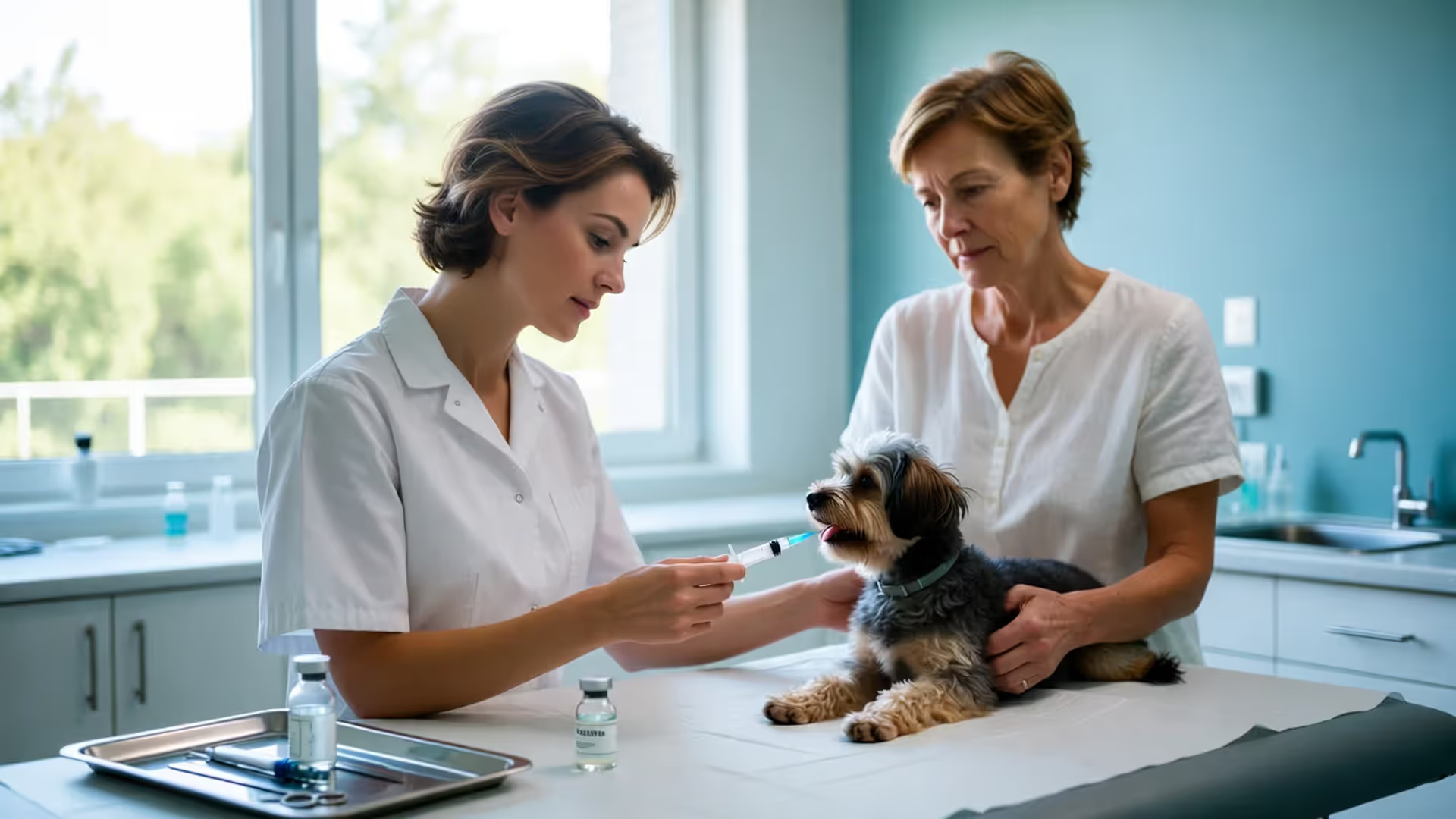
Understanding dental coverage prevents expensive surprises.
Pet Insurance Dental Coverage guide

Content
Your dog cracks a tooth chewing on a bone, or your cat develops painful gingivitis. Suddenly you're facing a $1,200 veterinary dental bill. You flip through your pet insurance policy, wondering what's actually covered—and that's when the fine print gets confusing.
Most pet owners assume their insurance handles dental work the same way it covers other illnesses. The reality is messier. Some policies treat dental care as a standard medical issue. Others exclude it entirely unless you purchase add-ons. Understanding these distinctions before you need emergency extractions can save you hundreds or thousands of dollars.
How Dental Coverage Works in Pet Insurance Plans
Pet insurance dental coverage falls into three distinct categories, and most policies don't cover all of them equally.
Accident coverage kicks in when trauma causes dental damage. Your dog gets hit by a car and breaks several teeth, or your cat falls from a window and fractures her jaw. These scenarios trigger accident coverage in nearly every standard policy. No special riders needed.
Illness coverage addresses dental problems stemming from disease—periodontal infections, tooth resorption, oral tumors. This is where policies diverge sharply. Mid-tier and premium plans typically include dental illness coverage after you satisfy waiting periods. Budget plans often exclude dental illness entirely or cap reimbursements at $500 annually.
Wellness coverage handles preventive care: routine cleanings, exams, fluoride treatments. Standard pet insurance policies don't include wellness benefits. You'll need to purchase a separate wellness rider, which functions more like a discount plan than true insurance.
Waiting periods for dental policy pets insurance range from 14 days to 12 months. Accident-related dental claims usually have the shortest waits—sometimes none at all. Illness-based dental claims face 30-day minimum waiting periods with most insurers. A few companies impose six-month or even 12-month waiting periods specifically for dental illness, designed to prevent people from buying coverage right before scheduled procedures.
Pre-existing conditions remain excluded across the board. If your pet had gingivitis diagnosed before your policy started, future treatments for that condition won't qualify for reimbursement—even if you switch to a more generous insurer later.

Author: Ashley Reynolds;
Source: lamadone.net
Common Dental Procedures Covered (and Excluded) by Pet Insurers
The distinction between what counts as "covered dental care" versus "excluded routine maintenance" confuses even experienced pet owners.
Accident-Related Dental Injuries vs. Routine Care
Dental treatments covered pets insurance when trauma causes the damage. Covered scenarios include:
- Fractured or avulsed teeth from vehicle accidents, falls, or blunt force
- Jaw fractures requiring surgical repair
- Torn gums or oral lacerations from chewing foreign objects
- Root canals or crowns following traumatic injury
- Emergency extractions after dog fights
These claims process like any other accident claim. You'll pay your deductible, then receive reimbursement at your policy's percentage (typically 70-90%) up to your annual limit.
Routine dental cleanings fall outside standard coverage. Even when your veterinarian discovers periodontal disease during a cleaning and performs extractions, insurers often deny the claim if the cleaning itself was scheduled preventive care. The workaround: if your vet diagnoses dental disease during a regular exam, schedules a separate treatment appointment, and documents medical necessity, the subsequent procedure has better odds of approval.
Excluded procedures regardless of medical justification:
- Cosmetic dentistry (crown restoration for show dogs)
- Orthodontics (braces, even if they improve bite function)
- Pre-existing dental disease diagnosed before coverage started
- Preventive treatments like sealants or fluoride applications
- Cleaning performed without anesthesia ("anesthesia-free dentistry")
Breed-Specific Dental Conditions
Certain breeds face predictable dental problems that complicate coverage. Small dogs—Yorkshire Terriers, Chihuahuas, Toy Poodles—develop periodontal disease at higher rates than large breeds. Their tiny mouths crowd teeth together, trapping food and bacteria.
Brachycephalic breeds (Bulldogs, Pugs, Persian cats) often have misaligned teeth and require extractions. Some insurers classify these as congenital conditions and exclude coverage if symptoms appear before age one.
Greyhounds and other sighthounds frequently crack teeth on hard toys. If your Greyhound breaks multiple teeth over several years, insurers may deny later claims, arguing the behavior pattern makes subsequent breaks "preventable" rather than accidental.
Cats develop tooth resorption—a painful condition where teeth disintegrate from the root—at alarming rates after age three. Quality dental procedures insurance pets policies cover extractions for resorption as illness treatment. Budget policies often cap reimbursement or exclude it as a "common condition."
Author: Ashley Reynolds;
Source: lamadone.net
Comparing Dental Reimbursement Rates Across Major Pet Insurance Providers
Dental reimbursement pets insurance varies dramatically by carrier. The table below compares how seven major insurers handle dental claims.
| Insurance Provider | Dental Coverage Type | Reimbursement Rate (%) | Annual Dental Limit ($) | Waiting Period (days) | Notable Exclusions |
| Healthy Paws | Accident + Illness | 70-90 | Unlimited | 15 | Routine cleanings, pre-existing |
| Trupanion | Accident + Illness | 90 | Unlimited | 5 (accidents), 30 (illness) | Preventive care, tooth trimming |
| Embrace | Accident + Illness + Wellness* | 70-90 | Varies by plan | 14 | Cosmetic procedures |
| Nationwide | Accident + Illness + Wellness* | 70-90 | $1,000-$2,000 | 14 | Pre-existing, anesthesia-free cleaning |
| ASPCA Pet Health | Accident + Illness + Wellness* | 70-90 | $500-$1,000 | 14 | Orthodontics, routine care without rider |
| Pets Best | Accident + Illness + Wellness* | 70-90 | Varies | 14 | Congenital conditions (some plans) |
| Lemonade | Accident + Illness + Wellness* | 70-90 | Unlimited | 14 (accidents), 6 months (illness) | Preventive without wellness package |
*Wellness coverage requires separate add-on purchase
The "unlimited" annual limits sound appealing, but they're still subject to your overall annual maximum—typically $5,000 to $20,000 depending on your plan tier. If your pet exhausts that limit on other conditions, dental claims get nothing.
Reimbursement percentages apply after your deductible. A $1,500 dental procedure with a $250 deductible and 80% reimbursement means you pay $250 + $250 (20% of the remaining $1,250) = $500 out of pocket.
The Real Cost of Pet Dental Cleaning and When Insurance Pays

Author: Ashley Reynolds;
Source: lamadone.net
A professional veterinary dental cleaning under anesthesia costs $400-$1,200 for dogs, $300-$900 for cats. Geographic location drives much of that variance—expect double those figures in Manhattan or San Francisco.
That baseline covers:
- Pre-anesthetic bloodwork
- Anesthesia and monitoring
- Scaling and polishing all tooth surfaces
- Subgingival (below the gum line) cleaning
- Post-procedure pain medication
The price climbs when your vet discovers problems during cleaning. Extractions add $50-$150 per tooth. Dental X-rays (essential for diagnosing root disease) cost $150-$300. Antibiotic treatment for infections adds another $50-$100. A "routine" cleaning that uncovers advanced periodontal disease can easily hit $2,000.
Dental cleaning insurance pets policies distinguish between preventive and therapeutic cleanings. A preventive cleaning—scheduled annually with no diagnosed disease—only qualifies for reimbursement if you've purchased a wellness rider. Even then, wellness plans typically cap dental cleaning reimbursement at $100-$150 annually.
Therapeutic cleanings get covered under illness benefits when your vet documents periodontal disease, gingivitis, stomatitis, or other diagnosed conditions. The documentation matters enormously. Your claim needs:
- Diagnosis code for the specific dental disease
- Treatment notes explaining medical necessity
- Before-treatment photos showing disease severity (many insurers request these)
- Itemized invoice separating diagnostic work from treatment
File a claim for "dental cleaning" without disease documentation, and you'll get denied even if your vet performed extractions. The insurer sees "cleaning" and assumes preventive care.
5 Mistakes Pet Owners Make When Filing Dental Claims
Mistake 1: Assuming all dental work qualifies after the waiting period
You wait 30 days after buying your policy, then schedule your dog's dental cleaning. The vet extracts three diseased teeth. Your claim gets denied because the periodontal disease existed before your coverage started—you just hadn't diagnosed it yet. Insurers consider dental disease "pre-existing" if any symptoms appeared before coverage, even if you didn't know about them. That's why policies with 6-12 month dental waiting periods exist: to outlast the "hidden disease" window.
Mistake 2: Missing the documentation window
Most insurers require claims within 90 days of treatment. Your cat has dental surgery in January, but you don't submit the paperwork until May because you're waiting to see if other health issues develop. Denied. File promptly, even if you're unsure whether you'll hit your deductible.
Mistake 3: Not separating preventive from therapeutic procedures
Your invoice lists "dental cleaning with extractions - $1,100" as a single line item. The insurer denies the entire claim, arguing it's preventive care. Request itemized invoices that separate the diagnostic exam, cleaning, X-rays, extractions, and medications. Submit only the therapeutic components for illness coverage reimbursement.
Mistake 4: Buying coverage right before scheduled dental work
You book a dental cleaning for next month, then purchase insurance hoping to get reimbursement. Even if you satisfy the waiting period, insurers investigate the timeline. If your vet's records show the appointment was scheduled before your coverage started, they'll deny the claim as a pre-existing condition or fraudulent filing.
Mistake 5: Forgetting about annual limits and deductibles
Your policy has a $500 annual deductible. Your dog needs $600 in dental work in February. You'll pay $500 (deductible) + 20% of the remaining $100 = $520 out of pocket. The insurance pays $80. Many pet owners expect larger reimbursements and feel cheated when the math doesn't work in their favor early in the policy year.
Author: Ashley Reynolds;
Source: lamadone.net
Is Adding Dental Coverage to Your Pet Insurance Worth It?
The math depends on your pet's age, breed, and your financial cushion.
For young, healthy pets (under age 3), dental coverage delivers minimal value unless you choose breeds prone to early dental disease. A two-year-old mixed-breed dog with clean teeth probably won't need therapeutic dental work for years. You'll pay $20-$40 monthly in premiums for coverage you won't use.
For middle-aged pets (ages 4-8), dental reimbursement pets insurance becomes worthwhile. Periodontal disease accelerates during these years. A $600 annual premium increase for dental coverage breaks even if you file one $1,500 claim during that period—likely for most dogs by age six or seven.
For senior pets (ages 9+), the value proposition shifts again. Many insurers either exclude dental coverage for pets enrolled after age 8, or they impose 12-month waiting periods that eat into your pet's remaining healthy years. If you already have coverage that includes dental, keep it. If you're shopping for new insurance for a senior pet, dental coverage may not be available at any price.
Wellness riders for preventive cleanings cost $10-$25 monthly and reimburse $100-$150 annually. You're essentially pre-paying for cleanings at a slight discount. These make sense if you're disciplined about annual cleanings but need budget smoothing. They're poor value if you skip cleanings or if your regular vet charges less than $300 for the procedure.
I see clients every week who avoided dental coverage because their young dog had perfect teeth, then face $2,500 bills for extractions at age seven. Dental disease progresses silently for years before owners notice symptoms. By then, insurance won't cover it as a new condition. The pets who benefit most from dental coverage are those enrolled young, before problems develop.
— Dr. Sarah Mitchell, a board-certified veterinary dentist in Colorado
Small breeds benefit most from dental coverage. A Chihuahua will likely need multiple dental procedures over her lifetime, with cumulative costs reaching $5,000-$8,000. Large breeds often maintain healthier teeth longer but face higher per-procedure costs when problems arise.
Calculate your break-even point: (Annual premium increase for dental coverage) ÷ (Your reimbursement percentage) = Dental expenses needed to break even. If dental coverage adds $300 annually to your premium and you have 80% reimbursement, you need $375 in covered dental expenses per year to break even. Most middle-aged and senior pets exceed that threshold.
Frequently Asked Questions About Pet Insurance Dental Coverage
Pet insurance dental coverage pays for itself when you understand the boundaries between accident, illness, and wellness benefits. Buy coverage before your pet develops symptoms. Document everything your vet does. Know which procedures qualify for reimbursement and which you'll fund yourself.
The pets who benefit most are those enrolled young with comprehensive illness coverage, particularly small breeds prone to periodontal disease. If you're shopping for insurance for a middle-aged or senior pet, run the numbers carefully—extended waiting periods and pre-existing condition exclusions may eliminate most of the value.
Wellness riders for routine cleanings make sense for disciplined pet owners who schedule annual preventive care but need budget smoothing. For everyone else, they're optional.
The worst strategy is assuming your policy covers dental work without reading the fine print, then discovering limitations when you're already facing a $2,000 treatment bill. Thirty minutes reviewing your policy's dental provisions now can prevent expensive surprises later.