Indoor Cat Insurance Guide — Coverage Options for House Cats
Indoor Cat Insurance Guide and Coverage Options

Content
Think your indoor cat is immune to expensive vet bills? Thousands of pet parents make this assumption—right up until they're facing a $3,500 emergency surgery bill for a swallowed hair tie or starting $250-a-month diabetes treatments for their seven-year-old tabby.
The real issue isn't whether house cats need medical care—they absolutely do, often for problems you'd never anticipate. What matters is whether you've got the financial cushion to handle a four-figure vet bill next Tuesday without breaking a sweat.
Do Indoor Cats Actually Need Pet Insurance?
Here's a surprising statistic: 70% of American cats live exclusively indoors, yet barely 3% of cat owners carry any pet insurance whatsoever. That massive gap exists because of one deeply entrenched myth—that indoor cats basically coast through life without serious medical problems once they're past the kitten stage.
Claims data from major pet insurers tells a completely different story. House cats rack up substantial veterinary expenses, just not from the obvious outdoor dangers. Your cat won't need stitches from a raccoon fight, but there's a decent chance she'll end up in emergency surgery after eating ribbon from a gift bag or develop a urinary blockage that requires immediate intervention.
Let's talk actual numbers for a minute. Emergency vet visits start at $800-$1,500 before anyone touches your cat. Need diagnostic imaging to figure out if there's a blockage? Add $400-$800. The surgery to fish out that swallowed object? You're looking at $2,000-$5,000. One incident can blow past what you'd spend on premiums over multiple years.
House cats face plenty of chronic diseases too. Diabetes management runs $200-$500 every month when you factor in insulin, testing strips, and monitoring visits. Kidney disease shows up in tons of cats after age seven—the specialized food, fluid therapy, and regular bloodwork costs $150-$300 monthly. Hyperthyroidism means either daily medication ($30-$60 monthly plus checkups) or radioactive iodine treatment hitting you for $1,500-$2,500 all at once.
Author: Jordan Whitman;
Source: lamadone.net
Looking at lifetime costs instead of monthly payments changes the calculation completely. A healthy indoor cat reaching age 15 will almost certainly face at least one medical crisis exceeding $1,000, plus probably multiple chronic conditions during those senior years. That's not pessimism—it's just how cat bodies work as they age.
What Indoor Cat Owners Should Know Before Buying Coverage
Not every insurance company approaches house cat coverage the same way. Some policy differences matter enormously for indoor-specific risks, while other "features" are basically marketing fluff you'll never use.
Coverage Types That Matter Most for Indoor Cats
Accident and illness protection is your baseline—the non-negotiable core of any worthwhile policy. This handles surprise medical problems: sudden illnesses, injuries from household mishaps, swallowed foreign objects, and emergency situations like urinary blockages that develop out of nowhere.
Pay close attention to hereditary and congenital condition coverage, particularly if you've got a purebred. Persians get polycystic kidney disease. Maine Coons develop heart conditions. Scottish Folds have joint problems baked into their genetics. You need crystal-clear coverage for conditions your specific cat was predisposed to from birth—not vague language that lets insurers wriggle out of claims later.
Chronic condition coverage deserves serious consideration because indoor cats typically outlive outdoor cats by several years, giving them more time to develop ongoing health issues. Your policy should explicitly cover conditions requiring treatment across multiple policy years without suddenly reclassifying them as pre-existing when you renew.
Dental illness coverage (not just injury-related dental work) addresses what's probably the most common health problem house cats face. Plenty of policies exclude dental disease completely unless you buy it as an add-on. Meanwhile, 70% of cats show dental disease signs by their third birthday.
Author: Jordan Whitman;
Source: lamadone.net
Common Exclusions in Indoor Cat Policies
Pre-existing conditions get excluded across the board—every insurer does this. The timing of when you buy coverage becomes absolutely critical because of this rule. If your cat shows any symptoms before coverage kicks in, even without a formal diagnosis, insurers can reject related claims down the road.
Bilateral conditions create a particularly frustrating scenario. Let's say your cat develops a problem in her left eye before you purchase insurance. Most insurers will exclude that same condition in both eyes, even though only the left side had issues initially.
Waiting periods vary wildly between companies. Accident coverage usually starts within 2-3 days, which is reasonable. Illness coverage typically makes you wait 14 days. Here's the kicker—orthopedic conditions (like torn ligaments) and breed-specific problems may have waiting periods stretching six months or even a full year.
Behavioral issues rarely qualify for coverage. When your indoor cat develops stress-induced problems needing veterinary care—excessive grooming creating skin lesions, stress-triggered bladder inflammation, or aggression requiring medication—most policies won't reimburse a cent.
How Much Does Insurance for an Indoor Cat Cost?
Five main factors determine what you'll pay monthly: your cat's age when you enroll, her breed, where you live, which deductible you pick, and what reimbursement percentage you select. Getting familiar with how each factor impacts cost helps you build a policy matching your budget without leaving you exposed to major financial risks.
Your cat's age matters more than anything else on this list. Insurance companies set prices using actuarial tables showing older cats file more claims. Enrolling during kittenhood locks in rock-bottom rates, with premiums climbing at each birthday—and the increases accelerate significantly after age seven.
Breed creates price differences because certain breeds carry higher odds of expensive hereditary problems. A mixed-breed domestic shorthair costs noticeably less to insure than purebred Persians, Maine Coons, or Bengals.
Where you live changes your premium based on regional veterinary pricing. Cat owners in San Francisco, New York, or Boston pay 30-50% more than folks in rural Iowa or Mississippi, directly reflecting what veterinary care actually costs in those areas.
Average Monthly Premium Comparison for Indoor Cats by Age and Provider
| Insurance Provider | 1-Year-Old Cat | 5-Year-Old Cat | 10-Year-Old Cat |
| Healthy Paws | $25-$35 | $35-$48 | $65-$85 |
| Trupanion | $28-$38 | $38-$52 | $70-$95 |
| Pets Best | $22-$32 | $32-$45 | $58-$78 |
| Embrace | $24-$34 | $34-$48 | $62-$82 |
| ASPCA Pet Health Insurance | $26-$36 | $36-$50 | $64-$88 |
| Nationwide | $30-$42 | $42-$58 | $75-$100 |
These estimates assume a $500 annual deductible, 80% reimbursement rate, $10,000 annual maximum, and a healthy mixed-breed indoor cat. Your actual quotes will vary based on your ZIP code and your specific cat's details.
Deductible options typically range from $100 up to $1,000 annually. Higher deductibles drop your monthly premium but increase what you pay out-of-pocket when filing claims. For most cat owners, a $250 annual deductible hits the sweet spot—low enough that filing smaller claims makes sense, high enough to keep your monthly costs manageable.
Reimbursement percentages (usually 70%, 80%, or 90%) determine what portion of your vet bill gets paid back after meeting your deductible. Jumping from 70% to 90% reimbursement typically adds 20-30% to your monthly premium, but it dramatically reduces your share of large bills.

Author: Jordan Whitman;
Source: lamadone.net
5 Health Risks Indoor Cats Face That Insurance Covers
Understanding which medical problems actually drive claims for house cats explains why comprehensive coverage makes financial sense even when your cat never ventures outside.
Obesity-related complications impact nearly 60% of American indoor cats. Extra weight triggers diabetes (annual treatment costs hitting $2,000-$4,000), arthritis needing pain medication ($600-$1,200 yearly), and hepatic lipidosis—a dangerous liver condition developing when overweight cats suddenly stop eating, requiring hospitalization that costs $2,000-$5,000.
Urinary tract problems hit indoor cats hard because of stress, insufficient water drinking, and diet factors. Feline lower urinary tract disease (FLUTD) creates painful urination, bloody urine, and potentially deadly urethral blockages requiring emergency intervention ($1,500-$3,500). Male cats face especially high risk for complete blockages needing catheterization and hospital stays. These issues frequently come back, creating multiple claims over time.
Foreign body ingestion lands indoor cats in emergency surgery with surprising regularity. Cats swallow hair ties, rubber bands, Christmas tinsel, string, ribbon, and small toys that block their intestines. Getting a diagnosis requires X-rays or ultrasound ($400-$800), then surgical removal runs $2,000-$5,000. Even cats who've never shown interest in non-food items can randomly eat something dangerous, making this risk nearly impossible to predict.
Dental disease shows up in most indoor cats by middle age. Periodontal disease creates mouth pain, eating difficulties, and bacterial infections that can migrate to the heart and kidneys. Professional dental cleaning under anesthesia costs $500-$1,200, but plenty of cats need tooth extractions adding another $400-$1,000 to your bill. Once problems start, cats often need dental work every 2-3 years.
Chronic kidney disease affects roughly one in three cats past their tenth birthday. This progressive condition demands specialized prescription diets ($60-$100 monthly), subcutaneous fluid therapy either at home or the clinic ($100-$300 monthly), regular bloodwork monitoring kidney function ($200-$400 every 3-6 months), plus medications managing symptoms and slowing progression ($50-$150 monthly). Cats often survive 2-4 years post-diagnosis with appropriate treatment, stacking up significant long-term expenses.
Indoor cats may avoid outdoor hazards, but they're actually more prone to obesity, diabetes, and stress-related conditions that require ongoing treatment. I've seen emergency surgeries for hairball obstructions and foreign body ingestion cost upwards of $4,000. The 'safe indoor environment' doesn't eliminate veterinary expenses—it just changes what you're likely to pay for.
— Dr. Michelle Torres, DVM, ABVP
How to Choose the Right Policy for Your Indoor Cat
Picking appropriate coverage means matching the policy to your specific cat's risk factors and your household's financial picture. What works perfectly for a one-year-old mixed-breed differs dramatically from what a ten-year-old purebred Persian needs.
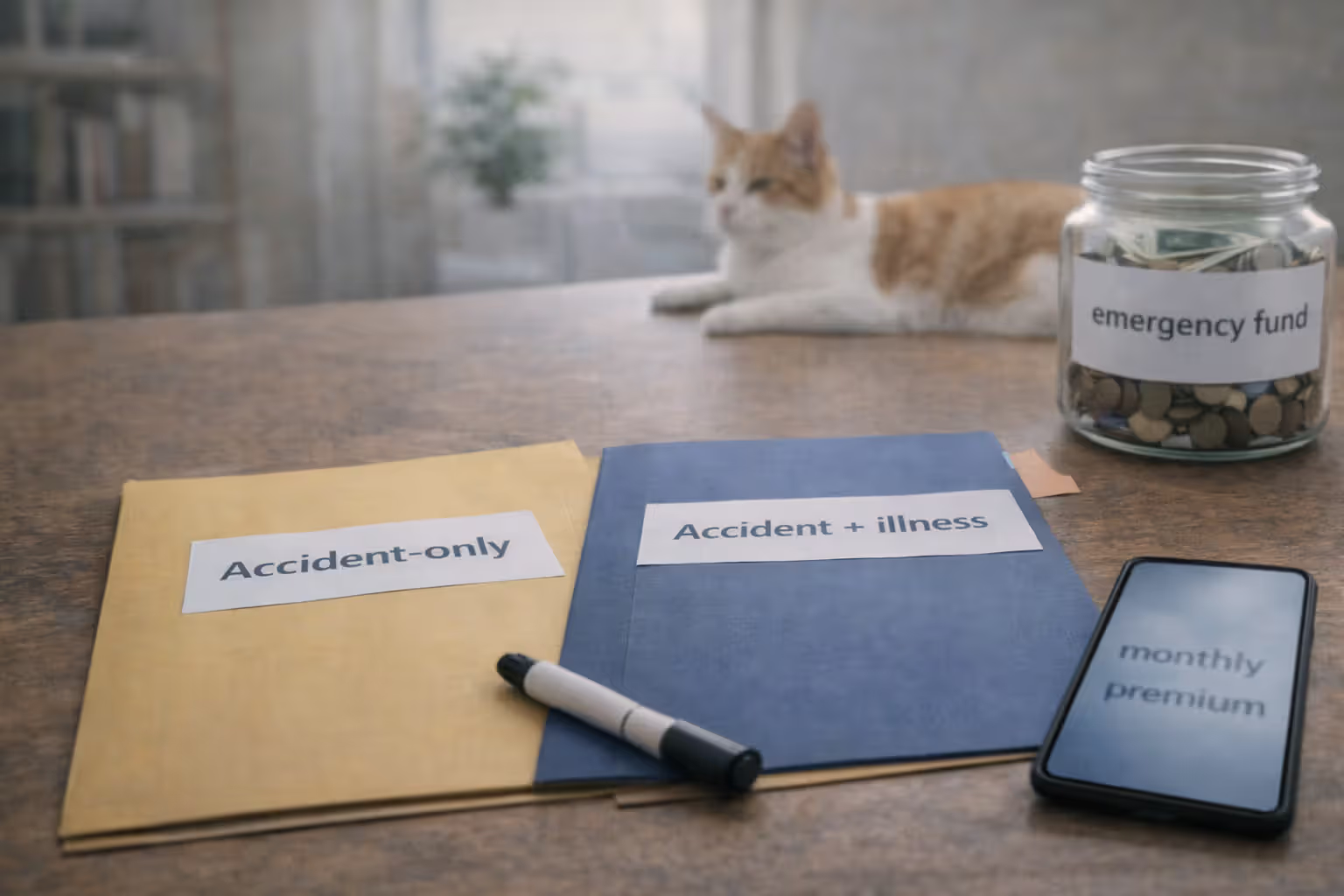
Accident-Only vs. Comprehensive Coverage
Accident-only policies cost 40-60% less than comprehensive plans but leave you completely exposed to the most common—and expensive—problems indoor cats face. These stripped-down policies cover injuries from falls, burns, cuts, or poisoning, but exclude every single illness. No coverage for cancer. No diabetes. No kidney disease. No hyperthyroidism. Nothing related to disease processes.
For house cats, accident-only coverage makes sense in exactly one narrow scenario: you're temporarily insuring a young, healthy cat while building up an emergency fund, and you can realistically self-insure for illnesses. For the vast majority of owners, this represents penny-wise, pound-foolish thinking. The conditions these bare-bones policies exclude generate 85-90% of actual veterinary claims for indoor cats.
Comprehensive accident and illness coverage costs more each month but protects against the medical problems house cats actually develop. This coverage handles both sudden emergencies and long-term conditions, making it the right choice for most cat owners wanting real financial protection.
Author: Jordan Whitman;
Source: lamadone.net
Wellness Add-Ons Worth Considering
Wellness or routine care packages cover preventive services: annual checkups, vaccinations, fecal testing, heartworm prevention, and flea/tick products. These riders cost $10-$25 monthly and typically reimburse $250-$500 yearly for routine care.
The math usually doesn't favor wellness coverage. Annual preventive care for an indoor cat runs $200-$350 when paying directly. Wellness packages cost $120-$300 annually but only reimburse up to their stated caps. You're essentially prepaying for predictable care at a slight markup, trading flexibility for predictable monthly budgeting.
Wellness coverage makes sense if you struggle setting aside money for expected expenses or if your cat needs frequent routine care due to a managed chronic condition. For most people, skipping wellness coverage and depositing that $15-20 monthly into a dedicated savings account provides more flexibility.
Consider your cat's current age and health first. Kittens and young adults (under five years) do fine with mid-tier coverage: $500 annual deductible, 80% reimbursement rate, and $10,000-$15,000 annual maximums. Middle-aged cats (5-10 years) benefit from lower deductibles ($250-$500) and higher annual caps ($15,000-unlimited) as health risks climb. Senior cats (past ten years) need the most robust coverage you can reasonably afford: low deductibles, high reimbursement rates, and unlimited annual maximums.
Think honestly about your financial cushion. If an unexpected $3,000 vet bill next month would force you onto credit cards or make you choose between your cat's health and your finances, you need comprehensive coverage with a lower deductible. If you've got a dedicated pet emergency fund holding $5,000 or more, you can choose higher deductibles to reduce monthly premiums.
Mistakes Cat Owners Make When Insuring Indoor Pets
Understanding common pitfalls helps you sidestep expensive mistakes when buying and using coverage.
Waiting until health problems emerge represents the costliest error by far. Pet insurance exclusively covers conditions developing after your policy starts and waiting periods pass. Once your cat displays symptoms of any condition—even before getting an actual diagnosis—insurers label it pre-existing and permanently exclude it. That single vomiting episode that seemed minor? If it occurred before coverage started and your cat later gets diagnosed with chronic gastritis, the insurer can reject claims.
Misunderstanding waiting periods creates denied claims and serious frustration. Beyond the standard 14-day illness waiting period, many companies impose 6-12 month waiting periods specifically for orthopedic conditions and breed-specific hereditary problems. Reading your policy's waiting period schedule carefully prevents nasty surprises when filing claims shortly after enrollment.
Overlooking hereditary condition coverage proves expensive for purebred cat owners. Some budget policies exclude hereditary and congenital conditions completely, leaving you unprotected for precisely the problems your breed commonly faces. Always confirm that hereditary conditions get covered without special exclusions or sublimits.
Assuming indoor lifestyle automatically reduces premiums disappoints shoppers. Insurers calculate prices using age, breed, and location—not whether your cat goes outside. While outdoor cats encounter certain risks indoor cats avoid, the reverse holds equally true. Premiums reflect overall actuarial risk for cats generally, not lifestyle-based adjustments.
Dropping coverage as premiums increase with age leaves you uninsured exactly when your cat needs protection most. Sure, premiums climb as cats age, but that's because older cats file more claims. Canceling at age nine or ten means you funded premiums throughout the low-risk years but won't have coverage during high-risk senior years when major expenses hit.
Failing to maintain detailed medical records complicates claims and can trigger denials. Keep copies of all veterinary records, including routine exam notes. If an insurer questions whether a condition existed before coverage began, comprehensive documentation proves the timeline and protects your claim.
Frequently Asked Questions About Indoor Cat Insurance
Whether to insure your indoor cat ultimately hinges on your financial readiness for veterinary expenses and your personal risk tolerance. Insurance functions as a financial mechanism converting unpredictable, potentially devastating costs into predictable monthly payments.
Calculate your personal situation. What would happen if your cat needed $4,000 in emergency surgery next month? Or developed a chronic condition demanding $200 monthly in treatment for the next five years? If either scenario would create genuine financial hardship or force you making care decisions based on affordability rather than medical necessity, comprehensive coverage makes solid sense.
For most house cat owners, a mid-tier policy purchased early in the cat's life strikes the best balance between protection and cost. Expect paying $25-$45 monthly for a young adult cat, with premiums climbing as your cat ages. That investment purchases peace of mind and ensures your cat can receive necessary veterinary care regardless of price tags.
The cats benefiting most from insurance are those enrolled young and kept insured throughout their lives, allowing coverage to protect them during senior years when medical expenses typically surge. The owners benefiting most are those who'd struggle paying large, unexpected veterinary bills without experiencing financial stress.
Your indoor cat may dodge cars, predators, and infectious diseases from outdoor exposure, but she still faces substantial health risks generating expensive veterinary bills. Insurance doesn't prevent those problems—it just ensures you can afford treating them when they occur.