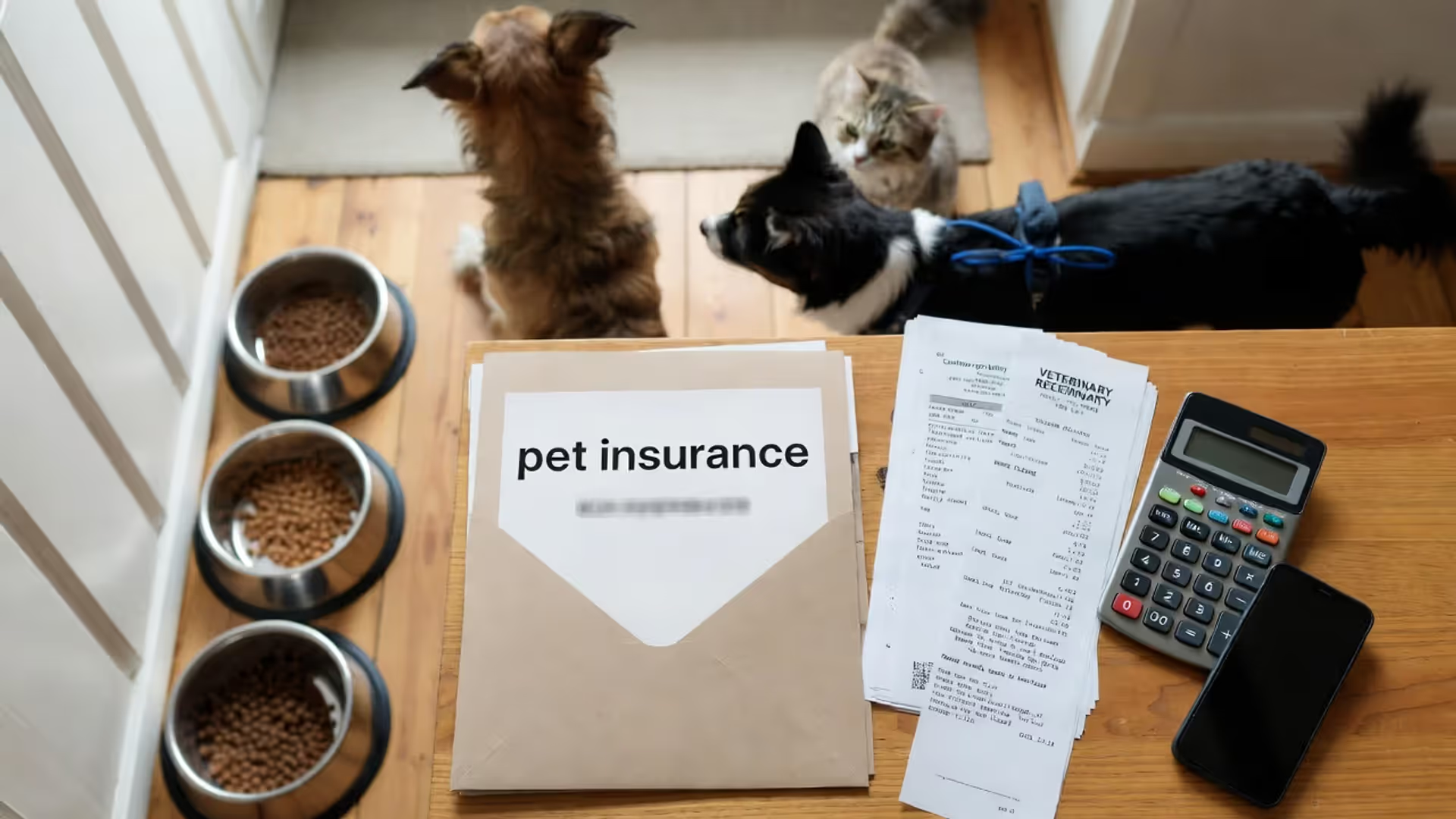
Multi Pet Insurance Guide — How to Save on Multiple Pets
Multi Pet Insurance Guide — How to Save on Multiple Pets

Content
Here's what nobody tells you about owning three dogs: when one needs emergency surgery, the other two inevitably develop their own health issues within weeks. That $2,400 ACL repair suddenly becomes $4,000 in vet bills when you're treating ear infections and dental problems at the same time.
If you're juggling veterinary care for multiple animals, you've probably noticed how quickly those costs spiral. One pet's annual healthcare might run $800 to $1,200. Add a second animal? You're looking at $1,600 to $2,400. A third pet pushes you past $3,000 annually—and that's just routine care before emergencies strike.
Multi pet insurance can knock 5% to 10% off your premiums for each additional animal. Doesn't sound like much until you realize that's $150 to $300 back in your pocket every year. But here's where it gets tricky: not all "multi-pet" policies work the same way. Some providers bundle everything under one policy number. Others just link separate policies and call it a discount. Getting this wrong means you'll either overpay or end up with coverage that doesn't match what your animals actually need.
What Is Multi Pet Insurance and How Does It Differ from Single Pet Policies?
Think of multi pet insurance as two completely different setups that somehow share the same name.
Option one: You get separate policies for each animal, but they're connected behind the scenes. Your beagle has policy #12345, your tabby cat has policy #12346, and your German shepherd has policy #12347. Each one comes with its own deductible (usually $250 to $500), its own coverage cap, and its own renewal paperwork. The "multi-pet" part? You get 5% to 10% knocked off policies #12346 and #12347 because they're linked to #12345. Your bills arrive together, you've got one online account, but otherwise these function like completely independent policies.
This setup gives you maximum control. Your senior cat with kidney disease can have a $250 deductible and $20,000 annual coverage while your healthy two-year-old Lab gets a $500 deductible and $10,000 coverage. Different needs, different protection levels, different costs—but you still collect that multi-pet discount.

Author: Ashley Reynolds;
Source: lamadone.net
Option two: Everything bundles under a single policy. One policy number covers all three animals. Here's where things get interesting—some insurers make you hit just one deductible total. Spend $300 treating your beagle's ear infection in March, then your cat needs a $600 dental cleaning in July. With a $250 deductible, you've already cleared that threshold with the dog, so the cat's entire procedure gets reimbursed at your coverage rate (usually 70% to 90%). Other insurers keep separate deductibles even within the bundled policy, which kind of defeats the purpose.
The catch with bundled policies? Changes affect everyone. Want to increase coverage for your aging dog? Your two healthy young cats get the same increase—and the premium bump that comes with it. Need to remove one pet from coverage? Some providers make you cancel the entire policy and start over.
When you're insuring multiple pets insurance becomes a real consideration, focus less on whether it's "bundled" or "linked" and more on whether the deductible structure and coverage flexibility actually work for your situation.
How Much Can You Save with Multi Pet Discounts?
Let's run real numbers instead of percentages that don't mean much without context.
Say you're insuring two cats. First cat costs $35 monthly for solid coverage—$5,000 annual limit, 80% reimbursement, $250 deductible. At full price, both cats would run $840 yearly. Apply a 10% multi-pet discount to the second cat, and you're paying $798 annually instead. You've saved $42.
Not exactly life-changing money, right? But now scale it up. You've got two dogs and two cats. First dog runs $50 monthly, second dog $45 monthly, two cats at $35 each. Without discounts: $1,980 yearly. With 10% off pets two through four: $1,782. That's $198 in savings—enough to cover several months of flea prevention or a routine dental cleaning.

Author: Ashley Reynolds;
Source: lamadone.net
The math gets better with more expensive breeds. Insuring a French Bulldog often costs $70 to $90 monthly because of their respiratory issues and joint problems. Get a 10% discount on an $80 monthly premium, and you're saving $96 annually on just that one dog. Add a second Frenchie, another $96 in savings. Two purebred dogs with expensive premiums can put $150 to $200 back in your budget every year.
Discount Structures by Number of Pets
Most companies keep it simple: every pet after the first gets the same percentage off. Second pet gets 10% off, third pet gets 10% off, fourth pet gets 10% off. Straightforward, easy to calculate.
A handful of providers do tiered discounts—5% off the second pet, 7% off the third, 10% off the fourth and beyond. Sounds better in theory, but unless you're insuring four or more animals, the extra complexity doesn't deliver meaningfully larger savings.
Watch out for pet limits. Many insurers cap multi-pet policies at five or six animals total. Running a small rescue with eight dogs? You'll need to split them across separate accounts, which might disqualify you from multi-pet discounts entirely depending on how the provider structures their rules.
Here's something that'll bite you: some companies require all pets to stay active on coverage for the discount to apply to any of them. Drop one pet's policy because they passed away or you rehomed them, and suddenly your remaining three pets lose their discounts and jump back to full price. You're essentially locked into maintaining coverage across your entire household or losing the financial benefit.
Hidden Costs That Reduce Your Savings
Enrollment fees operate outside the discount structure at most companies. You're paying $35 per pet just to sign up—that's $105 for three pets before you've even started monthly premiums. That fee doesn't get discounted, so you've lost a big chunk of your first-year savings before you've filed a single claim.
Deductible structure matters way more than most people realize. Let's say both your dog and cat need surgery in the same year—$2,200 for the dog's ACL repair, $900 for the cat's intestinal blockage. You've got $250 deductibles for each pet.
With per-pet deductibles, you're paying $500 total out-of-pocket before reimbursement kicks in. Then you get 80% back on the remaining $2,850, which equals $2,280 reimbursed. You've spent $1,320 total ($3,100 in vet bills minus $2,280 reimbursement plus your annual premiums).
With a shared deductible, you pay $250 once, then get 80% back on the remaining $3,050. That's $2,440 reimbursed. You've spent $1,160 total—a $160 difference on the same claims.

Author: Ashley Reynolds;
Source: lamadone.net
For households where one pet typically needs expensive care while others stay healthy, shared deductibles deliver real savings. For families where claims distribute evenly or pets rarely need care simultaneously, per-pet deductibles might actually cost less because you're not triggered that deductible every year.
Annual coverage limits apply per pet, not across your whole household—make sure you understand this before signing up. A policy advertising "$15,000 annual coverage" means $15,000 per animal, not $15,000 split between your three cats. Good news if you thought you'd have to ration coverage across multiple pets. But some budget providers do impose aggregate limits, so read the fine print during enrollment.
Comparing Multi Pet Insurance Providers: Coverage and Discount Options
The table below breaks down how major insurers handle multi-pet households. Pay attention to the species coverage column—it matters more than you'd think.
| Provider Name | Multi-Pet Discount (%) | Species Covered | Annual Deductible Options | Wellness Add-ons Available | Customer Rating |
| Healthy Paws | 10% | Dogs and cats only | $250 or $500 | Not available | 4.5/5 |
| Embrace | 5% | Dogs and cats only | $200, $300, $500, $750, $1,000 | Yes—covers vaccines, checkups, dental | 4.3/5 |
| Nationwide | 5% | Dogs, cats, birds, rabbits, reptiles, ferrets | $250 or $500 | Yes—routine care coverage available | 4.0/5 |
| ASPCA Pet Health Insurance | 10% | Dogs and cats only | $100, $250, or $500 | Yes—preventive care reimbursement | 4.2/5 |
| Pets Best | 5% | Dogs and cats only | $50, $100, $200, $500, $1,000 | Yes—wellness plans separate add-on | 4.1/5 |
| Trupanion | No discount offered | Dogs and cats only | $0 to $1,000 per condition (not annual) | Not available | 4.4/5 |
Healthy Paws and ASPCA tie for the biggest discount at 10%, but neither touches exotic pets. You've got a rabbit or a parrot? You're out of luck with those two.
Nationwide stands alone covering birds, reptiles, and small mammals under the same roof as your dogs and cats. Their 5% discount lags behind, sure, but you can't get multi-pet coverage for your bearded dragon anywhere else. That monopoly position means they can offer a smaller discount and still win your business if you've got non-traditional pets.
Trupanion doesn't play the discount game at all. Their angle? Per-condition deductibles instead of annual ones. You pay a deductible once for each separate condition, then that condition's covered for life with no annual reset. Crucially, they offer unlimited lifetime payouts with no caps. For pets with chronic conditions needing ongoing treatment, that structure can save thousands compared to annual limit policies—even without a multi-pet discount.
Wellness add-ons cover the routine stuff: annual exams, vaccinations, fecal tests, heartworm prevention, dental cleanings. Embrace and Pets Best let you tack these onto multi-pet policies, reimbursing $250 to $500 annually depending on which tier you choose. If you're managing routine care for three or four animals, that's $750 to $2,000 in reimbursed expenses—which can completely offset your premium costs for one pet.
Customer ratings above 4.3 generally signal smooth claims processing. Below 4.0? Expect complaints about delayed reimbursements, disputed claims, or difficulty reaching customer service. That half-point difference translates to real frustration when you're waiting three weeks for a $1,800 reimbursement check.
Should You Bundle All Pets Under One Policy or Keep Them Separate?
The honest answer? It depends on whether your pets are basically identical or completely different animals with unique needs.
Bundling makes sense when: All your pets fall into similar age ranges (within three to four years of each other), share similar health risks, and need comparable coverage. You've got three young adult cats, all healthy, all indoor-only? Bundle them. Same coverage works for all three, you'll manage one renewal date, and there's no reason to complicate things with separate policies.
Here's what bundling gets you: One renewal date to remember instead of three. Single customer service number and account login. Consolidated claims history showing all your pets in one place. Potential for shared deductibles where spending from any pet counts toward one annual threshold. Simpler record-keeping come tax time if you're deducting pet insurance as a business expense.
Where bundling falls apart: You need different coverage levels for each animal. Your twelve-year-old golden retriever needs comprehensive coverage with a $250 deductible because you know hip dysplasia and cancer are coming. Your two-year-old terrier mix just needs catastrophic coverage with a $750 deductible because she's healthy and you can handle routine expenses. Force them onto the same bundled policy, and you're either over-insuring the young dog (wasting money on coverage she doesn't need) or under-insuring the senior dog (setting yourself up for financial disaster when his health declines).
Adjusting bundled policies gets messy fast. Want to lower the deductible for one pet? Some providers require you to change it for all pets on the policy. Need to cancel coverage for one animal because you rehomed them? You might have to cancel the entire policy and re-enroll the remaining pets as new applicants—which means new waiting periods and fresh pre-existing condition exclusions.

Author: Ashley Reynolds;
Source: lamadone.net
Separate policies shine when: Your pets differ significantly in age (more than four or five years apart), species, breed-specific risks, or existing health conditions. You've got a three-year-old beagle, an eight-year-old Persian cat with chronic kidney disease, and a one-year-old Lab puppy. Those three animals need radically different coverage, and trying to bundle them just creates problems.
Benefits of keeping things separate: Full customization for each animal's deductible, coverage limit, and reimbursement rate. Cancel or modify one pet's policy without affecting the others. Maintain coverage continuity if you lose a pet or your household changes. You're not stuck applying blanket changes across animals with different needs.
The tradeoffs: Multiple renewal dates spread across the year. Separate claims submissions for each pet through different policy portals. Potentially higher administrative fees. More complex tracking of what's covered under which policy.
Practical rule: Bundle pets that are genuinely similar. Keep separate policies when your animals differ by five or more years in age, when they're different species with different health risks, or when one has pre-existing conditions that require specialized coverage. A household with two puppies and a senior dog should absolutely keep the old guy on his own policy—the comprehensive coverage he needs would unnecessarily inflate costs for the healthy young dogs if you bundled everyone together.
What Types of Pets Qualify for Multi Pet Insurance?
Dogs and cats? Every provider covers them, no questions asked. Mix and match breeds, ages, sizes—the multi-pet discount applies whether you've got two Chihuahuas, one Chihuahua plus one Maine Coon, or a Great Dane paired with a tabby cat.
Exotic pets get complicated fast. Nationwide wrote basically the entire market for birds, rabbits, guinea pigs, reptiles, and ferrets. They'll insure your cockatiel, extend multi-pet discounts when you bundle it with your Labrador, and process claims for your bearded dragon's vet visits. Everyone else? Dogs and cats only.
Even with Nationwide, coverage for exotic pets comes with restrictions. Birds need to be captive-bred (no wild-caught parrots). Reptiles must be legally owned (no endangered species). And they won't touch venomous snakes, primates, or any animal classified as inherently dangerous. If you've got a ball python and a rabbit, you're good. A reticulated python and a capuchin monkey? Find another solution.
Age limits vary more than you'd expect. Most insurers accept puppies and kittens starting at eight weeks old—no upper limit for existing policyholders adding new pets. But enrolling a brand-new senior pet? Many companies cap initial enrollment at 14 years for dogs, 16 years for cats. Adopt a fifteen-year-old dog from a rescue, and you might not be able to add him to your existing multi-pet policy at all. You'd need a separate policy without discount benefits, assuming you can find someone willing to insure him.
Health underwriting happens for every pet individually. Your three healthy dogs don't somehow vouch for the new cat you're adding to your policy. That cat goes through standard medical review, waiting periods (typically 14 days for illness, six months for orthopedic conditions), and pre-existing condition exclusions just like any other new enrollment.
Pre-existing conditions create permanent exclusions. Anything documented in veterinary records before coverage starts—or anything that shows symptoms during waiting periods—gets excluded forever. Your new kitten develops a heart murmur at ten weeks old, two weeks after you enrolled her. That's technically during the illness waiting period, so any heart conditions likely get classified as pre-existing even though you signed her up as a healthy eight-week-old.
Breed-specific stuff rarely blocks multi-pet discount eligibility, but it absolutely affects whether you can get coverage at all. Certain insurers won't touch wolf-dog hybrids, specific bully breeds, or dogs with bite history. The few providers willing to cover high-risk breeds usually tack on premium surcharges—20% to 40% increases that apply before calculating multi-pet discounts. That 10% multi-pet discount suddenly matters less when you're paying 30% extra because your dog's half wolf.
Common Mistakes When Insuring Multiple Pets
Giving every pet identical coverage because it seems simpler. Your seven-year-old cocker spaniel faces completely different health risks than your eighteen-month-old mixed breed. The older dog's entering prime years for ear infections, glaucoma, and hip problems—she needs lower deductibles and higher annual limits. Your young dog's biggest risk is swallowing something stupid and needing emergency surgery. He needs catastrophic coverage with a high deductible since you can handle routine care out-of-pocket. Forcing them onto identical policies wastes money on over-insuring the young dog or under-insuring the older one.
Comparing providers purely on discount percentages without reading coverage exclusions. You've got a bulldog and a golden retriever. Company A offers 10% multi-pet discounts but excludes all brachycephalic conditions (breathing problems, soft palate issues, heat stroke) for the bulldog. Company B offers 7% discounts and covers everything except pre-existing conditions. That extra 3% discount is worthless when your bulldog's most likely health problems aren't covered. You'll pay full price for his $3,000 soft palate surgery because you chased a bigger discount percentage instead of reading the fine print.
Setting coverage at enrollment and never looking at it again. Pets age. Their needs change. That $10,000 annual limit made sense when your dog was three years old. Now she's nine, developing arthritis, and you're burning through that limit by August between joint supplements, pain medication, and physical therapy. Meanwhile, your coverage costs haven't increased to match her changing needs because you've never adjusted the policy. Annual reviews take fifteen minutes—do them.
Adding new pets mid-year without understanding waiting periods. You adopt a ten-week-old puppy and immediately add him to your multi-pet policy. Two months later, he's limping. The vet diagnoses hip dysplasia. Here's the problem: orthopedic waiting periods typically run six months. Your puppy's symptoms appeared at eighteen weeks old—still inside that waiting period. Even though you enrolled him the day you brought him home, the insurance company classifies hip dysplasia as pre-existing because symptoms showed up before the waiting period expired. You're paying out-of-pocket for a condition that could cost $5,000 to $8,000 to manage over his lifetime.
Picking providers based on marketing instead of actual claims experiences. Company X advertises "90% reimbursement rates!" and "comprehensive coverage!" Their customer reviews tell a different story: claims delayed for weeks, constant requests for additional documentation, arbitrary denials requiring appeals. Company Y offers 80% reimbursement with a smaller multi-pet discount, but claims process in five business days and approvals come through without hassle. That 10% reimbursement difference means nothing if you're fighting for three months to get paid.
Canceling one pet's coverage without checking the impact on everyone else. Your multi-pet discount required minimum two insured pets. Your older cat passes away, and you cancel her policy. Suddenly your remaining dog's premium jumps 10% because he's lost multi-pet discount eligibility—he's now your only pet on coverage. That $3 monthly increase doesn't sound like much until you realize it's $36 annually that you weren't expecting. Before canceling any pet's policy, confirm exactly how it affects premiums for your other animals.
Expert Perspective:
Dr. Sarah Mitchell, a veterinarian with 15 years in companion animal medicine, shared this:
I've watched families face impossible choices when two pets need expensive treatment simultaneously—they drain savings treating the first animal, then can't afford necessary care for the second. Multi pet insurance provides crucial financial backup, but most people approach it wrong. They default to identical coverage across all their animals because it seems simpler, and they end up overpaying for protection that doesn't match their actual risks. Your senior cat with kidney disease needs completely different coverage than your healthy two-year-old dog. Smart multi-pet insurance means customizing protection for each animal's situation while still capturing those discount benefits. The families I see handling this best aren't chasing maximum discount percentages—they're matching coverage to genuine needs and choosing providers based on claims reliability rather than marketing promises.
— Dr. Sarah Mitchell
Frequently Asked Questions About Multi Pet Insurance
Making Multi Pet Insurance Work for Your Household
Start by evaluating each animal individually instead of thinking about your "pet household" as one unit. Your eight-year-old dachshund with a history of back problems needs specific protection. Your three-year-old mixed breed with zero health issues needs something completely different. Your sixteen-year-old cat who's defying all odds? She needs coverage tailored to senior pets with ongoing conditions.
List out each pet's genuine risks. Breed-specific conditions (German shepherds get hip dysplasia, cavalier King Charles spaniels get heart disease, Maine Coons develop hypertrophic cardiomyopathy). Age-related concerns (senior pets need coverage for cancer, kidney disease, cognitive dysfunction). Current health status (existing conditions that might progress, early symptoms that could develop into chronic issues).
Now match coverage to those risks. High-risk animals benefit from lower deductibles ($100 to $250), higher annual limits ($15,000 to unlimited), and higher reimbursement rates (80% to 90%). You'll pay more in premiums, but you're protecting against predictable expensive conditions. Low-risk pets can carry higher deductibles ($500 to $750) and lower annual limits ($7,000 to $10,000) because you're mainly guarding against unpredictable catastrophic events—the $4,000 foreign body surgery or the $6,000 hit-by-car treatment.
Compare providers on total value, not individual features in isolation. Calculate your actual annual cost after multi-pet discounts. Read coverage documents for breed-specific exclusions affecting your particular animals. Check recent customer reviews on independent sites—focus on complaints about claims processing since that's where rubber meets road. Verify whether wellness add-ons make mathematical sense (they usually do if you're managing routine care for three or more pets).
Customize aggressively when your pets differ significantly. Unless all your animals fall within similar age ranges, health statuses, and risk profiles, separate policies with multi-pet discounts typically deliver better value than bundled coverage. The administrative convenience of one policy number doesn't justify paying for coverage that doesn't fit.
Set annual review reminders. Your dog's insurance needs at age three differ dramatically from age eight. A policy that made perfect sense when you enrolled her becomes inadequate or wasteful as she ages. Review coverage every year, adjust deductibles as your financial situation changes, and make sure you're not paying for protection you don't need while maintaining adequate coverage where it actually matters.
Multi pet insurance works when you treat it as a customized risk management tool rather than a one-size-fits-all product. The households getting the most value aren't the ones with the highest discount percentages—they're the ones who invested time upfront understanding their options, matched coverage to genuine needs, and picked providers based on comprehensive reliability instead of marketing flash.