How Pet Insurance Works From Enrollment to Getting Reimbursed
How Pet Insurance Works From Enrollment to Getting Reimbursed

Content
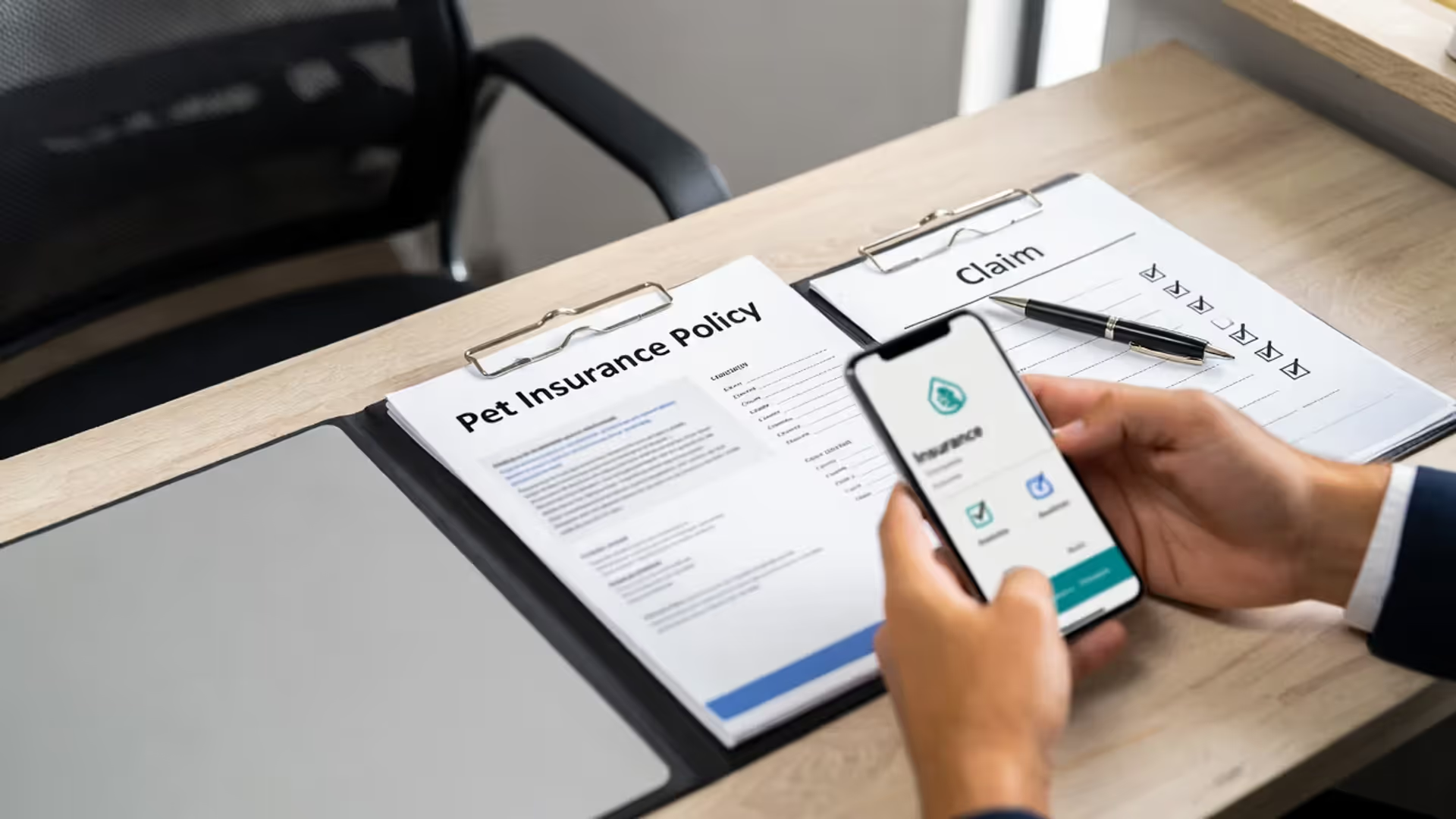
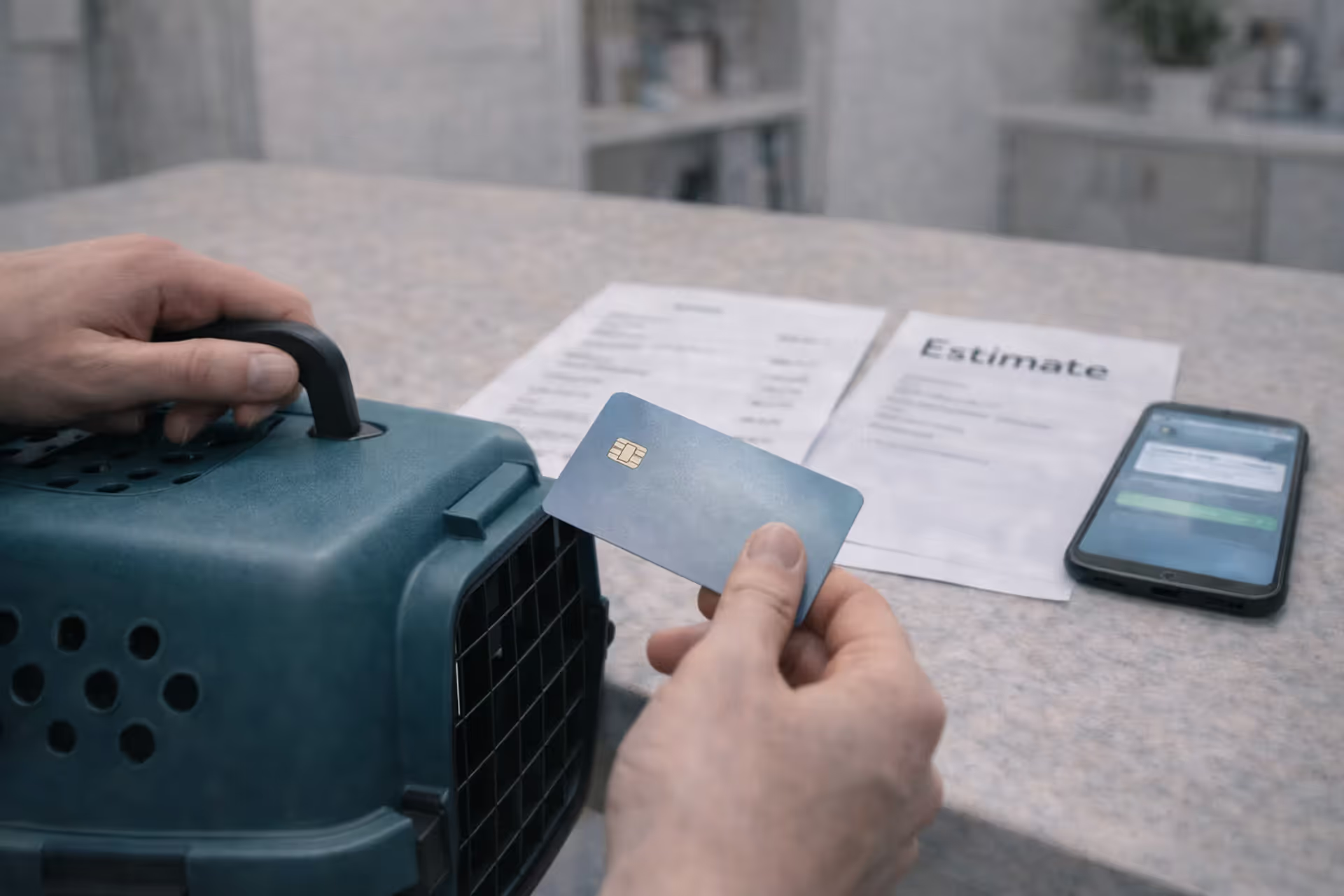
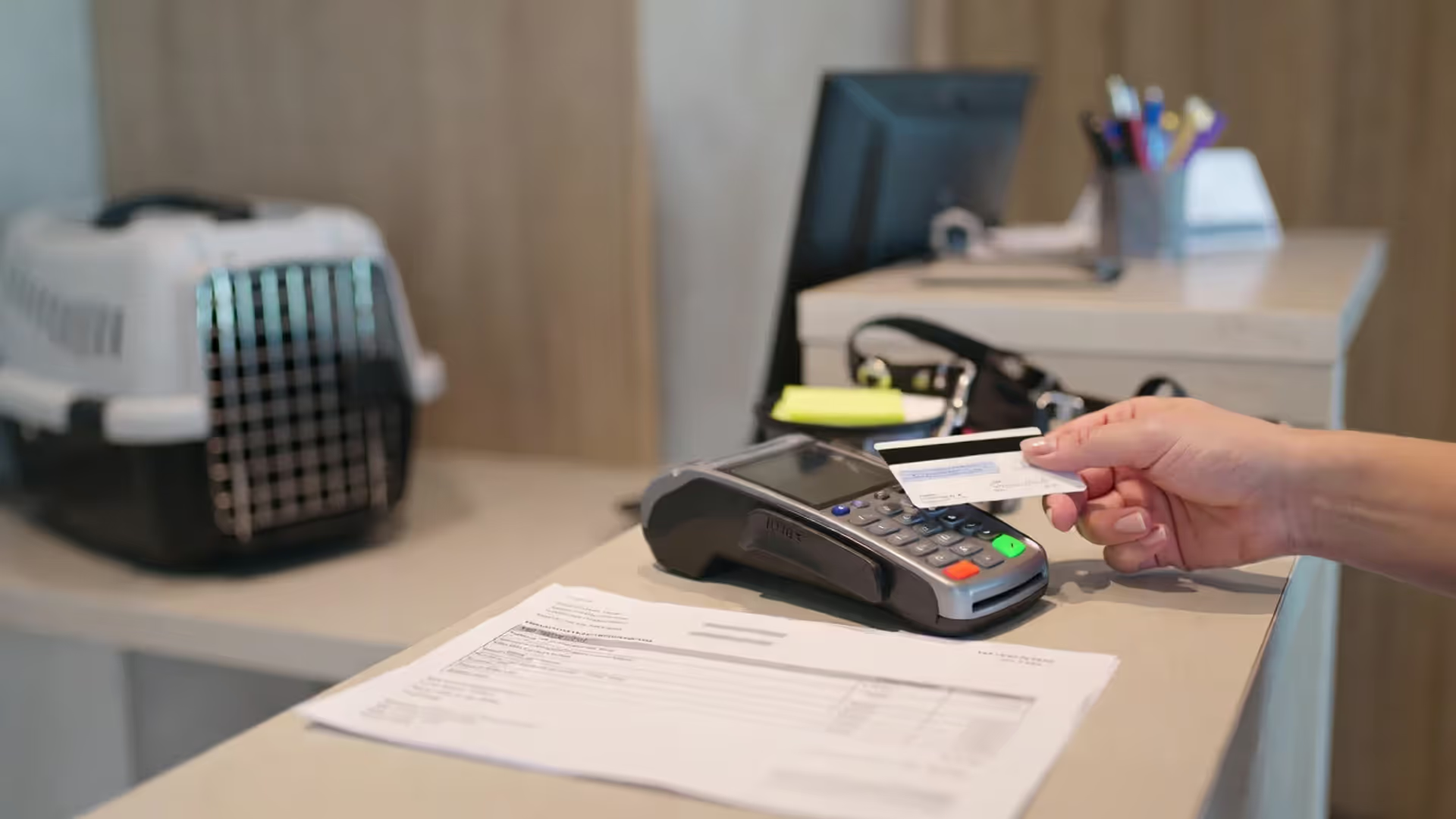
Ever stood at the vet's counter, wallet in hand, wondering how this whole pet insurance thing actually plays out? Here's the reality: you'll hand over your credit card first, pay that hefty bill in full, then start the paperwork dance to get money back. That's the core of how policies operate pets insurance—it's a reimbursement system, not the swipe-and-go experience you might have with your own health insurance.
The pet insurance process overview isn't complicated once you've done it a few times, but that first claim? It confuses almost everyone. You're dealing with waiting periods, deductibles that work differently than you'd expect, and documentation requirements that feel excessive until you understand why they matter. Each insurance company tweaks the details, but the fundamental workflow stays consistent across the industry.
What Happens When You Sign Up for Pet Insurance
You'll start by filling out an application—expect questions about breed, age, current weight, and whether your pet has seen the vet recently for anything beyond routine care. Have your pet's microchip number handy if they're chipped. The application takes maybe ten minutes if you have your vet's contact information ready.
Here's where companies diverge in their approach. Some will request full medical records dating back 12-24 months from your veterinarian before approving coverage. Others trust you to self-report and only dig into records if you file a claim later. That second approach gets you coverage faster but can lead to claim denials down the road if undisclosed conditions surface in old records.
Young, healthy pets sail through approval in 24-48 hours. Got a senior dog or one with a medical history? The underwriting team might take 5-7 days reviewing records. They're looking for patterns—that cough your dog had last spring might flag respiratory issues, or those three ear infections could signal allergies that'll be excluded from coverage.
Author: Brandon Keller;
Source: lamadone.net
Your policy won't activate the instant you're approved. Waiting periods exist specifically to prevent people from buying insurance Tuesday after their cat starts limping Monday. Standard waiting periods look like this:
- Accidents: 2-3 days (some companies offer next-day coverage)
- Illnesses: 14 days minimum
- Orthopedic issues: 6 months to a full year, depending on the insurer
During signup, you're selecting three variables that'll haunt every future claim calculation. Pick your annual deductible ($100, $250, $500, $750, or sometimes $1,000). Choose your reimbursement percentage—usually somewhere between 70% and 90%. Set your annual maximum, which might be $5,000, $10,000, $20,000, or unlimited. Lower deductibles and higher reimbursement rates mean fatter monthly premiums.
Your effective date matters more than you'd think. If your policy starts on January 1st with that standard 14-day illness waiting period, your pet won't have illness coverage until January 15th. Accidents would be covered starting January 3rd or 4th, depending on your specific policy terms.
The Coverage Period: What Your Policy Actually Does
Once you're past those waiting periods, you've entered the active coverage phase where the policy lifecycle pet insurance begins in earnest. Think of your policy as a financial agreement, not a discount card. It won't reduce prices at checkout—it reimburses you later for eligible expenses.

Author: Brandon Keller;
Source: lamadone.net
Comprehensive policies typically cover accidents (hit by car, snake bite, swallowed sock), illnesses (cancer, diabetes, infections), diagnostic workups (bloodwork, x-rays, ultrasounds), surgeries, hospitalization stays, prescription medications, and emergency clinic visits. Want coverage for annual checkups, vaccinations, flea prevention, and teeth cleanings? You'll need to add a wellness rider, which operates on a different reimbursement structure—usually a fixed schedule paying set amounts per service rather than percentages.
Pay closer attention to what's excluded than what's covered. Every policy excludes pre-existing conditions, cosmetic procedures (tail docking, ear cropping), breeding-related expenses, and elective surgeries. Some policies carve out breed-specific hereditary conditions or cap coverage for cancer treatment at lower amounts than other conditions.
Understanding Deductibles, Copays, and Annual Limits
Your deductible functions as the threshold you must cross before insurance starts paying anything. Pet insurance offers two structural approaches:
Annual deductible: You pay this amount once per policy year across all claims. Let's say you carry a $500 annual deductible and your dog needs emergency surgery in February costing $2,800. You'll pay that $500 deductible, and insurance calculates reimbursement on the remaining $2,300. If your cat needs dental surgery in April costing $1,200, insurance reimburses based on the full $1,200—you've already satisfied your deductible for the year.
Per-condition deductible: Each separate illness or injury triggers a new deductible. This structure drops your monthly premium but gets expensive fast if your pet develops multiple unrelated problems in one year.
The reimbursement percentage determines your copay on covered expenses after the deductible. Options usually include 70%, 80%, or 90%, though some companies offer 100% reimbursement at premium prices. That percentage directly impacts what you'll pay monthly—90% reimbursement might cost $30 more per month than 70% reimbursement for the same pet.
Annual limits cap the insurer's total payout during your policy year, which typically runs from your enrollment date rather than the calendar year. If you've selected a $10,000 annual limit and your pet's covered claims total $14,000 in year three of coverage, you're paying that extra $4,000 yourself, plus whatever portions come from deductibles and copays.
Pre-Existing Conditions and Coverage Gaps
Pre-existing conditions cause more claim denials and policyholder complaints than everything else combined. Insurance companies define these as any injury, illness, or symptom present before coverage started or during waiting periods. Seems straightforward until you see how broadly "symptom" gets interpreted.
Your cat vomited twice last month before you enrolled? If she develops inflammatory bowel disease next year, the insurer might deny those claims because vomiting was a documented symptom before coverage began. No formal diagnosis existed, but symptoms in medical records can trigger exclusions.
A handful of insurers offer cure periods for conditions that fully resolve. If your puppy had kennel cough in December, received treatment, stayed symptom-free for six months, some companies will cover future respiratory infections as new incidents. This varies wildly by company—some offer it, most don't.
Bilateral conditions create a frustrating coverage trap. Your dog tears the ACL in his left knee six months after enrollment. You file the claim, get reimbursed, everything's fine. A year later, the right knee tears. Many insurers will deny that second claim, classifying it as related to the pre-existing left knee injury even though the right knee was healthy when the first injury occurred.
Step-by-Step: Filing a Pet Insurance Claim
The insurance workflow pets follow when filing claims starts before you even leave your vet's office. You're paying that bill in full right now—keep a credit card with adequate room because emergency surgeries routinely hit $4,000 to $10,000.

Author: Brandon Keller;
Source: lamadone.net
After you've paid, you've got a window (usually 90 days, sometimes 180) to file your claim. Most insurers accept submissions through mobile apps, online member portals, or email. You can still mail paper claims, but expect your processing time to double.
Every claim needs these components:
- Completed claim form with your policy number and pet's information
- Itemized invoice showing each service, procedure, medication, and its individual cost
- Medical records from that specific visit—exam notes, test results, surgical reports
- Receipt proving you paid the full amount
What Documentation You'll Need
Itemization matters more than you'd expect. A receipt saying "office visit - $420" will bounce back rejected within 48 hours. You need documentation breaking down "examination fee ($95), complete blood count ($78), chemistry panel ($142), urinalysis ($45), antibiotic injection ($60)." Each line item must be visible.
Surgical claims require operative reports detailing exactly what procedure the surgeon performed, anesthesia monitoring records, and post-op care instructions. For diagnostic imaging like x-rays or ultrasounds, insurers want the radiologist's interpretation report, not just a notation that the image was taken.
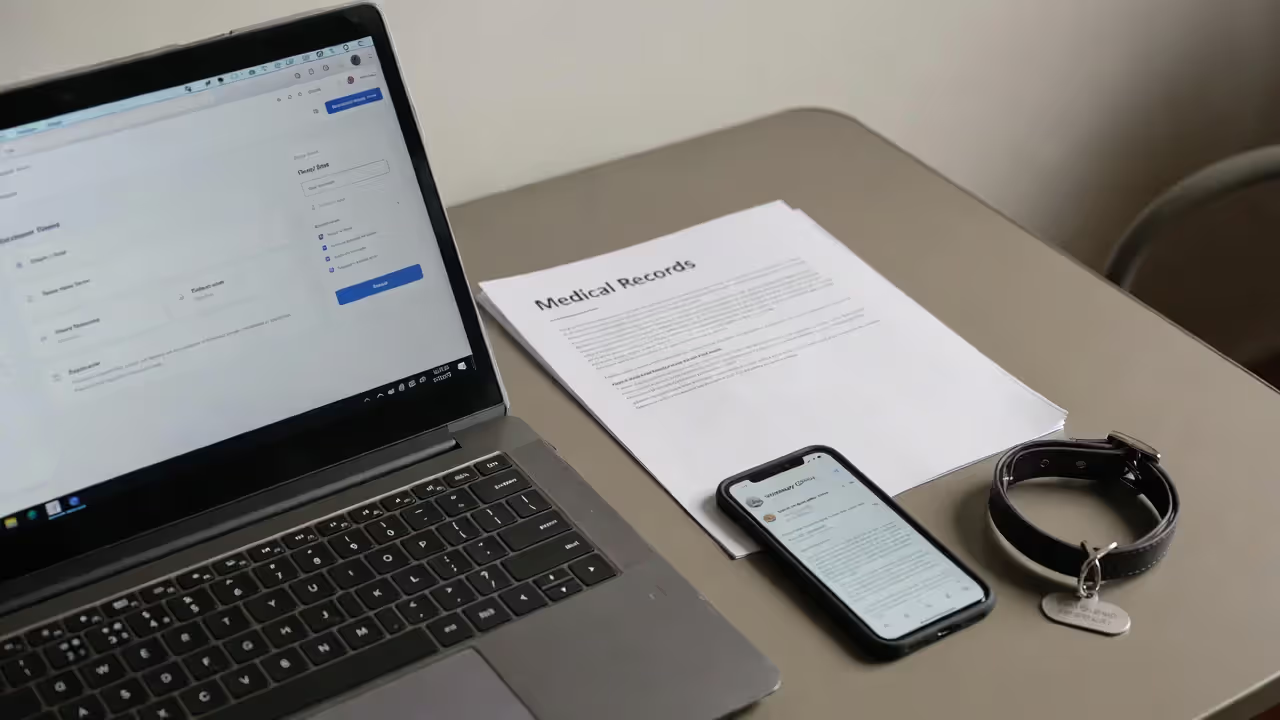
Medical records provide context that invoices can't. If your dog needed emergency surgery to remove a toy lodged in his intestines, those records establish this was an acute accident rather than chronic digestive disease. Records also help insurers verify whether pre-existing conditions might be involved.
First-time claims for newly diagnosed conditions often trigger requests for extended medical history. Your cat just got diagnosed with diabetes? The insurer might request 12-24 months of complete records to confirm no earlier symptoms existed like weight loss, increased thirst, or abnormal bloodwork. Once that condition is established as covered, future diabetes-related claims only need current visit documentation.
Direct Pay vs. Reimbursement Models
Traditional reimbursement means you're floating the entire cost until insurance sends you money—usually 7-14 days later. This model dominates the market because it keeps things simple between insurers and veterinary practices. Vets don't need special billing software or insurance company contracts.
A few insurers have rolled out direct pay programs where they send payment straight to your vet, eliminating your upfront cost. This only works at participating practices with integrated billing systems, which usually means larger corporate veterinary groups. Your neighborhood independent vet probably isn't set up for it. Emergency clinics and specialty hospitals rarely participate.
Some companies offer expedited reimbursement if you're in a financial bind—submit your claim and request 24-48 hour processing instead of the standard timeline. Expect to pay a $15-25 processing fee for this service.
How Reimbursement Works and When You Get Paid
The reimbursement process pets insurance uses involves mathematical steps that determine your actual payout. Understanding this calculation prevents that sinking feeling when the check arrives for less than you expected.
Here's the calculation sequence:
- Start with total charges from your vet bill
- Remove any non-covered items (exam fees if your policy excludes them, sales tax in some states, pre-existing conditions)
- Subtract your deductible if you haven't met it yet this policy year
- Multiply what's left by your reimbursement percentage
- Verify this doesn't exceed your remaining annual maximum

Author: Brandon Keller;
Source: lamadone.net
| Reimbursement Level | Total Vet Bill | Your Deductible | Amount Subject to Reimbursement | What Insurance Pays | Your Total Cost |
| 70% coverage | $3,000 | $500 | $2,500 | $1,750 | $1,250 |
| 80% coverage | $3,000 | $500 | $2,500 | $2,000 | $1,000 |
| 90% coverage | $3,000 | $500 | $2,500 | $2,250 | $750 |
Processing speed depends on claim complexity and documentation completeness. Simple claims with everything attached process in 5-10 business days. Complex claims requiring the insurer to contact your vet or request additional records can stretch to 15-30 days.
Payment arrives via direct deposit (fastest option, 1-2 business days after approval), paper check (add 5-7 days for postal delivery), or PayPal with participating insurers. Set up direct deposit during enrollment to avoid waiting for checks.
Several factors can shrink your payout below your calculation:
Benefit schedules: Some budget policies cap reimbursement for specific procedures regardless of your vet's actual charges. If your policy maxes out ACL surgery reimbursement at $1,500 but your vet charges $3,800, you're getting $1,500 minus deductible and copay—then paying the remaining $2,300+ yourself.
Usual and customary limits: If your vet's charges significantly exceed regional averages, insurers may reduce reimbursement to align with typical pricing. When most area vets charge $700-900 for dental cleaning but yours charges $1,600, the insurer might reimburse based on $850.
Exam fee exclusions: Many policies exclude routine examination fees, covering only diagnostics and treatment. A $680 vet bill might include an $85 exam fee that gets subtracted before any reimbursement math happens.
I see the same confusion every single time a client files their first claim. They genuinely believe it works like their own health insurance—show your card, pay a copay, done. When they discover they're paying $2,500 upfront for surgery, then waiting two weeks for a check, reality hits hard. I tell every new puppy owner to read their policy while their dog is healthy, not while they're standing in my lobby facing a $4,000 emergency bill.
— Dr. Jennifer Martinez
Common Mistakes That Delay or Deny Your Claim
Missing documentation causes more delays than any other single issue. Submit your claim with just an invoice and no medical records? Automatic 10-14 day delay while they request additional information and wait for you to respond. Always send complete documentation the first time.
Filing after the deadline results in automatic denial—no exceptions, no appeals, no matter how valid the claim. Most policies give you 90 days from the service date, though some extend to 180 days. File on day 92, and you're out of luck. Set phone reminders immediately after major vet visits.
Incomplete claim forms frustrate adjusters and stall processing. Common errors: forgetting your signature, leaving the diagnosis field blank, not indicating whether this is a new condition or ongoing treatment, missing your policy number. Review every single field before hitting submit.
Submitting claims for services your policy explicitly doesn't cover wastes everyone's time. If dental care sits in your exclusions list and you submit a $380 dental cleaning claim, it's getting denied. Review your policy's exclusion section before filing anything.
Not disclosing previous symptoms related to your claim triggers pre-existing condition denials. Your dog limped occasionally before enrollment but you didn't mention it. Now you're filing an ACL tear claim. The insurer will request complete medical history, discover that earlier limping, and likely deny coverage based on pre-existing condition language.
Ignoring requests for additional information within their deadline (typically 30 days) leads to automatic claim closure. If they request veterinary records and you don't respond within that window, they'll close your claim without payment—you'll need to start completely over.
Using the wrong submission method for your claim type can route it to the wrong department, adding weeks to processing. Some insurers maintain separate workflows for accident claims versus illness claims versus wellness claims. Submitting a surgical claim through the wellness portal creates confusion and delay.
How Pet Insurance Costs Change Over Time
The policy lifecycle pet insurance follows includes predictable premium increases as your pet ages. Expect annual increases of 5-15%, with steeper jumps at milestone ages. That $45 monthly premium for your 2-year-old Golden Retriever might climb to $70/month by age 6 and $110/month by age 10.
Breed-specific pricing reflects actuarial data about which breeds file the most expensive claims. Insuring a Great Dane, French Bulldog, or Rottweiler costs substantially more than a mixed breed or breeds with fewer hereditary issues. If you've got a breed prone to expensive conditions like Bulldogs with their respiratory issues, your premium increases will outpace general inflation consistently.
Renewal happens automatically each year unless you actively cancel. You'll receive renewal documents 30-60 days before your policy anniversary showing rate changes, coverage adjustments, or policy term modifications. Insurers can raise rates and adjust terms at renewal, but they can't single you out for increases based on your individual claim history—rate changes apply across all policyholders in your rating category (age, breed, location).
Geographic location drives significant pricing differences. Pet insurance in Manhattan costs 40-60% more than identical coverage in rural Oklahoma because veterinary costs vary dramatically by region. Urban areas with high costs of living mean higher vet bills, which means higher insurance premiums.
You can adjust coverage variables at renewal to control costs. Raising your deductible from $250 to $500 typically drops your monthly premium by $12-18. Lowering reimbursement from 90% to 80% creates similar savings. Reducing your annual maximum from unlimited to $10,000 also cuts premiums but increases your financial exposure.
Watch for multi-pet discounts (usually 5-10% off when insuring multiple pets) and annual payment discounts (paying the full year upfront often saves you one month's premium compared to monthly payments). These small savings compound significantly over 10-15 years.
Switching insurers becomes increasingly difficult as pets age because conditions accumulate. If your 7-year-old Labrador has developed arthritis, ear infections, and skin allergies under your current policy, switching to a different company means all three conditions become pre-existing and excluded under the new coverage. Most pet owners find they're better off keeping their original policy despite premium increases rather than starting fresh with a mountain of exclusions.
FAQ: Your Pet Insurance Questions Answered
Pet insurance functions as a financial planning tool that transforms unpredictable veterinary costs into predictable monthly payments. The system demands that you understand waiting periods, maintain available credit for upfront costs, keep organized records, and submit claims promptly. Unlike your own health insurance, you're controlling the entire process from selecting your veterinarian to gathering documentation to submitting claims.
The reimbursement model requires you to have available credit or savings to cover initial veterinary expenses, particularly during emergencies. Building a pet emergency fund of $1,500-3,000 bridges the gap between paying your vet and receiving your reimbursement check. This financial cushion prevents impossible decisions during veterinary emergencies when your pet needs immediate treatment.
Success with pet insurance comes down to enrolling while your pet is young and healthy, maintaining continuous coverage through all life stages, thoroughly understanding your specific policy's terms and exclusions, and keeping detailed records of every veterinary visit. Pet owners who view insurance as a long-term commitment rather than a year-by-year decision extract maximum value and experience minimal frustration with claims processing.