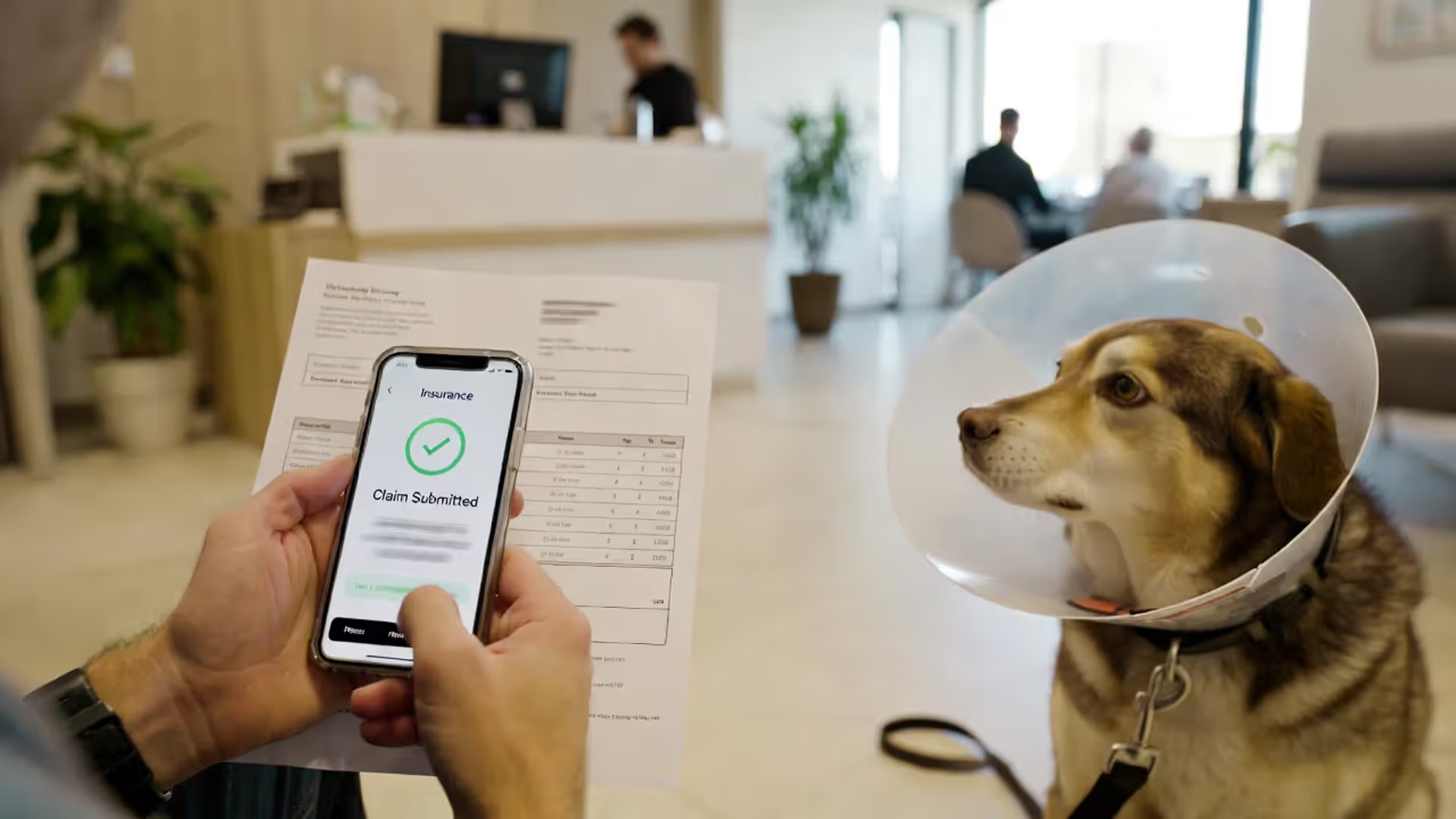
Know what your policy really covers.
Dog Bite Insurance Claims: How to File, What's Covered, and What to Expect

Content
Your dog just bit the neighbor's kid. Or maybe the UPS driver. Your heart's racing, you're worried about the victim, and somewhere in the back of your mind, you're wondering: "Will my insurance cover this?" Here's what catches most people off guard—your homeowner's or renter's policy probably already includes protection for exactly this situation, but only if you know how to use it correctly.
The average dog bite claim costs insurers about $50,000, according to the Insurance Information Institute's latest data. That's not pocket change. And here's the kicker: most homeowners have no idea they're carrying coverage for dog incidents until disaster strikes. Let me walk you through everything you need to know about protecting yourself financially when teeth meet skin.
How Dog Bite Liability Coverage Works in Homeowners and Renters Insurance
Your standard homeowner's policy contains a section called personal liability coverage. Think of it as your financial shield against lawsuits—and yes, it extends to your four-legged family members. This isn't some special rider you need to purchase separately. It's already sitting there in your policy, quietly waiting to do its job.
Here's how the numbers typically shake out: most policies start with liability limits around $100,000, though plenty of people carry $300,000 or more. When someone gets bitten and decides to come after you for compensation, this coverage handles their medical bills, lost paychecks, pain and suffering payments, and even your legal defense if things escalate to court. All of this comes out of your liability bucket—up to whatever limit you selected when you bought the policy.
The coverage follows your dog around like a shadow. Backyard bite? Covered. Incident at the park during your morning walk? Still covered. Your dog nipped someone at your sister's barbecue across town? Yep, covered. Location doesn't matter nearly as much as the fact that your dog caused the injury and you're legally responsible.
Once you report an incident, your insurance company assigns someone called a claims adjuster. This adjuster investigates what happened, figures out who's at fault, and either negotiates a settlement with the injured person or prepares to defend you if they sue. You're not navigating this alone—that's literally what you've been paying premiums for all these years.
But—and this is a big but—certain dogs make insurance companies nervous. Really nervous. Pit Bulls, Rottweilers, German Shepherds, Dobermans, Akitas, Chow Chows, and any wolf-hybrid breeds appear on most insurers' "we'd rather not" lists. Some companies flat-out refuse to write policies if you own these breeds. Others will cover you but make you sign paperwork that specifically excludes your dog from liability protection. A few charge premiums so steep you'll need to sit down when you see the quote.
Pennsylvania, Michigan, and New York have actually banned this breed discrimination by law. Everywhere else? Insurance companies can pretty much do what they want. And what they want is to avoid expensive bite claims.
Then there's the bite history problem. Let's say your dog already bit someone last year. Your current insurer might've kept you on after that first incident, but they're watching closely now. Many carriers implement what I call a "two strikes and you're out" policy—actually, more like "one strike and we're done." After your dog's first documented bite, expect one of three responses: they'll exclude that specific animal from coverage going forward, they'll jack up your rates by 30-50%, or they'll simply choose not to renew your policy when it expires.
Step-by-Step: Filing a Dog Bite Claim With Your Insurance Company
Time matters more than you'd think when dealing with the claim process dog bites insurance requires. I've seen people wait three weeks to report an incident because they hoped it would blow over. Spoiler alert: it never blows over. It gets worse.

Author: Ashley Reynolds;
Source: lamadone.net
Call your insurance company within 24 hours—48 hours maximum. Yes, even if the bite seems minor. Even if the person said "don't worry about it." Even if you're convinced nothing will come of it. Every policy contains language about "prompt notification," and insurance companies use delayed reporting as grounds to deny coverage all the time. Don't give them that ammunition.
During your initial call, stick to the basics. When did it happen? Where exactly? Who got bitten? What injuries did you observe? Did police or animal control show up? That's it. Don't start theorizing about why your dog reacted that way. Don't tell them "Fluffy's never aggressive" if that's not strictly true. Observable facts only.
Within a day or two, someone from the insurance company reaches out—this becomes your main point of contact going forward. They'll want to schedule a recorded statement, which sounds scarier than it is. They're gathering information, not trying to trap you. Just answer their questions honestly and completely.
Documentation You'll Need to Submit
Get these items together before you talk to the adjuster:
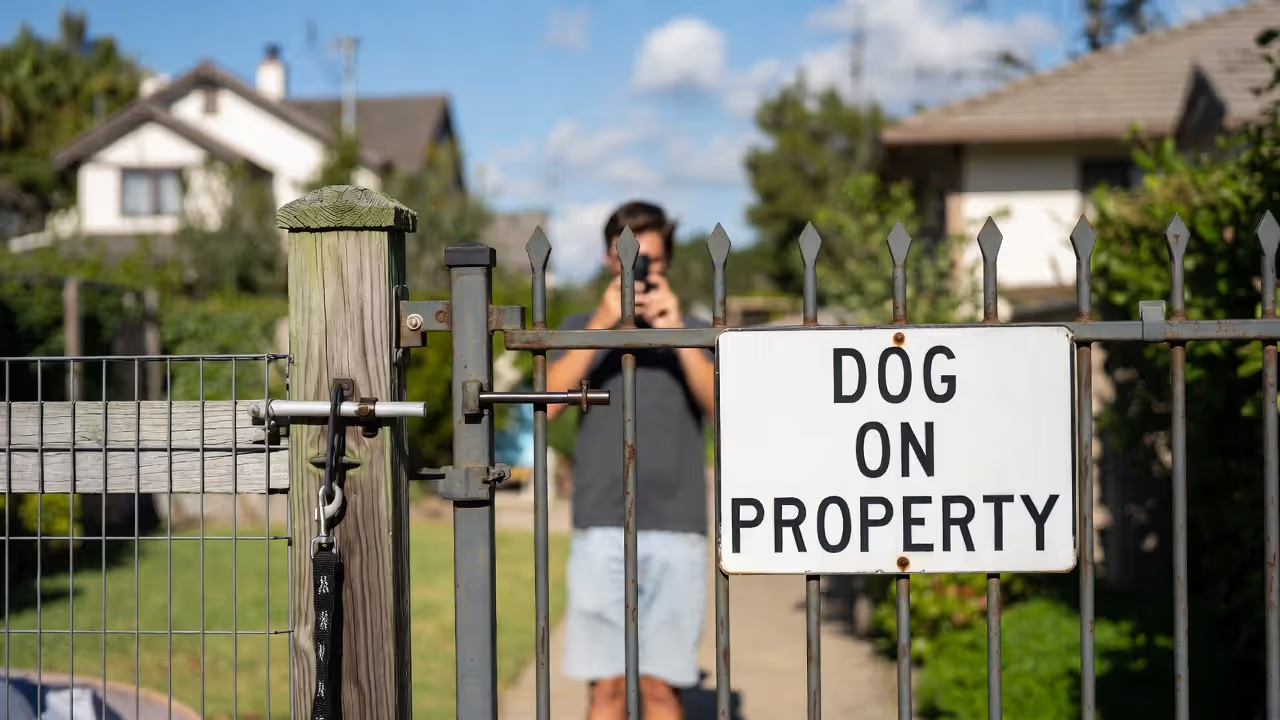
Photos of where it happened. Snap pictures of your yard, the fence, any "Beware of Dog" signs you have posted, gates, leashes—whatever's relevant to how the incident unfolded. If your dog was restrained behind a six-foot fence and someone climbed over, those photos become crucial evidence.
Your dog's vet records. They need proof of rabies vaccination first and foremost. Beyond that, your vet records show you've been a responsible owner who keeps up with wellness visits. A healthy, well-cared-for dog with no history of aggressive behavior documented in vet notes? That helps your case considerably.
Witness accounts. Anyone see what happened? Get their version in writing, along with their phone number and address. Neighbor saw the whole thing from his window? That witness statement could be worth its weight in gold, especially if it confirms the victim provoked your dog or ignored posted warnings.
Official reports. Police reports and animal control documentation carry significant weight because they're created by neutral third parties. If authorities responded to the incident, get copies of every report they filed.
Your dog's complete background. Training certificates, obedience class completion records, any prior incidents (yes, you need to disclose these), behavioral assessments—compile it all. Hiding past problems is a terrible strategy. Adjusters find out eventually, and when they do, they can void your entire claim for material misrepresentation.
Injury photos if available. You probably won't have these, since the victim typically documents their own injuries. But if you saw the wounds immediately after the bite, having your own photographic record provides an unbiased view of the initial injury severity.
Author: Ashley Reynolds;
Source: lamadone.net
Timeline: What Happens After You File
The first week moves fast. Your adjuster digs into the details—reviewing what you told them, interviewing the person who got bitten, examining all the documentation you submitted. They're making two key determinations: does your policy actually cover this situation, and how much is this claim likely to cost?
Weeks two through four bring settlement discussions for straightforward cases. Minor injuries—scratches, small puncture wounds that only required an urgent care visit—often settle within 30 days. The adjuster makes an initial offer, usually somewhere between $5,000 and $15,000 for these less serious bites. The injured person can take it, reject it, or counter with a different number. Negotiations happen, and hopefully everyone reaches an agreement.
Months two through six apply to messier situations. Severe injuries, disputed facts about what happened, or cases where the victim hired an attorney all take longer to resolve. Sometimes the injured person is still getting medical treatment, which means nobody knows the final cost yet. You can't settle a claim when someone's still seeing doctors twice a week for reconstructive surgery. The insurance company might bring in independent medical examiners or hire experts to analyze liability questions.
At the six-month mark and beyond, lawsuits can enter the picture. If negotiations completely break down, the victim may sue you directly. Here's where your insurance coverage really proves its value—your carrier provides lawyers to defend you, and you won't see a bill for that legal representation (as long as the case stays within your policy limits). Most lawsuits still settle before ever seeing a courtroom, but once litigation starts, you're looking at potentially 12-18 months before resolution.
I can't stress enough how critical immediate, honest reporting is. I've watched homeowners completely lose coverage because they downplayed their dog's history or waited a month to report. We can't build a solid defense if we're blindsided by facts that surface later. Tell us everything, tell us right away—that's how you get the best outcome.
— Jennifer Ramirez
Common Dog Bite Settlement Amounts and What Influences Them

Author: Ashley Reynolds;
Source: lamadone.net
Settlement numbers bounce around wildly depending on what happened and who got hurt. I'll give you typical ranges, but remember—every case is different, and these figures just show you what's common, not what's guaranteed.
| Type of Injury | Medical Bills Usually Run | Settlement Typically Falls Between | What Drives the Number |
| Minor (scratches, bruising, no stitches needed) | $500 to $2,500 | $3,000 to $10,000 | Where on the body, how much pain, any infection complications |
| Moderate (puncture wounds, required stitching, antibiotics prescribed) | $2,500 to $15,000 | $10,000 to $40,000 | How many wounds, facial involvement, whether scarring develops |
| Severe (surgery required, hospitalization, nerve damage present) | $15,000 to $100,000+ | $40,000 to $200,000+ | Permanent problems, missed work, ongoing psychological issues |
| Catastrophic (major disfigurement, amputation, fatality) | $100,000 to $500,000+ | $200,000 to $1,000,000+ | Victim's age and career, state laws on damage caps, available policy limits |
These ranges reflect data from thousands of actual dog bite settlements insurance companies have paid. But what makes one case settle for $10,000 while another reaches $200,000?
Medical expenses form the foundation. A bite requiring reconstructive surgery and months of physical therapy costs exponentially more than one needing only emergency room stitches and a week of antibiotics. Future treatment gets factored in too—if someone needs additional surgeries down the road, that projected cost gets added to the settlement.
Lost wages matter significantly. Miss a week of work as a software engineer making $150,000 annually? That's roughly $3,000 in lost income. Miss three months as a retail worker earning $35,000? That's about $8,750. These wages get calculated and added to the settlement demand.
Scarring changes everything. Facial bites, particularly to children, generate the highest settlements because the disfigurement is permanent and highly visible. I've seen relatively minor medical bills—maybe $8,000 for initial treatment—balloon into six-figure settlements because the child now has noticeable scars on their cheek. That scar affects them for potentially 70+ years.
The victim's age and career create huge variations. Young children receive higher settlements because they live with scarring longer. Working adults whose appearance directly impacts their income—salespeople, actors, models, television reporters—can claim substantial career damages. A facial scar might not affect a software developer's earning potential, but it could devastate a model's career.
Your dog's documented history weighs heavily. First-time incident with a dog who's never shown aggression? Settlements tend toward the lower end of the range. Dog with prior complaints to animal control or previous bite incidents? Expect demands to double. That history proves you knew the dog was dangerous, which strengthens the victim's case.
State laws dramatically affect outcomes. Some states enforce "strict liability" rules—meaning you're automatically responsible for any bite, period, regardless of your dog's history or your own negligence. Other states follow a "one-bite rule," giving dogs one free incident before owners become liable. States with contributory negligence laws reduce settlements when the victim shares some fault—like teasing the dog or trespassing on your property.
Policy limits act as a ceiling. Smart plaintiffs' attorneys research your coverage limits before negotiating. If you're carrying only $100,000 in coverage but the injuries justify $200,000, they'll demand your full policy limit and then decide whether pursuing your personal assets for the remaining $100,000 makes financial sense.
5 Costly Mistakes Dog Owners Make When Handling Bite Claims
Mistake #1: Apologizing your way into liability. I get it—someone got hurt, you feel terrible, human decency compels you to express remorse. But there's a difference between "I hope you're okay, let me get your information for my insurance company" and "This is completely my fault, I knew Rex was aggressive, I should've kept him locked up." That second version? You just handed them evidence for their lawsuit. Express concern without accepting blame.
Mistake #2: The "maybe they won't file a claim" gamble. Some owners watch the calendar tick by after a bite, hoping the victim decides not to pursue compensation. Meanwhile, their insurance policy says notify us "immediately" or "as soon as practicable" after an incident. Three weeks later when the victim's attorney sends a demand letter, your insurance company asks why you waited so long to report. Delayed notification gives them a legitimate reason to deny your entire claim. Don't gamble—report immediately, even if you suspect nothing will come of it.
Mistake #3: Trusting your memory instead of documentation. Six months into a claim investigation, can you remember exactly where you were standing when the bite happened? What the weather was like? Whether your gate was latched? Whether the victim said anything before approaching your dog? Memories fade and details blur. Without contemporaneous photos, written notes, and witness statements, the case becomes your word against theirs. The victim might claim they were invited guests when they actually hopped your fence. They might say your dog attacked unprovoked when actually they cornered your dog against a wall. Document everything the day it happens.
Mistake #4: Skating by with minimum coverage. That standard $100,000 liability limit your policy came with? It barely scratches the surface of a serious dog bite claim. Once medical bills, lost wages, pain and suffering, and scarring damages push past $100,000—which happens more often than you'd think—you're personally on the hook for everything above your limit. Plaintiffs can pursue your bank accounts, retirement savings, home equity, and garnish your wages for years. An umbrella policy adding $1-2 million in additional coverage costs maybe $300 annually. That's $25 per month to protect everything you've worked for. Why wouldn't you carry it?
Mistake #5: Flying solo instead of getting legal advice. Your insurance company provides defense attorneys if someone sues you, and for minor claims that settle quickly, you probably don't need your own lawyer. But serious bites—anything involving surgery, hospitalization, facial scarring, or settlement demands at your policy limit—warrant at least a consultation with your own attorney. Your insurer's lawyers represent the insurance company's interests, which usually align with yours but not always perfectly. They're focused on settling within policy limits and closing the file. Your personal attorney ensures the settlement actually protects you from future claims and that you're not inadvertently exposed to additional liability. Most initial consultations cost nothing. Use them.
Real Dog Bite Claim Examples: Approved vs. Denied Cases
Author: Ashley Reynolds;
Source: lamadone.net
Looking at actual dog bite claim examples insurance adjusters have processed shows you how coverage decisions play out in the real world.
Example #1 - Claim Paid: Mail Carrier Incident
Frank's Labrador Retriever bit the postal worker who entered his fenced yard to deliver a package. Frank had posted "Beware of Dog" signs on both gates. The carrier needed stitches on her hand and antibiotics for infection. Medical expenses totaled $8,500.
Frank's insurance company settled for $20,500—covering the medical bills plus $12,000 for pain and suffering. Why'd they pay despite the warning signs and fence? Because postal workers have legal authorization to access your property for deliveries. The warning sign actually worked against Frank—it demonstrated he knew the dog posed a risk but didn't adequately control the animal. The fence should've been kept latched when Frank knew a delivery was coming.
Example #2 - Claim Denied: Breed Concealment
Maria owned a Pit Bull mix but told her insurance agent she had a "mixed breed dog" without specifying the breeds involved. When her dog bit a child at her daughter's birthday party—causing facial lacerations requiring 30 stitches—the family filed a claim seeking compensation. The insurance company investigated, discovered the Pit Bull lineage, found a breed exclusion in Maria's policy, and denied coverage completely.
Maria faced a $75,000 lawsuit with no insurance protection. She'd committed material misrepresentation by concealing her dog's breed. If she'd been upfront, the insurer would've either excluded the dog specifically, charged higher premiums, or declined to offer coverage at all. Because she essentially lied by omission, they voided her coverage and left her hanging. She ended up settling the lawsuit using her retirement savings.
Example #3 - Claim Paid But Policy Cancelled: Second Bite
Tom's German Shepherd had bitten a jogger two years earlier—a minor incident he'd reported and his insurance had covered. Last summer, his dog bit a neighbor's child who reached through Tom's fence trying to pet the dog. This bite required emergency treatment and follow-up care, totaling $18,000 in bills. The family demanded $60,000.
Tom's insurance company negotiated the claim down to $45,000 (contributing negligence by the child reduced the amount) and paid it. But they also non-renewed Tom's policy effective at the end of his term. They fulfilled their obligation on the second bite but made it clear they wouldn't offer him coverage for a third year. Tom spent the next three months calling insurance companies trying to find anyone willing to cover him with a dog that had two documented bites. He eventually found coverage at nearly triple his previous premium.
When Your Insurance Won't Cover a Dog Bite: Exclusions and Gaps
Understanding what liability dog bites insurance specifically won't cover prevents ugly surprises when you actually need protection.
Breed-specific exclusions wipe out coverage for designated dogs. Your policy might explicitly state "We do not cover injuries caused by Pit Bulls, Rottweilers, Dobermans..." followed by a list of breeds. Own one of those breeds? You have zero liability protection for bite incidents, period. Some homeowners discover this exclusion only when filing a claim. Pull out your policy right now and check your declarations page—look for any exclusions section mentioning dog breeds or specific animals.
Known vicious dog exclusions apply after your dog shows aggression. Once your dog bites someone or authorities document aggressive behavior (animal control complaints, attacks on other animals, threatening behavior reported by neighbors), insurers frequently add an exclusion naming your specific dog. "We exclude from coverage any incidents involving Rex, the German Shepherd residing at your address." Your other liability coverage continues working fine—just not for that particular dog.
Business use voids your personal coverage. Breeding dogs for sale? That's a business. Running a dog walking service? Business. Guard dog services? Business. Even therapy dog work often crosses into commercial activity. Personal liability coverage on homeowner's policies doesn't extend to business operations. You need commercial insurance for business-related dog activities, which costs significantly more than personal coverage.
Intentional acts fall completely outside insurance protection. Command your dog to attack someone? Deliberately release your aggressive dog to threaten someone? Insurance covers accidents and negligence—never intentional harm. Adjusters investigate carefully when dog bites seem suspicious, looking for evidence the owner intentionally caused the incident.
Timing gaps leave you exposed. This seems obvious but causes confusion constantly. Bite occurs before your policy started? Not covered. Bite happens after you cancelled to save money? Not covered. Even a lapse of just a few days between policies can create an expensive gap where you're personally liable for any incident.
Household members typically can't file liability claims. If your dog bites your spouse, child, or anyone else living in your home, the personal liability section doesn't apply. It's designed to protect you from third-party claims—outsiders who get injured. Your family's health insurance would need to cover medical expenses for household members injured by your dog.
FAQ: Dog Bite Insurance Claims Answered
Protecting Yourself Before a Bite Occurs
Dog bite insurance claims create financial stress and emotional turmoil that smart preparation can minimize dramatically. Right now—today, before anything happens—pull out your homeowner's or renter's policy. Find your liability limits. Check for any breed exclusions. Verify your specific dog has coverage. If you're carrying only $100,000 in liability protection, seriously consider increasing to $300,000 and adding a $1-2 million umbrella policy on top.
Document everything about your dog regularly. Keep vaccination records accessible. File away training certificates, obedience class completion paperwork, and any behavioral assessments you've had done. These records prove responsible ownership and can significantly reduce your liability if an incident occurs.
Never fall into the "it won't happen to me" trap. Even gentle, well-trained dogs bite under certain circumstances. Pain triggers biting. Fear triggers biting. Surprise triggers biting. Protective instincts trigger biting. The mail carrier who startles your sleeping dog, the toddler who yanks your dog's tail, the stranger who approaches aggressively during your evening walk—these create bite scenarios regardless of your dog's normal temperament.
Understanding how dog bite liability claims insurance functions, carrying adequate coverage limits, and knowing the claim process before you need it transforms a potential financial disaster into a manageable insurance matter. The difference between a resolved claim and personal bankruptcy often comes down to three things: proper preparation, adequate coverage, and immediate honest action when something goes wrong.