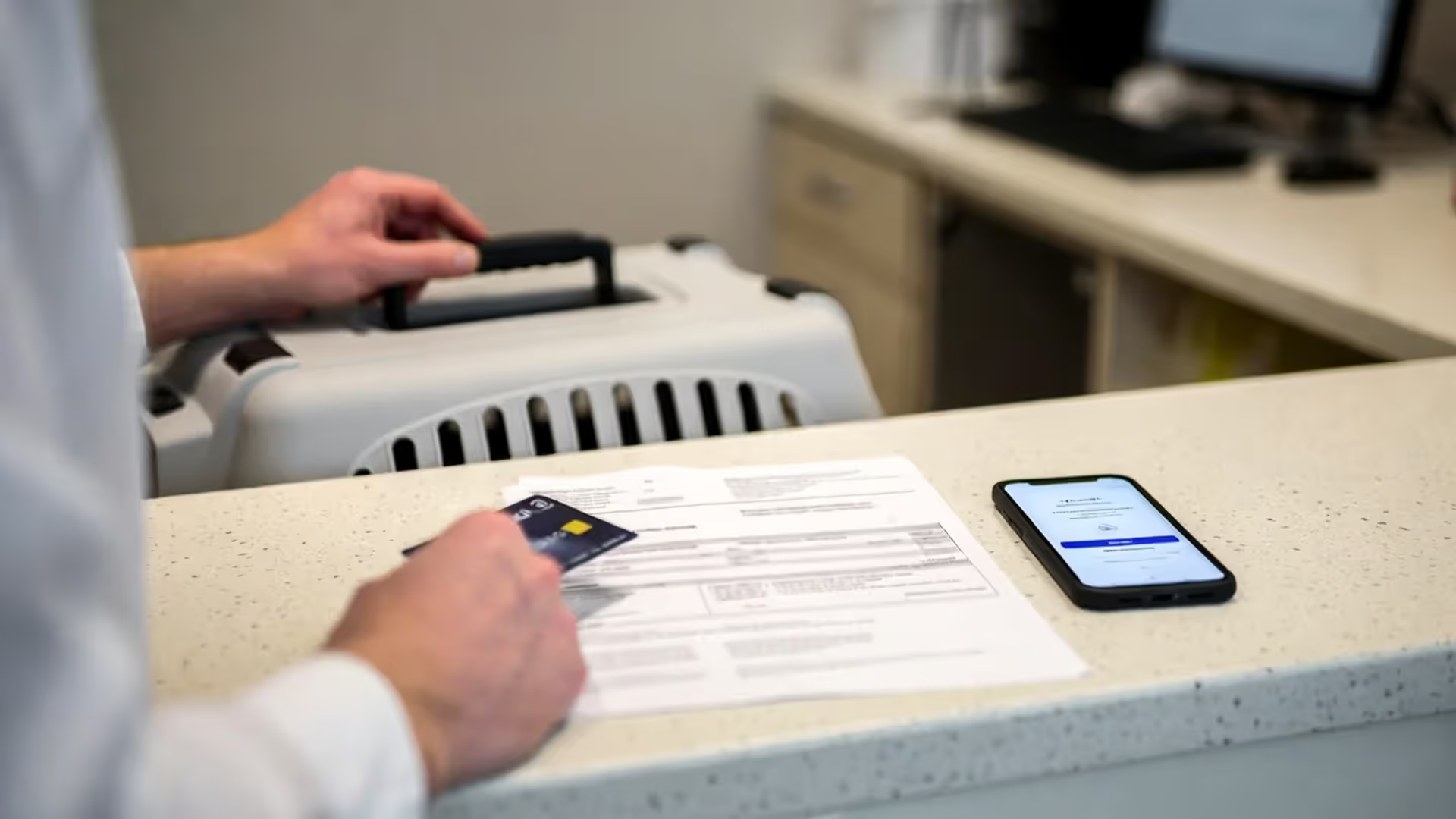
Cat Insurance Cost — What You'll Actually Pay Each Month
Cat Insurance Cost — What You'll Actually Pay Each Month

Content
Most cat owners shopping for insurance expect to pay somewhere between $15 and $50 per month. Reality? That range barely scratches the surface. Your actual premium depends on dozens of variables, and understanding them can save you hundreds of dollars annually while still protecting your cat when emergencies strike.
How Much Does Cat Insurance Cost Per Month?
The average cat insurance premium in the United States sits around $29 per month for accident and illness coverage. That translates to roughly $348 annually—a figure that sounds manageable until you realize it's just the starting point.
Accident-only plans begin as low as $10 per month for young, healthy cats in affordable regions. Comprehensive accident and illness policies for senior cats in high-cost states can exceed $80 monthly. The cat insurance monthly price you'll actually see depends on your specific situation, not national averages.
Here's what real pet owners pay across different scenarios: a two-year-old domestic shorthair in Ohio might cost $22 monthly with a $250 deductible and 80% reimbursement. That same cat in New York City could run $38 for identical coverage. Age that cat to twelve years, and the premium jumps to $65–$75 regardless of location.
The cat insurance price range widens dramatically when you factor in coverage enhancements. Adding wellness coverage (routine exams, vaccinations, dental cleanings) typically adds $15–$25 monthly. Lowering your deductible from $500 to $100 might increase premiums by 30–40%. Bumping reimbursement from 70% to 90% adds another 15–20% to your bill.
Most providers offer monthly payment options, but paying annually usually nets you a 5–10% discount. That $29 monthly premium becomes $313 annually instead of $348—a small but meaningful difference over your cat's lifetime.
What Determines Your Cat Insurance Premium?
Insurance companies use actuarial tables and claims data to calculate risk. The higher the likelihood your cat will need expensive veterinary care, the more you'll pay. These factors carry the most weight in pricing decisions.

Author: Brandon Keller;
Source: lamadone.net
Your Cat's Age and Breed
Age dominates pricing calculations. Kittens under one year typically qualify for the lowest premiums because they haven't developed chronic conditions yet. A healthy six-month-old mixed breed might cost $18 monthly to insure.
That same cat at age three pays around $26 monthly. By age eight, expect $42. At twelve years old, premiums often exceed $70 for the same coverage level. Some insurers won't even accept new enrollments for cats over fourteen years old.
Breed matters less for cats than dogs, but certain purebreds still trigger higher premiums. Persian cats face increased risk for polycystic kidney disease. Maine Coons show higher rates of hypertrophic cardiomyopathy. Insurers price these genetic predispositions into their rates. A Persian kitten might cost $5–$8 more monthly than a domestic shorthair of the same age.
Mixed-breed cats generally qualify for the best rates since they typically enjoy better genetic diversity and fewer hereditary conditions.
Where You Live
Your ZIP code significantly impacts what you'll pay. Veterinary care costs vary wildly across the country, and insurers adjust premiums accordingly.
Cat owners in California, New York, and Massachusetts consistently see the highest premiums—often 40–60% above the national average. A routine emergency visit in San Francisco might cost $800; the same visit in rural Tennessee runs $350. Insurers price their policies to reflect these regional differences.

Author: Brandon Keller;
Source: lamadone.net
Urban areas within any state cost more than rural ones. Manhattan cat owners pay more than those in upstate New York. Los Angeles residents pay more than those in Fresno. The concentration of specialty veterinary hospitals and higher operating costs in cities drive these differences.
Some states also have regulatory requirements that affect pricing. States with mandated coverage provisions or stricter insurance regulations sometimes see slightly higher premiums across the board.
Coverage Type and Deductible Choices
Your deductible represents how much you'll pay out-of-pocket before insurance kicks in. This single choice dramatically affects your cat insurance monthly price.
Annual deductibles typically range from $100 to $1,000. Choosing a $100 deductible might cost you $45 monthly. Increase that to $500, and your premium might drop to $28. Select a $1,000 deductible, and you could pay just $22.

Author: Brandon Keller;
Source: lamadone.net
The math here requires honest self-assessment. If your cat has ongoing health issues requiring multiple vet visits annually, a lower deductible makes sense despite higher premiums. For a healthy young cat, a higher deductible keeps monthly costs down while still protecting against catastrophic expenses.
Some insurers offer per-incident deductibles instead of annual ones. You'll pay the deductible for each new condition or accident. These plans often feature lower premiums but can cost more if your cat develops multiple issues in one year.
Coverage caps also affect pricing. Policies with $5,000 annual limits cost less than those with $15,000 limits. Unlimited annual coverage commands the highest premiums but provides the most protection for serious illnesses like cancer or chronic conditions requiring years of treatment.
Reimbursement Percentage
After you meet your deductible, your insurer reimburses a percentage of covered expenses. Standard options include 70%, 80%, and 90% reimbursement.
A policy with 70% reimbursement might cost $25 monthly. Increase to 80%, and you'll pay around $29. Jump to 90%, and expect $33–$35. The difference seems small monthly, but it compounds over time and significantly affects your out-of-pocket costs during claims.
Consider a $5,000 surgery. With 70% reimbursement, you pay $1,500 plus your deductible. At 90%, you pay $500 plus your deductible. That $1,000 difference dwarfs the extra $96 annually you'd spend on higher premiums.
Most financial advisors suggest 80% or 90% reimbursement for cats. The premium difference remains manageable while providing substantially better protection during expensive treatments.
Cat Insurance Pricing by Coverage Level
Pet insurance falls into three main categories, each with distinct pricing structures and benefits. Understanding what you actually receive at each tier prevents both overpaying and underinsuring.
Accident-only coverage represents the bare minimum. These policies cover injuries from accidents—hit by car, broken bones, lacerations, foreign object ingestion, poisoning. They exclude all illnesses, chronic conditions, and preventive care. These plans make sense only for owners with substantial emergency savings who want protection against catastrophic accidents.
Accident and illness policies cover both injuries and sicknesses. This includes infections, cancer, digestive issues, urinary problems, diabetes, kidney disease, and thousands of other conditions. These comprehensive plans represent what most people mean when they discuss cat insurance. They provide the best value for most cat owners.
Accident and illness plans with wellness add-ons cover everything above plus routine care: annual exams, vaccinations, flea prevention, heartworm testing, dental cleanings, and sometimes even prescription food. These additions increase premiums substantially but can make sense for owners who want predictable monthly budgeting.
| Coverage Type | Kitten (0-1 year) | Adult (2-8 years) | Senior (9+ years) |
| Accident-Only | $8–$12 | $10–$15 | $18–$25 |
| Accident & Illness | $18–$28 | $25–$40 | $55–$85 |
| Accident & Illness + Wellness | $35–$50 | $45–$65 | $75–$110 |
These figures represent national averages with typical policy settings: $250 deductible, 80% reimbursement, and $10,000 annual limit. Your actual costs will vary based on the factors discussed earlier.
Wellness coverage deserves special scrutiny. Annual wellness costs for cats typically run $200–$400 when paid out-of-pocket. Adding wellness to your insurance costs an extra $180–$300 annually. You're essentially prepaying for routine care with minimal savings and adding administrative complexity to basic vet visits. Most financial experts recommend skipping wellness add-ons and paying routine care directly.
How to Find Affordable Cat Insurance Without Sacrificing Coverage
Cheap cat insurance options exist, but "cheap" shouldn't mean inadequate. These strategies lower your premiums while maintaining meaningful protection.
Optimize your deductible and reimbursement balance. Run the numbers for your situation. A healthy three-year-old cat might do well with a $500 deductible and 80% reimbursement—a sweet spot between affordability and protection. If you're risk-averse and want minimal out-of-pocket costs during claims, accept higher premiums for a $250 deductible and 90% reimbursement.
Enroll young. Insurance companies reward early enrollment with lower lifetime premiums. A cat insured at six months might pay $18 monthly initially, with gradual increases to $60 by age twelve. That same cat enrolled at age eight starts at $45 and climbs to $75 by twelve. Over the cat's lifetime, early enrollment saves thousands.
Multi-pet discounts stack up quickly. Insuring two cats typically nets 5–10% off each policy. Three or more pets might earn 10–15% discounts. A household with three cats paying $30 each monthly saves $108–$162 annually with multi-pet discounts.
Pay annually instead of monthly. Most insurers charge convenience fees for monthly payments or offer discounts for annual payment. That 5–10% savings translates to $17–$35 annually per cat—enough to cover a routine exam.
Check employer benefits. Many companies now offer voluntary pet insurance as a workplace benefit. These group plans sometimes provide 10% discounts or waived enrollment fees. Even if your employer doesn't subsidize premiums, access to group rates can save money.
Adjust coverage as your cat ages. Some owners start with comprehensive coverage and high reimbursement when their cat is young, then adjust to higher deductibles as they build emergency savings. This strategy works if you're disciplined about setting aside the premium savings.
Avoid unnecessary add-ons. Wellness coverage, burial insurance, and lost pet rewards sound appealing but rarely provide good value. Stick with core accident and illness protection.
Compare quotes from at least four providers. Pricing varies dramatically between companies for identical coverage. The same cat might cost $28 monthly with one insurer and $39 with another. Fifteen minutes of comparison shopping can save $132 annually.
One common mistake: choosing accident-only coverage to save money. The $8–$15 monthly savings disappears instantly when your cat develops a $3,000 urinary blockage or $5,000 cancer diagnosis. Accident-only policies leave you exposed to the most common expensive conditions.
Is Cat Insurance Worth the Cost? Breaking Down the Math
The value proposition depends on your financial situation, your cat's health, and your risk tolerance. Real scenarios illustrate when insurance makes sense.
Scenario one: Healthy young cat, owner with $5,000 emergency fund. You pay $25 monthly ($300 annually) for accident and illness coverage with a $500 deductible and 80% reimbursement. Over ten years, you'll spend roughly $3,000–$4,500 in premiums (accounting for age-related increases). If your cat develops diabetes requiring $300 monthly insulin and monitoring, you'll spend $36,000 over ten years. Insurance covers approximately $28,000 of that after deductibles and reimbursement rates. You come out ahead by $24,000–$25,000.
Scenario two: Same cat remains healthy. You pay $3,000–$4,500 in premiums over ten years and file minimal claims—maybe $800 total for a few minor issues. You lose $2,700–$3,700 compared to paying out-of-pocket. This represents the "cost" of peace of mind and protection against unlikely but catastrophic expenses.
Scenario three: Senior cat with pre-existing conditions. You're paying $70 monthly for coverage that excludes the chronic kidney disease your cat already has. Insurance will only cover new, unrelated conditions. Unless your cat develops something major like cancer, you'll likely spend more in premiums than you receive in benefits. Insurance makes less sense here unless you value budget predictability.

Author: Brandon Keller;
Source: lamadone.net
Common expensive cat conditions and their typical costs help frame the decision:
- Urinary blockage: $2,000–$5,000
- Cancer treatment: $5,000–$15,000
- Diabetes (annual): $2,000–$4,000
- Hyperthyroidism treatment: $1,500–$4,000
- Broken leg surgery: $2,500–$5,000
- Foreign body removal: $2,000–$4,000
Any one of these incidents exceeds several years of premiums. Two or more during your cat's lifetime means insurance almost certainly saves money.
Dr. Sarah Chen, DVM and veterinary economics consultant, explains:
The question isn't whether insurance costs money—it does. The question is whether paying $30 monthly for ten years is better than potentially facing $8,000 in surgery costs with two weeks' notice. For most families, predictable monthly expenses beat financial crisis. I've seen too many owners make heartbreaking decisions because they couldn't afford treatment. Insurance removes money from the medical decision-making process, and that alone provides enormous value.
— Dr. Sarah Chen
Insurance makes the most sense for:
- Owners who couldn't comfortably pay $3,000–$5,000 for emergency care without financial strain
- Purebred cats with known genetic health risks
- Cats enrolled young before developing pre-existing conditions
- Owners who want budget predictability and peace of mind
Insurance makes less sense for:
- Wealthy individuals who can easily absorb any veterinary expense
- Senior cats with multiple pre-existing conditions
- Owners with substantial emergency funds who prefer self-insuring
The mathematical "break-even" point matters less than your financial security and emotional comfort. Even if you ultimately spend more in premiums than you receive in benefits, insurance might still provide value by eliminating financial stress around your cat's healthcare.
Frequently Asked Questions About Cat Insurance Costs
Making the Right Choice for Your Cat and Your Budget
Cat insurance cost ultimately represents a trade-off between predictable monthly expenses and unpredictable veterinary bills. The right choice depends on your financial cushion, your cat's health profile, and your comfort with risk.
For most cat owners, comprehensive accident and illness coverage purchased while their cat is young provides the best combination of protection and value. Starting with a $250–$500 deductible and 80% reimbursement balances affordability with meaningful coverage during emergencies.
Skip the wellness add-ons unless you strongly prefer bundled budgeting. Avoid accident-only policies unless you have substantial savings specifically earmarked for pet emergencies. Compare quotes from multiple providers before committing—pricing varies more than you'd expect.
Remember that the best time to buy insurance is before you need it. Pre-existing conditions haunt pet insurance policies, excluding coverage for anything diagnosed before enrollment. A healthy two-year-old cat paying $25 monthly has far better lifetime value than an eight-year-old with early kidney disease paying $50 monthly for coverage that excludes the kidneys.
Calculate what you can afford monthly, understand what you're actually buying, and make an informed decision based on your specific situation rather than generic advice. The peace of mind that comes from knowing you can afford your cat's care regardless of diagnosis is worth more than any premium calculation suggests.