Pet Insurance Direct Pay Vets: How to Avoid Upfront Costs at the Clinic
Pet Insurance Direct Pay Vets: How to Avoid Upfront Costs at the Clinic

Content
Your golden retriever just swallowed a corn cob. The emergency vet estimates $3,400 for endoscopic removal. Your credit card limit? $2,000. This exact scenario sends thousands of pet owners into financial panic every year—not because insurance won't cover it, but because standard policies make you drain your bank account first, then reimburse you weeks later. A growing alternative changes this equation entirely: arrangements where insurance companies settle directly with veterinary practices. Sounds perfect, right? Not quite. The mechanics, availability, and real-world complications deserve closer examination before you rely on this feature in a crisis.
Understanding Direct Billing Between Insurance Companies and Veterinary Practices
Here's the fundamental difference: who writes the check to your veterinarian when treatment ends. Standard coverage operates on reimbursement—you cover the complete invoice, file paperwork, then receive money back anywhere from one to three weeks later. The alternative approach reverses this sequence. Your insurer's software talks to the clinic's billing system, processes approval during your visit, and commits to paying the veterinary practice within days. You settle only deductibles, coinsurance amounts, and whatever falls outside your coverage terms.
The mechanics involve real-time integration. Your vet's office software connects with the carrier's claims platform. Once your pet's exam and treatment wrap up, the clinic uploads procedure codes and costs. The insurance system evaluates everything against your specific policy—coverage limits, waiting periods, exclusions. Approval comes back immediately or within hours. The carrier guarantees payment to the clinic. You leave owing just your share.

Author: Brandon Keller;
Source: lamadone.net
Boundaries apply here. Many carriers restrict this arrangement to procedures exceeding $1,000 to $1,500. A routine $280 ear infection visit probably won't qualify. Emergency rooms at 2 a.m. may lack access to live claims adjusters. Your policy's existing conditions, waiting periods, and annual maximums all remain in force. Hip dysplasia that showed symptoms before you bought coverage? Still excluded, regardless of payment method.
The advantage centers on preserving your available cash. You avoid maxing credit cards or depleting savings while waiting for checks to arrive. The constraint is simple but consequential: both your carrier and your specific veterinary location must participate in these programs. That combination remains surprisingly uncommon, especially outside major metropolitan areas.
We've watched treatment compliance jump nearly 40% after implementing direct billing. When families don't face an immediate $2,800 payment, they're far more willing to approve diagnostic imaging and follow-up protocols their pets actually need.
— Sarah Mitchell, Hospital Administrator, BluePearl Specialty + Emergency Pet Hospital
Major Insurance Carriers Offering Veterinarian Direct Payment
Trupanion built their entire model around this feature and maintains the most extensive integration, with software installed at several thousand locations across every state. Their approvals typically arrive within minutes on covered procedures, though you'll still owe your deductible portion immediately.
Figo concentrates their direct settlement option on emergency hospitals and specialty centers rather than everyday general practices. Their network includes numerous BluePearl, VCA, and Banfield facilities, but small independent three-veterinarian practices rarely have compatible systems installed.
Healthy Paws rolled out direct billing in limited markets starting 2023—initially California, Texas, and Florida. Your policy must be active at least 30 days with no disputed claims outstanding. They're expanding methodically, targeting high-density pet population areas first.

Author: Brandon Keller;
Source: lamadone.net
Nationwide provides this feature exclusively through their affiliated hospital network, representing a relatively small fraction of all practices nationwide. Your regular neighborhood vet probably won't qualify unless they're part of this specific network.
Pets Best offers "express pay," which differs from true point-of-service direct billing. You still cover the full amount upfront, but your clinic receives reimbursement within five business days instead of the payment going to you.
Geographic reality matters more than advertising suggests. A carrier might technically offer direct payment arrangements in all 50 states, but if only 150 clinics actually have functional software and none sit within 40 miles of your home, the feature becomes theoretical. Before selecting carriers that handle veterinary payments directly, verify your actual clinic participates—not merely that the option exists somewhere in America.
Qualification restrictions vary significantly. Common requirements include:
- Minimum claim thresholds ($500 to $1,500)
- Pre-authorization for scheduled (non-emergency) procedures
- Current account status with no missed premium payments
- Specific procedure eligibility (surgical procedures yes, teeth cleaning no)
Locating Veterinary Clinics That Process Direct Insurance Billing
Start with your current veterinarian's office. Call and ask these two specific questions: "Do you have software installed for real-time pet insurance billing?" and "Which specific carriers can you process instant payment with?" Receptionists frequently don't know off the top of their heads—you'll likely need the practice manager or billing coordinator.
Most carriers maintain searchable directories of participating locations online, but these databases update slowly. A clinic that installed Trupanion Express last quarter might not appear yet. Conversely, a practice that removed the system due to technical headaches could still show up incorrectly. Always confirm by phone with the actual clinic.
When evaluating clinics that accept instant insurance payments, ask these questions:
Does your approval happen instantly or does someone review it manually? Some integrations require adjuster evaluation, transforming "instant" into a two-to-four hour wait. Fine for scheduled surgeries, problematic for urgent situations.
What's the protocol if approval comes back partial? Suppose your $2,800 orthopedic surgery gets approved for only $2,200 because certain procedure codes hit your annual limit. You need to know immediately whether you're covering that $600 gap plus your deductible.
Do you still require a deposit even with direct billing? Numerous emergency hospitals hold deposits between $500 and $1,000 regardless, releasing the funds after final settlement. This protects them against denied claims but diminishes the cash flow advantage for you.
Is this available around the clock or just business hours? Emergency clinics operating past midnight may have no access to claims adjusters until 8 a.m. Eastern time the next morning.
If your preferred veterinarian doesn't participate, you face three choices: switch to a participating location (frequently inconvenient and disrupts your pet's care continuity), select an insurer based on other factors and accept reimbursement delays, or maintain a dedicated emergency fund or pet-specific credit line to bridge payment gaps.
Some owners maintain dual relationships: their regular clinic for routine $200-$400 visits (where they tolerate reimbursement delays), and a direct-billing emergency hospital for major unexpected expenses.
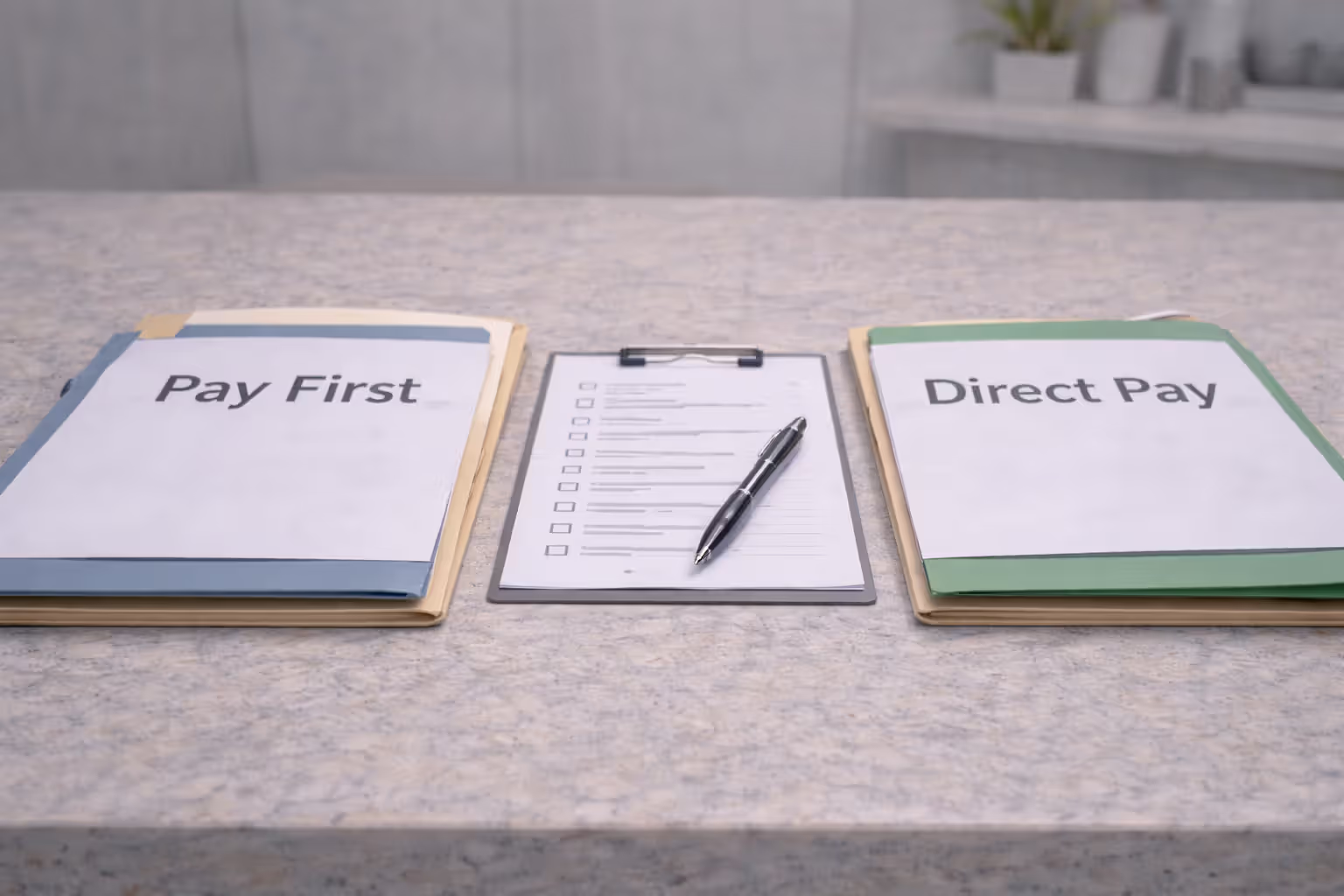
Comparing Payment Models: Financial Impact on Pet Owners
Author: Brandon Keller;
Source: lamadone.net
| Feature | Direct Billing Model | Standard Reimbursement |
| Initial payment at checkout | Only deductible + coinsurance + excluded items | Complete invoice amount (100% of charges) |
| Timeline for processing | Instant to 4 hours for approval; clinic receives payment in 3-5 days | Owner receives reimbursement 7-21 days after filing |
| Claim submission responsibility | Veterinary clinic handles automatically | Owner submits receipts, records, claim paperwork |
| Cash required at appointment | Typically $300-$1,500 (varies by deductible/coinsurance terms) | Full amount ($500-$10,000+ for major treatments) |
| Works best for owners who | Have limited available credit/savings; want predictable checkout costs | Maintain emergency funds; prioritize freedom in vet selection |
| Veterinary clinic requirements | Must have integrated software and trained staff | Any licensed veterinarian; no special systems |
Look at two real scenarios:
Example A: Your cat needs $4,200 surgery for foreign body removal. You carry a $500 deductible with 10% coinsurance. Under direct billing, you pay $870 at discharge ($500 deductible + $370 coinsurance on the remaining $3,700). Under reimbursement, you pay the full $4,200, file your claim, then get $3,330 back in 10-14 days.
Example B: Your dog needs a $450 workup for an ear infection including cytology and medication. Your $500 annual deductible is already met. With direct billing—assuming it's even available at this dollar amount, which is rare—you pay $45 (10% coinsurance). Under reimbursement, you pay $450 and receive $405 back. The difference is modest, and most carriers don't offer direct settlement for sub-$1,000 claims anyway.
Reimbursement actually works better when you value provider choice over immediate cash flow. Direct arrangements lock you into participating clinics. If the best oncologist for your dog's lymphoma practices two hours away at a university hospital without compatible billing software, you'll use reimbursement regardless of your policy's stated features.
Some owners actually prefer reimbursement because it provides a paper trail they control directly. You receive itemized invoices, submit claims yourself, and see precisely what got approved or denied. With direct billing, the financial conversation happens between insurer and clinic, sometimes leaving you unclear about coverage decisions until reviewing your explanation of benefits later.
Complications With Veterinarian Direct Billing and Prevention Strategies
Outright denials at point of service create awkward, stressful situations. You've authorized treatment expecting the insurance arrangement to cover $2,600 of a $3,000 procedure, but approval gets denied because the carrier flags the condition as pre-existing. Now you owe the complete amount before your pet goes home. Prevent this by requesting pre-authorization for any schedulable procedure. Most carriers will review your pet's medical history and provide coverage confirmation 24-48 hours before scheduled surgery.
Partial coverage approvals happen more frequently than complete denials. The insurer might cover the surgery itself but deny anesthesia monitoring equipment fees, or approve 80% of the specialist consultation because they consider the remaining 20% above "usual and customary rates" in your zip code. Ask your vet's billing team what their typical approval percentage is for your specific carrier—if they answer "usually 60-70% of our estimates get approved," prepare for payment gaps.
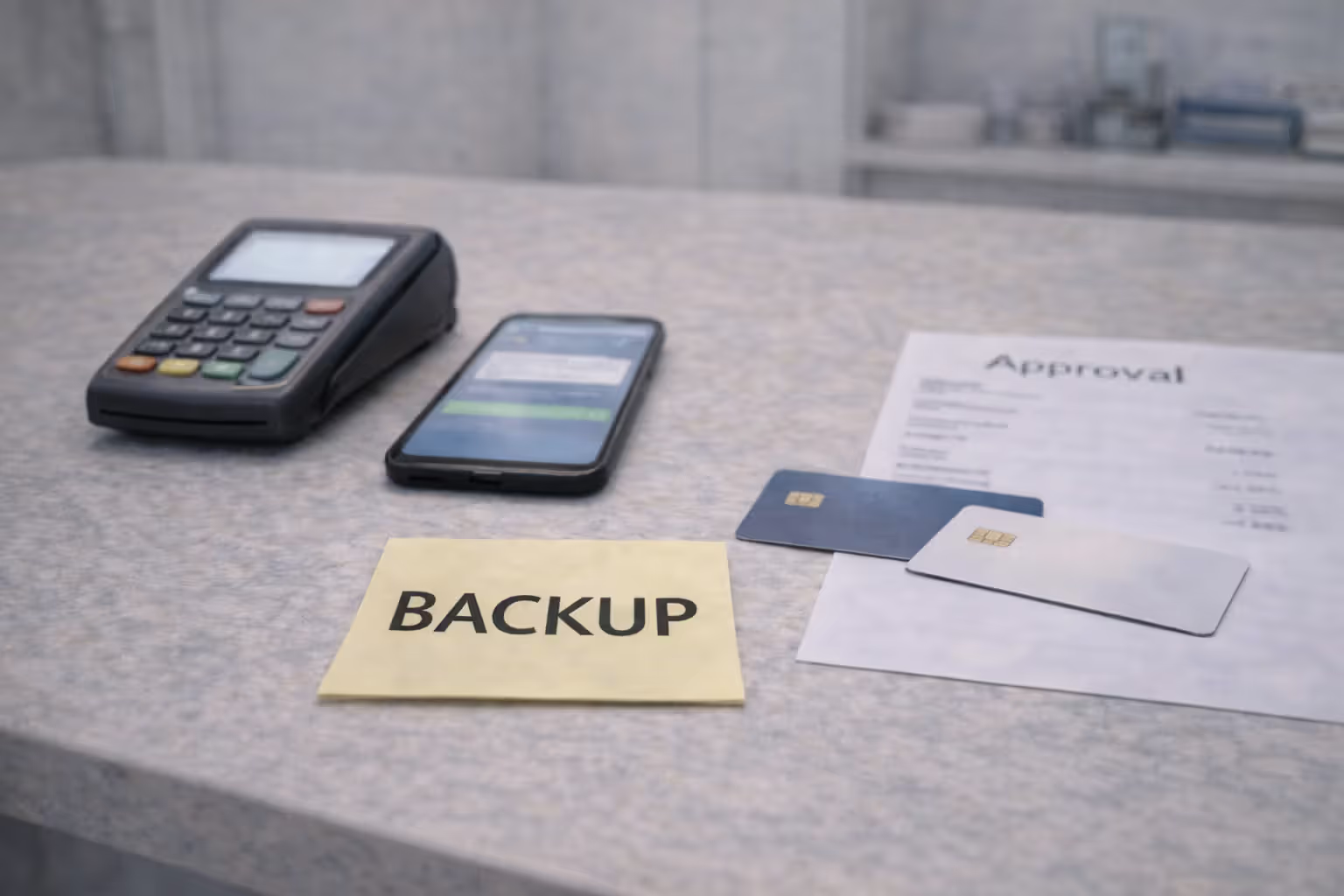
Software malfunctions strike at the absolute worst moments. The integration crashes, the insurer's system goes offline for maintenance, or your vet's internet connection fails during a thunderstorm. Every reliable resource covering veterinarian direct billing arrangements should stress this: always have a backup payment method available. A credit card with adequate limit or pre-approved CareCredit ensures treatment proceeds while technical problems get resolved.
Medical record requirements can stall approval even when coverage is legitimate. The insurer needs documents from your previous veterinarian to confirm a condition didn't pre-exist your policy, but that clinic closed for a long weekend. Or they require diagnostic imaging uploads, but the file size exceeds system limits. When booking non-emergency procedures, confirm all necessary documentation already exists in your current vet's system and is accessible to the carrier.
One frequently overlooked complication: staff turnover at veterinary practices means the person processing your direct billing might be unfamiliar with the system. A newly hired receptionist may not understand which screens to navigate or how to handle a partial approval. During your first appointment using this feature, arrive 15 minutes early and request to speak with whoever handles insurance processing—not just whoever happens to be at the front desk.
Author: Brandon Keller;
Source: lamadone.net
Using Direct Pay at Your Veterinarian: Complete Walkthrough
Before your appointment:
Contact your insurer's customer service and verify your policy shows active, premiums are current, and you haven't exceeded annual maximums. Ask explicitly: "If I have a $2,000 procedure tomorrow at (clinic name), will direct billing work?" Document a reference number from this call.
Contact the veterinary clinic directly and confirm they can process your specific carrier. Ask whether they need information from you beforehand—some clinics want your policy number and member ID loaded into their system before your appointment time.
Know your deductible status. If you've paid $300 toward a $500 annual deductible, you'll owe the remaining $200 plus coinsurance on new claims. Understanding these numbers before checkout prevents confusion.
During your clinic visit:
Bring your insurance card, photo identification, and a backup payment method. Even with direct billing, you'll cover deductibles and coinsurance.
When the veterinarian explains a treatment plan and provides a cost estimate, ask the clinic to submit for pre-approval before proceeding with treatment (when time allows). This takes 15-60 minutes but confirms coverage before your pet enters surgery.
Review the estimate line by line. Direct billing typically covers medical treatment, not boarding fees, premium food upgrades, or optional services like private recovery suites. You'll pay those items separately.
If direct settlement isn't available:
Ask whether the clinic offers payment plans. Many practices partner with CareCredit, Scratchpay, or VetBilling to provide financing at 0% interest for 6-12 months if you pay within promotional periods.
Pay with a credit card offering extended grace periods or rewards programs to offset costs during your reimbursement wait.
Submit your claim immediately—don't wait until you're home. Many carriers have mobile apps letting you photograph receipts and upload them from the parking lot. Faster submission means faster reimbursement.
After treatment:
Within 24-48 hours, check your insurer's online portal for your explanation of benefits. This document details what was approved, denied, or adjusted. If direct billing occurred, verify amounts match what you paid at checkout.
If you spot discrepancies—you paid $800 but the explanation of benefits shows you should have paid $650—contact both the clinic's billing department and your insurer immediately. These errors usually resolve within one billing cycle, but only when caught quickly.
Maintain all documentation: itemized invoices, explanations of benefits, receipts for your payments. If you switch carriers later or need to dispute a claim, you'll need this complete paper trail.
Common Questions About Direct Pay Pet Insurance Answered
Direct billing addresses a genuine problem for families who can't float several thousand dollars while waiting weeks for reimbursement checks. This feature performs best when you verify compatibility between your specific carrier and veterinarian before emergencies strike, thoroughly understand your policy's deductible and coinsurance structure, and maintain backup payment options for situations where direct billing fails or isn't available.
The model isn't universally accessible, and it won't magically cover expenses your policy excludes regardless of who pays whom. But for major unexpected veterinary costs at participating clinics, direct settlement eliminates the terrible choice between your pet's immediate health needs and your family's short-term financial capacity. Confirm your vet actually participates, know your coverage boundaries, and document every transaction—that combination transforms direct billing from a marketing bullet point into a genuinely useful financial tool.