
Pet Insurance Exclusions: What Your Policy Won't Cover
Pet Insurance Exclusions: What Your Policy Won't Cover

Content
Pet insurance can save you thousands when your dog or cat needs emergency surgery or cancer treatment. But every policy comes with a list of what it won't pay for—and these exclusions catch thousands of pet owners off guard each year. Understanding exactly what your insurer won't cover helps you avoid claim denials and budget for out-of-pocket costs.
How Pet Insurance Companies Define and Apply Exclusions
Pet insurance exclusions are specific conditions, treatments, or circumstances that your policy will not reimburse. Unlike human health insurance, pet policies operate on a reimbursement model where you pay the vet first, then submit a claim. Exclusions determine whether that claim gets approved or rejected.
The difference between exclusions, limitations, and waiting periods
These three terms often get confused, but they work differently. An exclusion permanently removes coverage for specific conditions or treatments—your policy will never pay for them. A limitation restricts how much the insurer will pay for certain conditions, like capping ACL surgery reimbursement at $2,500 even if your actual bill was $4,000. Waiting periods temporarily delay when coverage begins after you enroll.
For example, if your policy excludes breeding costs, you'll never get reimbursed for a C-section during whelping. But if hip dysplasia has a six-month waiting period, coverage kicks in after that time passes—assuming your pet didn't show symptoms during the waiting period.

Author: Megan Thornton;
Source: lamadone.net
Why insurers exclude certain treatments and conditions
Insurance companies exclude treatments that are predictable, preventable, or pre-existing because their business model depends on pooling risk across many healthy pets. If everyone could wait until their dog tore an ACL to buy insurance, premiums would skyrocket to cover guaranteed payouts.
Preventive care gets excluded because it's a scheduled expense, not an unexpected emergency. You know your cat needs annual vaccines, so insurers treat this like car insurance excluding oil changes. Some companies offer wellness add-ons that cover routine care, but these typically cost more in premiums than paying out-of-pocket.
Pre-Existing Conditions: The Most Common Reason for Claim Denials
Pre-existing condition exclusions account for roughly 60% of all denied pet insurance claims. This single category causes more frustration than any other policy limitation.
What qualifies as a pre-existing condition
A pre-existing condition is any injury, illness, or symptom that appeared or was treated before your coverage started—or during a waiting period. The definition extends beyond formal diagnoses. If your dog limped once before enrollment, a later ACL tear on that same leg could be denied as pre-existing, even without a previous diagnosis.
Insurers look for clinical signs in veterinary records. A note mentioning "mild itching" six months before enrollment could exclude all future allergy treatments. One vomiting episode noted in records might exclude future gastrointestinal claims. This is why getting coverage while your pet is young and healthy matters so much.
Curable vs. incurable pre-existing conditions
Some insurers distinguish between conditions that can be cured and those that can't. A curable condition, like a urinary tract infection, might become eligible for coverage if your pet goes 180 days symptom-free and treatment-free. After that cure period, a new UTI would be covered as a separate incident.
Incurable conditions remain excluded forever. Diabetes, epilepsy, heart murmurs, and cruciate ligament tears fall into this category. Even if your dog's seizures are controlled with medication, epilepsy stays on the exclusion list permanently. Some insurers consider all orthopedic conditions incurable, meaning one knee injury excludes both knees for life.

Author: Megan Thornton;
Source: lamadone.net
How insurers review veterinary records during claims
When you file your first claim, most insurers request complete medical records from every vet your pet has visited. They're looking for any mention of symptoms related to your current claim. This review can happen weeks after you've been paying premiums.
A common scenario: You enroll your dog in January with no known health issues. In March, he tears his ACL. You file a claim, and the insurer requests records. They find a note from two years ago mentioning your dog "favored his right hind leg" after a long hike. Claim denied—the insurer argues the limp was a precursor to the ACL tear.
The biggest mistake I see is pet owners assuming that because they didn't know about a condition, it won't be considered pre-existing. Insurance companies base pre-existing determinations on what's documented in medical records, not on what owners knew. A single symptom noted in passing can exclude an entire body system from coverage.
— Dr. Jennifer Coates, DVM, veterinary advisor and former member of the American Veterinary Medical Association
Standard Exclusions Found in Most Pet Insurance Policies
Beyond pre-existing conditions, every policy excludes certain categories of care. These standard exclusions appear across nearly all providers, though specific details vary.
Preventive and routine care exclusions
Annual wellness exams, vaccinations, heartworm prevention, flea and tick medication, nail trims, teeth cleaning, and spay/neuter surgery are excluded from standard accident and illness policies. Insurers classify these as predictable maintenance rather than unexpected medical events.
Some companies offer optional wellness riders that reimburse a fixed amount annually for routine care—typically $50 for an exam, $30 for vaccines, $150 for dental cleaning. But these add-ons often cost $200-300 per year in additional premiums while reimbursing only $250-350 in benefits. You're essentially prepaying for routine care at a markup.
Cosmetic and elective procedures
Ear cropping, tail docking, dewclaw removal (unless medically necessary due to injury), and cosmetic dentistry aren't covered. The line gets blurry with procedures like cherry eye surgery or entropion correction, which fix breed-related issues but also prevent medical complications. Most insurers cover these because they prevent pain and infection, not for cosmetic reasons.
Declawing is always excluded, as are procedures performed primarily for owner convenience rather than pet health.
Breeding and pregnancy-related costs
Pregnancy, whelping, C-sections, breeding-related injuries, false pregnancies, and neonatal puppy or kitten care are universally excluded. If your pregnant dog develops eclampsia (a life-threatening calcium deficiency), most insurers won't cover treatment because it's pregnancy-related.
This exclusion extends to pyometra in some policies if the dog was bred. However, pyometra in a spayed female or one never bred is typically covered as an infection.
Behavioral issues and training
Aggression, anxiety, compulsive disorders, destructive behavior, and any training costs are excluded. If your dog's separation anxiety leads to self-injury, the physical wounds might be covered, but not behavioral medication or training to address the root cause.
Some newer insurers are beginning to cover behavioral medications prescribed by veterinarians for diagnosed conditions, but this remains rare.
Waiting Period Exclusions: When Coverage Actually Begins
Your coverage doesn't start the day you enroll. Waiting periods prevent people from buying insurance after their pet shows symptoms of illness.
Typical waiting periods by condition type (illness, accident, orthopedic)
Most policies include a 14-day waiting period for illnesses and a 2-3 day waiting period for accidents. Orthopedic conditions face longer waits—often six months to a year. Cruciate ligament injuries specifically may have 12-month waiting periods at some insurers.

Author: Megan Thornton;
Source: lamadone.net
| Condition Type | Typical Waiting Period | When Coverage Begins | Exceptions |
| Accidents | 2-3 days | Day 3 or 4 after enrollment | Some offer no waiting period |
| Illnesses | 14 days | Day 15 after enrollment | Symptoms during waiting period exclude condition |
| Orthopedic conditions | 6-12 months | 6-12 months after enrollment | May be waived with vet exam |
| Cruciate ligament injuries | 6-12 months | 6-12 months after enrollment | Rarely waived |
| Cancer | 14 days | Day 15 after enrollment | Same as illness waiting period |
What happens if your pet gets sick during the waiting period
Any symptom that appears during a waiting period becomes a pre-existing condition. If your dog vomits twice during the 14-day illness waiting period, all future gastrointestinal issues could be excluded. This is why some owners schedule a vet exam right before enrollment to document that their pet is healthy.
If your cat develops diabetes on day 10 of the waiting period, diabetes and related complications (neuropathy, cataracts, urinary infections) are excluded forever. The waiting period essentially extends the pre-existing condition window.
Breed-Specific and Hereditary Condition Exclusions
Some policies exclude or limit coverage for conditions common to specific breeds, though this practice is becoming less common due to competitive pressure.
Common hereditary conditions excluded by breed
Older policies explicitly excluded hip dysplasia in large breeds, luxating patellas in small breeds, brachycephalic syndrome in flat-faced breeds, and intervertebral disc disease in Dachshunds. These breed-specific exclusions frustrated owners who chose pet insurance specifically to cover expensive hereditary problems.
Most modern policies now cover hereditary and congenital conditions as long as they're not pre-existing. However, bilateral condition clauses can still limit coverage. If your dog's right knee has a luxating patella before enrollment (or develops one during a waiting period), the left knee might also be excluded under the assumption that genetic conditions affect both sides.
How to find coverage for breed-predisposed conditions
When comparing policies, look for explicit statements about hereditary and congenital condition coverage. Trupanion, Healthy Paws, and Embrace specifically cover breed-predisposed conditions as long as symptoms didn't appear before enrollment. Nationwide and Pets Best also cover these conditions in their comprehensive plans.
The key is enrolling while your pet is young and asymptomatic. A two-year-old French Bulldog with no breathing issues can get full coverage for potential brachycephalic surgery. A five-year-old Frenchie who already snores and has exercise intolerance will have respiratory issues excluded as pre-existing.
7 Real-World Examples of Denied Pet Insurance Claims
These scenarios illustrate how exclusions work in practice:
Example 1: Owner enrolled a three-year-old Labrador in March. In July, the dog tore his ACL. The insurer requested records and found a note from 18 months earlier stating "mild stiffness after exercise." Claim denied—the insurer classified stiffness as a precursor to ligament damage. Owner paid $4,500 out-of-pocket.
Example 2: A cat developed diabetes on day 12 of the 14-day waiting period. Owner didn't notice symptoms until day 20 and filed a claim. Denied as pre-existing because symptoms began during the waiting period, even though the owner didn't know. Lifetime exclusion for diabetes and all related conditions.
Example 3: A Bulldog needed cherry eye surgery. Despite the breed predisposition, the claim was approved because the dog had no eye issues at enrollment and the waiting period had passed. The insurer paid $1,200 of the $1,500 bill after the deductible.
Example 4: Owner filed a claim for allergy testing and immunotherapy. Denied—the policy covered treating allergy symptoms (ear infections, skin infections) but excluded allergy testing and long-term immunotherapy as not medically necessary. Owner paid $800 for testing out-of-pocket.
Example 5: A dog ate a sock and needed emergency surgery during the three-day accident waiting period. Claim denied because the incident occurred before coverage began. Owner paid $3,200 out-of-pocket, then the policy covered a second foreign body surgery 10 months later.
Example 6: A cat developed a heart murmur at age two. Owner switched insurance companies at age four, hoping to reset the pre-existing condition. New insurer requested records from all previous vets, found the murmur diagnosis, and excluded all cardiac conditions. The switch didn't help.
Example 7: A mixed-breed dog needed bilateral ACL surgery. The first knee tore in year one and was covered—insurer paid $3,800. The second knee tore in year two. Claim denied under bilateral condition exclusion, arguing that the genetic weakness made the second tear predictable. Owner appealed and won partial reimbursement after providing evidence that the injuries occurred separately.
How to Minimize Exclusions When Choosing Pet Insurance
You can't eliminate all exclusions, but strategic decisions reduce your risk of claim denials.
Questions to ask before purchasing
Ask insurers directly: "How do you define pre-existing conditions?" and "Do you have a curable condition clause?" Some companies are more lenient than others. Ask about bilateral condition policies—whether one affected limb excludes the opposite side.
Request a sample policy document before purchasing. The marketing materials highlight what's covered; the policy document details what's not. Look for the exclusions section, typically 2-3 pages of fine print.
Ask about the medical record review process. When do they request records—at first claim, at enrollment, or randomly? How far back do they review?
Getting a clean bill of health exam before enrollment
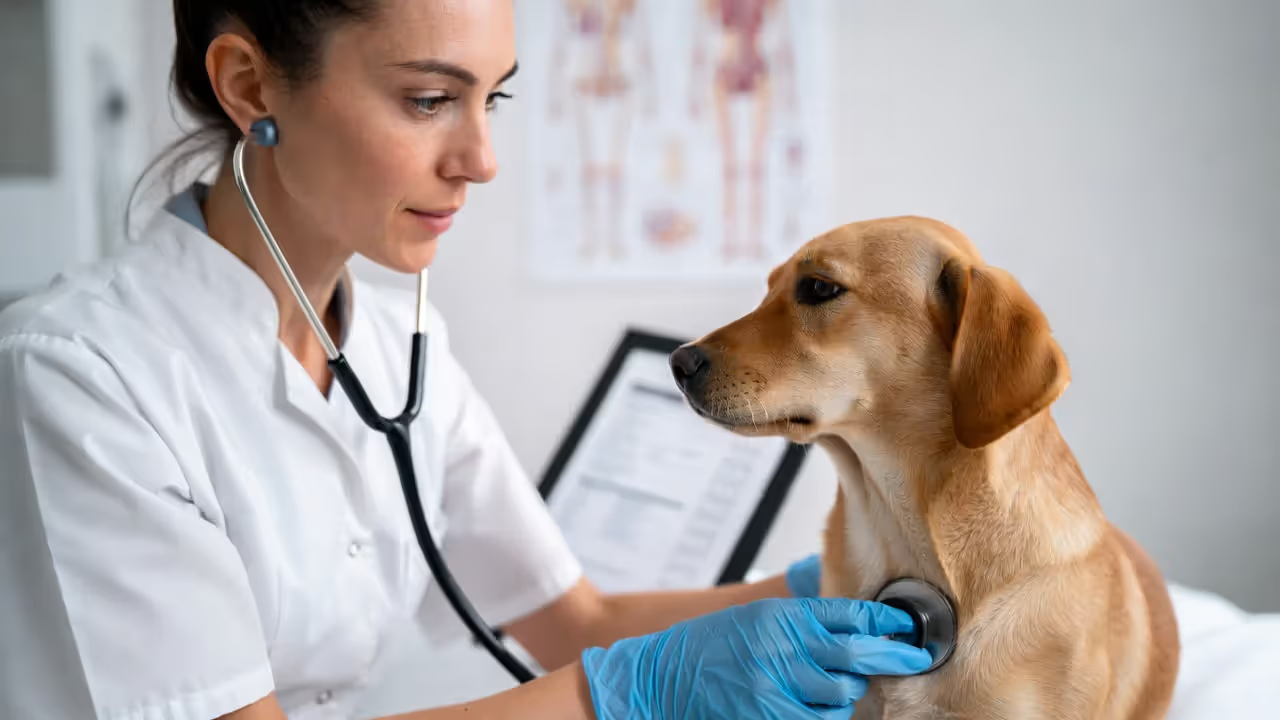
Schedule a comprehensive vet exam within 30 days before enrolling. This documents that your pet is healthy and symptom-free at a specific point in time. Some insurers waive orthopedic waiting periods if you submit an exam showing no joint issues.
The exam should include a thorough physical, not just a vaccine visit. Ask your vet to document normal findings for joints, heart, lungs, skin, and behavior. If the vet notes anything abnormal, address it before enrolling or accept that condition will be excluded.
Author: Megan Thornton;
Source: lamadone.net
Comparing exclusion lists across top providers
Trupanion's 30-day illness waiting period is longer than competitors, but they have no maximum payout limits. Healthy Paws has the shortest orthopedic waiting period at 15 days, making them attractive for breeds prone to joint issues.
Frequently Asked Questions About Pet Insurance Exclusions
Understanding Exclusions Protects Your Wallet and Your Pet
Pet insurance exclusions exist to keep premiums affordable by limiting coverage to unexpected illnesses and accidents. While the lists of what's not covered can seem overwhelming, most policies still provide valuable protection against catastrophic costs like emergency surgery, cancer treatment, or chronic disease management.
The key is enrolling early, reading policy documents thoroughly, and maintaining realistic expectations. Insurance won't cover everything, but it can prevent the heartbreaking choice between financial ruin and your pet's life. Budget for excluded costs—routine care, pre-existing conditions, and anything that develops during waiting periods—while letting insurance handle the unpredictable emergencies that could cost tens of thousands.
Before you buy, request sample policies from multiple providers and compare their exclusion lists side-by-side. Ask direct questions about scenarios specific to your pet's breed and age. And most importantly, get coverage before your pet shows any symptoms, because once something appears in medical records, it's excluded forever.