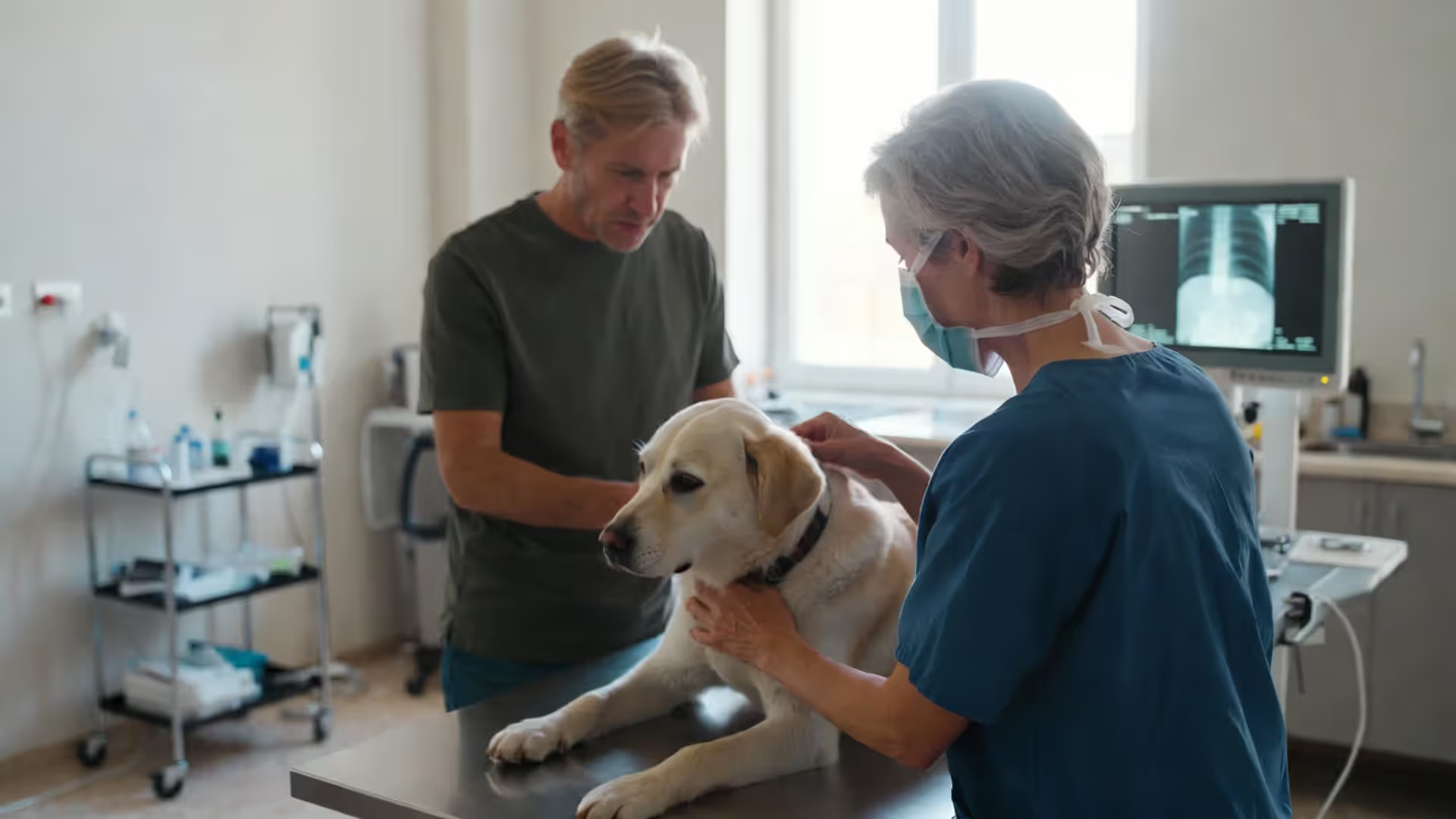
Pet insurance helps owners focus on care instead of costs.
How accident and illness pet insurance protects your pet from major vet costs

Content
When your cat stops eating or your dog starts limping after a hike, you want answers—not a calculator. Yet many pet owners face exactly that dilemma, weighing emergency vet bills against their budget. Comprehensive pet insurance that covers both accidents and illnesses removes that impossible choice, but understanding what you're buying matters just as much as having the coverage.
What Accident and Illness Pet Insurance Covers
Combined policies protect against two distinct categories of veterinary care. Most pet owners assume they understand the difference until a claim gets denied because they misclassified their pet's condition.
Accident Coverage Explained
Accident coverage handles injuries from specific, sudden events. Your dog tears a ligament chasing a squirrel. Your cat swallows a hair tie. A puppy fractures a leg jumping off furniture. These policies reimburse diagnostic tests, surgery, hospitalization, medications, and follow-up care related to the incident.
Poisoning falls under accident coverage, whether your pet ingests chocolate, antifreeze, or toxic plants. Foreign body removal—one of the most common emergency procedures—gets covered when your pet swallows something they shouldn't. Bite wounds from other animals, lacerations, burns, and vehicular injuries all qualify as accidents.
The key distinction: accidents happen at a specific moment you could point to on a calendar. If you can't identify when the problem started, it's probably not an accident.
Illness Coverage Explained
Illness policy pets insurance guide requirements address conditions that develop over time or stem from disease processes. Cancer, diabetes, kidney disease, allergies, ear infections, urinary tract infections, and gastrointestinal issues all fall under illness coverage. Genetic conditions like hip dysplasia or heart disease qualify as illnesses, even though your pet was predisposed from birth.
Chronic conditions receive ongoing coverage as long as they first appeared after your policy's waiting period ended. If your dog develops arthritis at age seven and needs medication for the rest of their life, each refill gets reimbursed according to your policy terms. Diagnostic workups for mysterious symptoms—bloodwork, X-rays, ultrasounds—get covered when investigating potential illnesses.
Author: Megan Thornton;
Source: lamadone.net
Behavioral conditions treated medically, such as anxiety requiring prescription medication, typically fall under illness coverage. Some insurers cover alternative therapies like acupuncture or physical therapy when treating covered illnesses.
Common Exclusions to Know
Pre-existing conditions get excluded universally. If your pet showed symptoms or received treatment before coverage started, that specific condition won't be covered—ever. Bilateral conditions create a gray area: if your pet's left knee fails before coverage begins, some insurers exclude both knees while others only exclude the affected side.
Preventive care stays excluded from accident and illness pet insurance unless you purchase a separate wellness add-on. Annual exams, vaccines, dental cleanings, flea prevention, and heartworm medication require additional coverage. Breeding costs, pregnancy, and elective procedures like tail docking or ear cropping never get covered.
Cosmetic procedures, experimental treatments, and food (even prescription diets) typically remain excluded. Some insurers won't cover exam fees, only diagnostics and treatment, which catches owners off guard when they see a $75 consultation fee denied.

Author: Megan Thornton;
Source: lamadone.net
Accident-Only vs. Accident and Illness Policies: Which Should You Choose?
Price differences between these policy types tempt budget-conscious owners, but the coverage gap is substantial.
| Feature | Accident-Only | Accident and Illness |
| What's Covered | Injuries from specific events: broken bones, lacerations, poisoning, foreign body ingestion, bite wounds | Everything in accident-only PLUS: cancer, infections, chronic diseases, genetic conditions, organ diseases, allergies |
| What's Excluded | All illnesses, diseases, infections, chronic conditions, organ failure, cancer | Pre-existing conditions, preventive care, breeding costs |
| Average Monthly Cost | $15–$25 for dogs; $10–$18 for cats | $35–$70 for dogs; $20–$40 for cats |
| Best For | Young, healthy pets with tight budgets; owners with substantial emergency savings | Most pet owners; those without $5,000+ in emergency funds; breeds prone to genetic conditions |
| Pros | Affordable; covers common emergencies like broken bones and toxin ingestion | Comprehensive protection; covers expensive chronic conditions; predictable budgeting for pet healthcare |
| Cons | Leaves you exposed to costliest claims (cancer treatment: $3,000–$10,000+); ear infections, UTIs, and common illnesses all out-of-pocket | Higher premiums; waiting periods for illness claims |
Accident-only policies make sense for a narrow group: owners with young, healthy pets and robust emergency savings who want catastrophic injury protection only. If your dog tears their ACL ($3,500 surgery), you're covered. When they develop diabetes two years later, you're not.
Combined accident illness policies pets provide the safety net most owners actually need. Illnesses account for roughly 80% of veterinary claims by cost. A single cancer diagnosis can exceed $8,000 in treatment. Chronic conditions like allergies or thyroid disease require lifelong medication that adds up to thousands over your pet's lifetime.
The math shifts dramatically for certain breeds. Bulldogs, German Shepherds, Golden Retrievers, and other breeds with known genetic predispositions to hip dysplasia, heart conditions, or cancer benefit enormously from illness coverage. Accident-only policies leave these predictable (and expensive) conditions completely unprotected.
How Combined Accident and Illness Policies Work
Understanding the mechanics of accident illness coverage pets insurance prevents surprise bills and claim denials.

Author: Megan Thornton;
Source: lamadone.net
Deductibles, Copays, and Annual Limits
Your deductible resets annually. If you select a $250 deductible, you pay the first $250 in covered vet bills each policy year before reimbursement starts. Some insurers offer per-incident deductibles instead, where you pay $250 for each new condition but nothing for ongoing treatment of the same issue.
Reimbursement levels typically range from 70% to 90%. After meeting your deductible, if you have 80% reimbursement and your vet bill is $1,000, you pay $200 and the insurer pays $800. Some policies reimburse based on a benefit schedule (a predetermined amount per condition) rather than actual vet bills—avoid these.
Annual limits cap total reimbursement per policy year. A $10,000 annual limit means once the insurer has paid $10,000 in claims, you're responsible for all additional costs until the policy renews. Unlimited annual coverage costs more but protects against catastrophic scenarios where your pet needs $15,000 in cancer treatment.
Per-incident limits cap reimbursement for each separate condition. A $5,000 per-incident limit means your pet's diabetes treatment can't exceed $5,000 in reimbursement, even if it costs $8,000. These limits often renew annually for chronic conditions.
Waiting Periods for Accident vs. Illness Claims
Accident coverage typically begins within 2–5 days of enrollment. If you enroll Monday and your dog breaks a leg Thursday, you're probably not covered. Wait until the following week and you are.
Illness waiting periods run 14 days for most conditions. Enroll January 1st, and coverage for ear infections, UTIs, and most illnesses starts January 15th. Orthopedic conditions like cruciate ligament tears often carry six-month waiting periods because they're expensive and owners might enroll after noticing a limp.
Hip dysplasia waiting periods stretch to 12 months with many insurers. Cancer waiting periods vary but typically match the standard 14-day illness period unless your pet showed any symptoms beforehand.
These waiting periods exist to prevent adverse selection—owners enrolling only after their pet gets sick. They also explain why enrolling young matters. A healthy six-month-old puppy clears all waiting periods before most conditions develop. A seven-year-old dog with a clean vet record still faces those waiting periods, during which anything could happen.
What Affects the Cost of Accident and Illness Coverage

Author: Megan Thornton;
Source: lamadone.net
Three factors drive premium calculations more than anything else.
Breed and age create the widest price swings. A mixed-breed one-year-old cat might cost $22 monthly for comprehensive coverage with a $250 deductible and 80% reimbursement. A purebred Persian the same age could run $38 monthly due to breed-specific health risks. Large-breed dogs cost more than small breeds because their surgeries, medications, and diagnostic imaging all cost more at the vet.
Age matters exponentially. That same mixed-breed cat costs $22 monthly at age one but $65 monthly at age 10. Dogs see even steeper increases. Insurers know that claims frequency and severity increase with age, and premiums reflect that reality. Some companies refuse new enrollment after age 14, while others simply price premiums to match risk.
Geographic location affects pricing by 20–40% in extreme cases. Urban areas with higher veterinary costs see higher premiums. A Labrador Retriever in rural Montana might cost $42 monthly to insure, while the identical dog in San Francisco costs $68 monthly. Vet specialists, emergency clinics, and diagnostic centers concentrate in cities, driving up average claim costs.
Reimbursement percentage choices offer the clearest trade-off. Selecting 70% reimbursement instead of 90% might reduce your premium by 25%. You'll pay more out-of-pocket per claim, but if your pet stays healthy, you've saved hundreds in premiums. Higher reimbursement makes sense when you can't absorb much cost-sharing. Lower reimbursement works when you want catastrophic protection but can handle moderate bills.
Deductible selection matters less than most owners expect. Jumping from a $250 to $500 deductible might save only $5–8 monthly. The insurer knows you'll hit that deductible most years anyway, so the risk reduction is minimal. Annual limit selection creates bigger swings—unlimited coverage costs 20–30% more than $10,000 limits.
Common Mistakes Pet Owners Make When Choosing Illness Coverage
Waiting until a pet shows symptoms. The single biggest mistake. Once your dog starts limping or your cat stops grooming, that condition becomes pre-existing the moment a vet documents it. Owners who "wait to see if it gets better" before enrolling often lock themselves out of coverage for that exact problem.
Assuming all illnesses get covered immediately. Those waiting periods catch people constantly. Enrolling when your puppy turns six months old seems responsible until they develop an ear infection on day 10 and you realize coverage doesn't start until day 14. The $200 vet visit falls entirely on you.
Choosing accident-only because their pet is young. Young pets get cancer. Puppies develop parvo. Kittens get respiratory infections. Age correlates with illness frequency, but it doesn't prevent illness. The lowest-risk pet still faces substantial illness risk over their lifetime.
Ignoring policy differences between insurers. Not all accident and illness pet insurance policies work identically. Some exclude exam fees. Others limit physical therapy to 10 sessions annually. A few don't cover alternative therapies at all. Policy details matter more than premium differences of $3 monthly.
Dropping coverage when their pet stays healthy. Insurance feels wasteful when you're not filing claims—until you need it. Owners who cancel after two claim-free years sometimes re-enroll later, only to find their now-older pet costs twice as much to insure and any conditions that developed during the coverage gap are now permanently excluded.
Selecting the cheapest plan without checking limits. A $30 monthly policy with $5,000 annual limits and 70% reimbursement might cost less than a $45 policy with unlimited coverage and 90% reimbursement, but it leaves you significantly more exposed if your pet needs $12,000 in cancer treatment.
How to Compare Accident and Illness Pet Insurance Plans

Author: Megan Thornton;
Source: lamadone.net
Start with the maximum financial exposure you can handle. If a $4,000 emergency vet bill would devastate your finances, you need robust coverage with high reimbursement and high annual limits. If you could manage $4,000 but not $15,000, moderate coverage with unlimited annual limits makes sense.
Request quotes from at least four insurers with identical parameters: same deductible, same reimbursement percentage, same annual limit. Price differences for identical coverage reveal which companies price your specific pet more favorably. A German Shepherd might be cheaper with Insurer A while a Siamese cat costs less with Insurer B based on their actuarial data.
Read the sample policy, not just the marketing materials. The exclusions section tells you what you're not buying. Look for how each insurer handles bilateral conditions, cancer treatment, hereditary conditions, and chronic disease. Some policies cover hip dysplasia only if diagnosed after age two. Others cover it regardless of diagnosis age as long as symptoms appeared after enrollment.
Check whether exam fees are covered. A $75 exam fee on every vet visit adds up quickly. Some policies cover exams related to covered conditions; others exclude them entirely. This single difference can mean $300–600 in additional annual out-of-pocket costs.
The biggest difference between accident-only and comprehensive coverage isn't just what's covered—it's financial predictability. Accidents are random, but illnesses are near-certain over a pet's lifetime. I've seen too many families forced into impossible decisions because they chose minimal coverage to save $20 monthly. Comprehensive accident and illness coverage transforms pet healthcare from a series of financial crises into a manageable monthly expense.
— Dr. Jennifer Martinez, DVM, Emergency & Critical Care Specialist, BluePearl Veterinary Partners
Investigate claim processing reputation. An insurer that takes 45 days to reimburse claims and denies 30% initially (even if overturned on appeal) creates more stress than one that processes claims in 10 days with a 95% approval rate. Online reviews skew negative, but patterns of complaint reveal problem areas.
Compare how each insurer handles rate increases. All pet insurance premiums increase as your pet ages, but some companies increase rates more aggressively than others. While you can't predict exact future costs, researching whether an insurer has a history of sudden 40% increases versus gradual 8–12% annual adjustments helps set expectations.
Frequently Asked Questions About Pet Accident and Illness Insurance
Making the Right Choice for Your Pet
Choosing between accident-only and comprehensive coverage ultimately depends on your financial resilience and risk tolerance. Accident coverage alone leaves substantial gaps that expose you to the costliest veterinary scenarios. For most pet owners, combined accident and illness policies provide the protection that matches real-world veterinary expenses.
Enroll while your pet is young and healthy. Premiums stay lower, waiting periods clear before problems develop, and you avoid pre-existing condition exclusions. The coverage you purchase today protects against tomorrow's unexpected diagnosis, not yesterday's symptoms.
Compare policies based on what matters: annual limits, reimbursement levels, coverage for hereditary conditions, and claim processing reputation. A $5 monthly premium difference means little if one policy caps orthopedic coverage at $3,000 while another offers unlimited coverage for the same condition.
Insurance can't prevent your pet from getting sick, but it can prevent you from choosing between your pet's health and your financial stability. That peace of mind—knowing you can say yes to the treatment your pet needs—is what comprehensive accident and illness coverage actually provides.