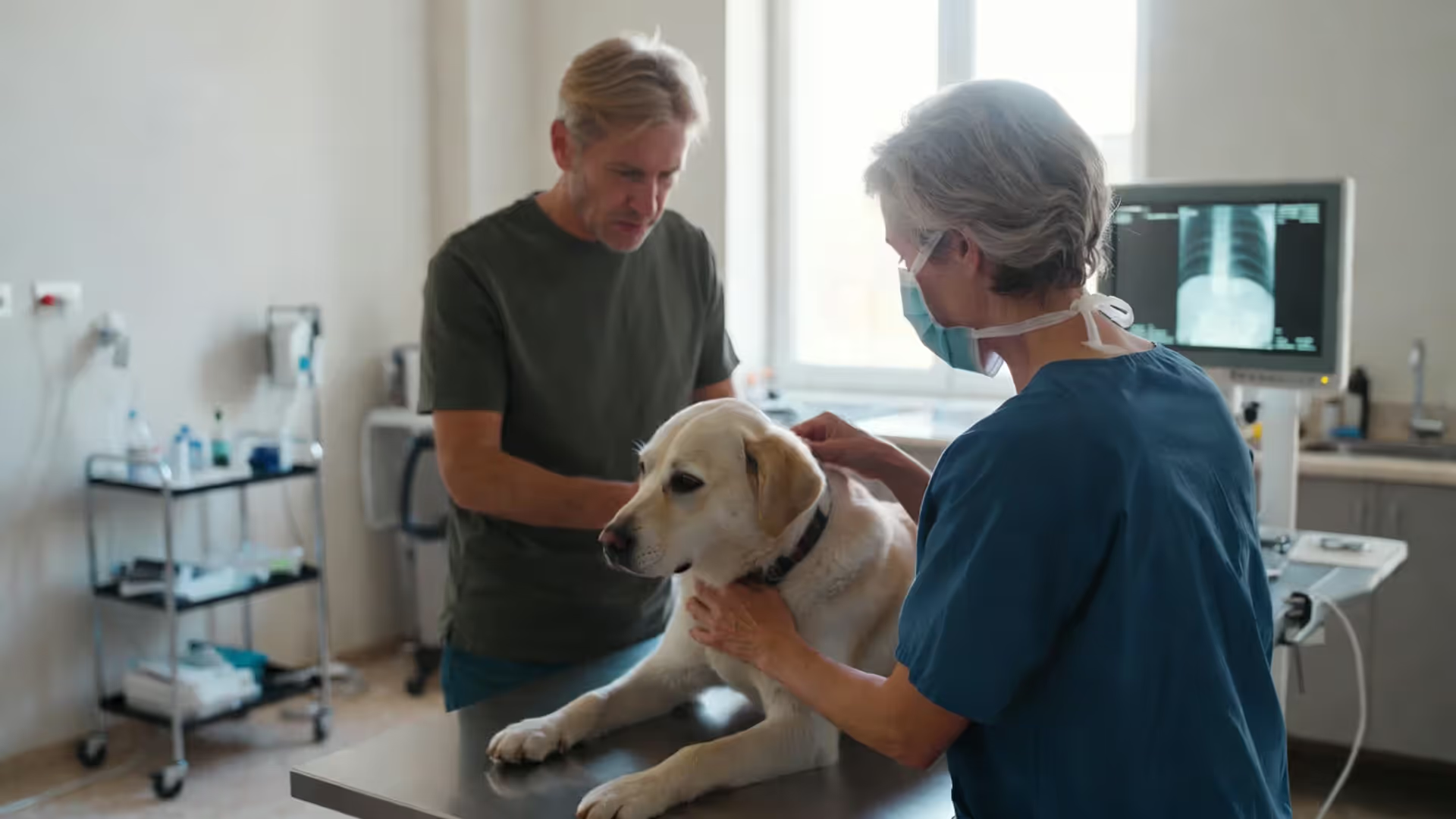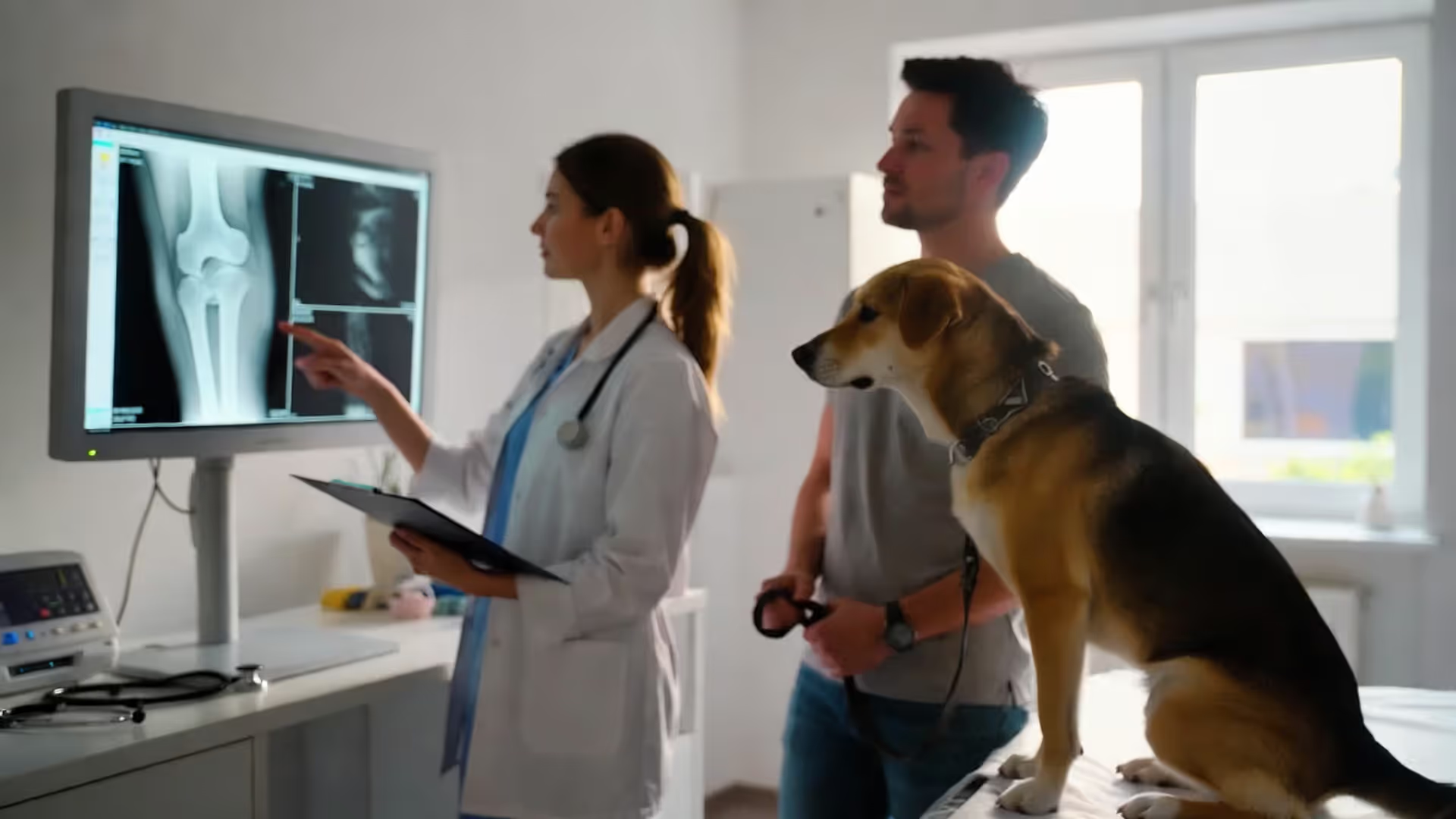
Emergency coverage matters most when time and costs spike.
Emergency Pet Insurance Coverage for Urgent Vet Visits and Emergency Surgery

Content
When your dog swallows a sock at 2 AM or your cat stops eating after ingesting a lily, the last thing you want to worry about is whether insurance will cover the $3,000 emergency vet bill. Emergency pet insurance coverage exists specifically for these terrifying moments, but understanding what's actually included—and what isn't—can mean the difference between financial relief and unexpected debt.
Most pet owners don't realize that emergency coverage varies dramatically between policies. Some plans treat emergencies as part of standard accident coverage, while others require specific add-ons or impose frustrating limitations that only become apparent when you're standing in an emergency clinic at midnight.
What Qualifies as a Pet Emergency Under Insurance Policies
Insurance companies define emergencies differently than you might expect. While you might consider any after-hours vet visit an emergency, insurers typically classify emergencies based on medical severity rather than timing.
Covered Emergency Conditions and Situations
Emergency pet insurance coverage generally includes life-threatening or severely painful conditions requiring immediate intervention. Poisoning from chocolate, xylitol, or household chemicals almost always qualifies. If your Labrador raids the trash and eats rat poison, expect coverage—assuming you've passed the waiting period.
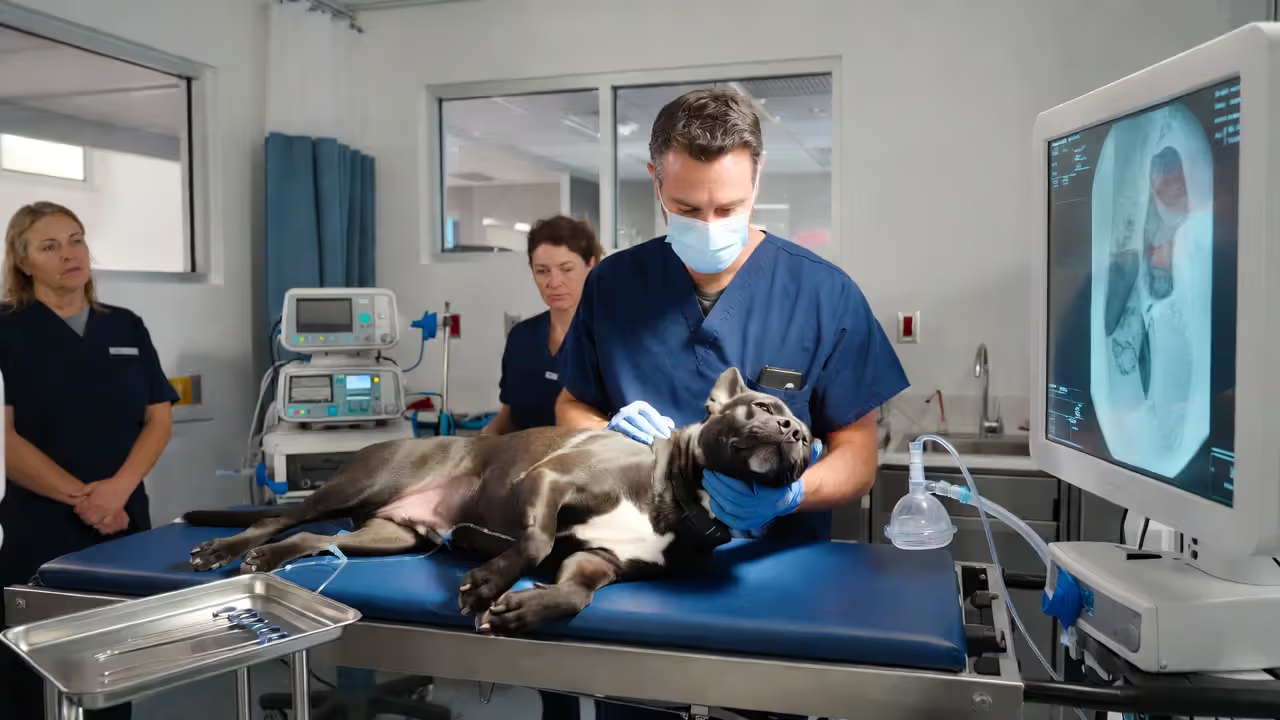
Traumatic injuries from car accidents, dog fights, or falls receive coverage under most accident policies. Foreign object ingestion ranks among the most common emergency claims. Dogs eating corn cobs, socks, or children's toys require emergency surgery that can exceed $5,000, and these emergency procedures insurance pets policies typically cover without dispute.
Gastric dilatation-volvulus (bloat) in large-breed dogs represents a classic covered emergency. This condition kills within hours without surgery, and the $4,000-$7,000 treatment cost gets reimbursed under standard accident coverage.
Sudden respiratory distress, seizures in pets without a pre-existing epilepsy diagnosis, severe allergic reactions, heatstroke, and acute urinary blockages (especially in male cats) also qualify. Bite wounds from wildlife, severe vomiting or diarrhea causing dehydration, and eye injuries from scratches or blunt trauma round out typical covered emergencies.
Author: Ashley Reynolds;
Source: lamadone.net
Common Exclusions in Emergency Coverage
Here's where pet owners get blindsided: conditions that seem like emergencies but don't qualify for coverage. Pre-existing conditions never receive emergency coverage, even if they suddenly worsen. If your cat had chronic kidney disease before enrollment and experiences an acute crisis, you'll pay out-of-pocket despite the emergency nature.
Breed-specific conditions subject to waiting periods cause confusion. Brachycephalic breeds experiencing breathing emergencies might face scrutiny if the insurer considers it related to a pre-existing anatomical issue. Hip dysplasia complications in large breeds sometimes get denied if the insurer argues the underlying condition existed before coverage began.
Routine care masquerading as emergencies gets rejected. Taking your pet to an emergency clinic for vaccine boosters or nail trims because your regular vet was closed won't qualify for reimbursement. Behavioral issues requiring emergency sedation typically aren't covered unless they result from a covered condition.
Some policies exclude certain toxins or limit poisoning coverage to specific substances. Read the fine print about whether your policy covers all toxins or just "common household" ones—a vague term that creates claim disputes.

Author: Ashley Reynolds;
Source: lamadone.net
How Emergency Treatment Insurance for Pets Actually Works
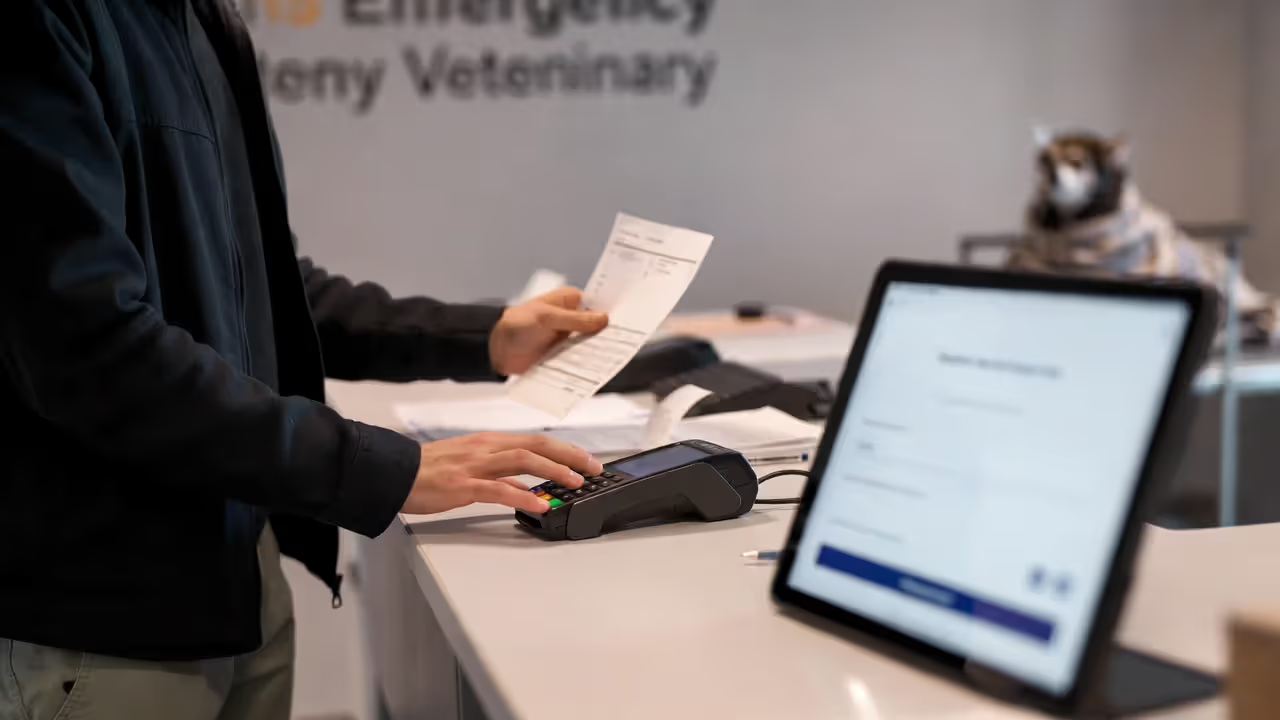
Emergency treatment insurance pets policies operate on a reimbursement model that catches new policyholders off-guard. You pay the emergency vet upfront—the entire bill—then submit a claim for reimbursement. There's no swiping your insurance card and walking out like human health insurance.
When you arrive at the emergency clinic with your seizing dog, the receptionist will ask for a deposit before treatment begins. This deposit often ranges from $500 to $2,000 depending on the suspected condition. The vet stabilizes your pet, runs diagnostics, and provides treatment. You receive the final bill at discharge and must pay in full.
Most emergency clinics accept payment plans through third-party financing like CareCredit or Scratchpay, which helps bridge the gap until reimbursement arrives. Some clinics will wait a few days for payment if you can prove you've submitted an insurance claim, but don't count on this courtesy.
Pre-authorization isn't typically required for true emergencies, which distinguishes urgent care insurance pets coverage from human insurance. You can't call your insurer at 3 AM to get approval before treating your poisoned cat. The life-threatening nature of emergencies means treatment happens first, paperwork later.
The reimbursement timeline varies by insurer but typically runs 7-21 days after claim submission. Some companies like Trupanion offer direct payment to vets through their software integration, eliminating the reimbursement wait for participating clinics. This feature alone can justify choosing one insurer over another.
Emergency coverage differs from specialty care coverage in important ways. If your pet requires transfer from an emergency clinic to a specialty hospital for advanced surgery or ICU care, both facilities might submit separate claims. Some policies cap specialty care reimbursement lower than general emergency care, creating unexpected out-of-pocket costs.
Claims require itemized invoices showing diagnosis codes, treatments performed, and medications dispensed. The emergency vet should provide this automatically, but verify before leaving. You'll also need medical records documenting the emergency nature of the visit—arrival time, vital signs, and clinical notes supporting the urgency.
Author: Ashley Reynolds;
Source: lamadone.net
Cost Breakdown: What You'll Pay for Emergency Vet Insurance
Emergency vet insurance pets guide resources often gloss over the real numbers. Here's what you'll actually spend across different insurers:
| Provider | Monthly Premium Range | Emergency Visit Deductible | Reimbursement Percentage | Annual Coverage Limit | Waiting Period (Accidents) |
| Healthy Paws | $35-$90 | $250-$500 | 70%-90% | Unlimited | 15 days |
| Trupanion | $40-$100 | $0-$1,000 | 90% | Unlimited | 5 days |
| Nationwide | $30-$75 | $250 | 70%-90% | $10,000-Unlimited | 14 days |
| Pets Best | $25-$80 | $50-$1,000 | 70%-90% | $5,000-Unlimited | 3-14 days |
These numbers assume a healthy 3-year-old mixed breed dog weighing 40 pounds in a mid-cost region. Premiums increase dramatically for older pets, purebreds, and high-cost areas like California or New York.
Monthly Premiums vs. Emergency Visit Deductibles
The premium-deductible relationship creates a critical decision point. Choosing a $100 monthly premium with a $250 deductible costs $1,450 annually if you never file a claim. Select a $50 monthly premium with a $1,000 deductible, and you pay $600 annually but face higher upfront costs during emergencies.
For young, healthy pets, higher deductibles make mathematical sense. The probability of needing emergency care in a given year hovers around 10-15% for dogs and 5-10% for cats. If your pet goes three years without an emergency, the lower premium saves $2,550 compared to the low-deductible option.
Annual deductibles versus per-incident deductibles dramatically affect emergency costs. An annual deductible means you pay it once per year regardless of how many emergencies occur. Per-incident deductibles apply to each separate emergency, potentially costing thousands if your pet has multiple crises.
Some insurers offer diminishing deductibles that decrease by $50 annually if you don't file claims. This rewards healthy pets but can backfire if you've been avoiding filing small claims to preserve your deductible reduction.

Author: Ashley Reynolds;
Source: lamadone.net
Reimbursement Rates and Annual Limits
Reimbursement percentages between 70% and 90% sound similar until you calculate real numbers. On a $5,000 emergency surgery after meeting your $500 deductible, 70% reimbursement returns $3,150 while 90% returns $4,050—a $900 difference.
Annual limits create the biggest financial risk. A $10,000 annual limit seems generous until your dog needs emergency surgery for bloat ($6,000), develops post-surgical complications requiring ICU care ($4,000), then gets bitten by a snake two months later ($2,500). You've exceeded your limit by $2,500 and will pay entirely out-of-pocket for any additional emergencies that year.
Unlimited annual coverage costs 20-40% more in premiums but eliminates the risk of hitting a cap during catastrophic years. For breeds prone to multiple emergencies—like Labradors who eat everything or Dachshunds with back problems—unlimited coverage often pays for itself.
The average emergency vet visit costs between $1,000 and $5,000, but we regularly see cases exceeding $10,000 when surgery and hospitalization are required. Pet owners without insurance often face impossible decisions between their pet's life and financial ruin.
— Dr. Sarah Mitchell, DVM, Emergency and Critical Care Specialist, BluePearl Veterinary Partners
5 Critical Mistakes Pet Owners Make With Emergency Coverage
Mistake one: enrolling after noticing symptoms. You adopt a puppy, skip insurance because he seems healthy, then three months later he eats a corn cob. You frantically purchase emergency policy pets insurance while driving to the vet, only to discover the 14-day waiting period means you're paying the $4,500 surgery bill yourself.
Waiting periods exist specifically to prevent this scenario. Even the shortest accident waiting periods run 3-5 days. Illness waiting periods extend 14-30 days. Some conditions like cruciate ligament injuries carry 6-12 month waiting periods. Enroll the day you bring your pet home, not the day before the emergency.
Mistake two: misunderstanding what "accident coverage" includes. Pet owners assume all sudden, unexpected events qualify as accidents. But if your dog's chronic arthritis suddenly worsens and he can't walk, insurers classify this as illness progression, not an accident—even if it feels like an emergency. True accident coverage requires an external, unexpected event: being hit by a car, falling down stairs, or ingesting a foreign object.
Mistake three: choosing the cheapest plan without reading emergency-specific exclusions. Budget policies often exclude emergency hospitalization beyond 24 hours, limit coverage for emergency diagnostics like CT scans or ultrasounds, or cap emergency medication reimbursement. Your $25/month policy might cover the emergency exam but not the $2,000 worth of diagnostics needed to identify the problem.
Mistake four: assuming emergency coverage works at any facility. Some policies restrict coverage to general practice veterinarians and exclude specialty emergency hospitals entirely. Others reduce reimbursement percentages when you visit emergency-only facilities versus your regular vet's after-hours service. This matters because true 24-hour emergency hospitals provide higher-level care but charge 30-50% more than general practices.
Mistake five: selecting annual limits based on average costs rather than worst-case scenarios. The average emergency costs $2,000, so pet owners choose $5,000 annual limits thinking they're covered. But emergencies cluster unpredictably. Your cat might need $8,000 in emergency care for urinary blockage in January, then develop emergency pancreatitis requiring $3,000 in treatment in October. Your $5,000 limit leaves you paying $6,000 out-of-pocket despite having insurance.
Comparing Emergency-Only Plans vs. Comprehensive Pet Insurance
Emergency-only plans seem appealing for budget-conscious pet owners, but the coverage gaps create significant risks.
| Feature | Emergency-Only Plans | Comprehensive Coverage |
| What's Covered | Life-threatening accidents and acute injuries; foreign object ingestion; poisoning; trauma from car accidents or falls | Everything in emergency-only PLUS illness treatment, chronic condition management, cancer care, diagnostic testing, hospitalization for non-emergencies |
| What's Excluded | All illnesses including infections, cancer, organ disease; chronic conditions; wellness care; preventive care; most diagnostic testing unless related to covered emergency | Wellness care and preventive services (unless wellness rider added); pre-existing conditions; cosmetic procedures |
| Average Monthly Cost | $15-$35 for dogs; $10-$25 for cats | $40-$100 for dogs; $25-$70 for cats |
| Best For | Young, healthy pets; owners with significant emergency savings; pets with pre-existing conditions that disqualify comprehensive coverage | Most pet owners; older pets; breeds prone to illness; owners without substantial emergency savings |
| Pros | Lower premiums; covers most expensive sudden emergencies; no waiting periods for accidents | Complete protection; covers both emergencies and illnesses; higher reimbursement potential over pet's lifetime |
| Cons | No illness coverage means you're unprotected against cancer, infections, organ failure; limited diagnostic coverage | Higher monthly cost; may include coverage you never use; waiting periods for illness |
Emergency-only plans work for specific situations: you have a young, healthy pet and maintain $10,000+ in dedicated emergency savings. You're essentially self-insuring against illness while protecting against catastrophic accidents.
Comprehensive coverage makes sense for most pet owners because emergencies and illnesses often intertwine. Your dog might present as an emergency with vomiting, but diagnostics reveal pancreatitis—an illness requiring ongoing treatment. Emergency-only coverage pays for the initial emergency visit but nothing thereafter.
The cost difference narrows when you factor in actual usage. Spending an extra $300 annually on comprehensive coverage seems expensive until your cat develops diabetes requiring $2,000 in annual treatment. The comprehensive policy reimbursed $1,800 while the emergency-only plan paid nothing.
How to File an Emergency Pet Insurance Claim While at the Vet

Author: Ashley Reynolds;
Source: lamadone.net
Start documentation before leaving the emergency clinic. Ask the receptionist for an itemized invoice showing every procedure code, medication, and service. Request this in digital format via email if possible—you'll need to upload it to your insurer's portal.
Verify the invoice includes your pet's complete medical records from the visit: admission notes, vital signs, diagnostic results, treatment plan, discharge instructions, and follow-up recommendations. Some insurers require the veterinarian's clinical notes documenting why the visit qualified as an emergency rather than routine care.
Take photos of all paperwork before leaving the clinic. Invoices get lost, email attachments fail to send, and having backup documentation prevents delays. Photograph prescription bottles showing medication names, dosages, and dispensing dates.
Most insurers offer mobile apps allowing claim submission within minutes. Open the app while sitting in your car after discharge. Upload invoice photos, enter claim details, and submit before driving home. This immediate submission starts the reimbursement clock and ensures you don't forget critical documentation.
If your insurer doesn't offer mobile submission, email claims to their dedicated address the same day. Include your policy number in the subject line, attach all documentation, and briefly describe the emergency in the email body. Follow up with their online portal submission if required.
For clinics integrated with Trupanion's software, ask if they can submit a direct payment request. The clinic contacts Trupanion during your visit, receives approval, and Trupanion pays their portion directly to the clinic. You only pay your deductible and copay amount at discharge.
Keep copies of everything: invoices, claim confirmation numbers, correspondence with your insurer, and reimbursement checks or direct deposits. Create a dedicated folder (physical or digital) for each emergency. This documentation becomes crucial if you need to appeal a denied claim or if your pet requires follow-up care related to the same emergency.
Follow up if you haven't received claim acknowledgment within 48 hours. Call the claims department, reference your claim submission method and time, and verify they received your documentation. Claims occasionally get lost in email spam filters or portal glitches.
Request pre-approval for ongoing treatment if your pet's emergency requires follow-up care. Some insurers want notification before you proceed with recommended follow-up diagnostics or treatments exceeding certain cost thresholds. A quick phone call prevents claim denial for treatments they would have covered with advance notice.
Frequently Asked Questions About Emergency Pet Insurance Coverage
Will my emergency pet insurance cover pre-existing conditions that become urgent?
No insurer covers pre-existing conditions, even when they escalate to emergencies. If your dog had a heart murmur before enrollment and later experiences congestive heart failure requiring emergency hospitalization, you'll pay entirely out-of-pocket. The emergency nature of the crisis doesn't override the pre-existing condition exclusion. This rule extends to conditions that existed but weren't diagnosed before enrollment. If your cat had early-stage kidney disease that wasn't detected until after you purchased insurance, and she later requires emergency treatment for a kidney crisis, the insurer will likely deny the claim after reviewing medical records showing the underlying condition predated coverage. Some insurers offer "curable condition" exceptions: if your pet had a bladder infection before enrollment, received treatment, and remained symptom-free for 180 days, a future bladder infection might receive coverage. But chronic conditions never convert to covered status.
Protecting Your Pet and Your Wallet
Emergency pet insurance coverage transforms terrifying situations from financial catastrophes into manageable expenses. The difference between having coverage and facing a $6,000 emergency bill without insurance often determines whether pets receive life-saving treatment or owners make heartbreaking decisions based on cost rather than care.
Choose coverage before you need it—waiting periods and pre-existing condition exclusions mean purchasing insurance after symptoms appear leaves you unprotected. Compare policies based on your pet's specific risks: young, adventurous dogs who eat everything need comprehensive accident coverage with high annual limits, while older cats might benefit from plans emphasizing illness coverage alongside emergency protection.
Read your policy documents thoroughly, particularly exclusions and waiting periods. Ask specific questions about how emergency claims work, whether your preferred emergency hospital accepts direct payment, and what documentation you'll need during urgent situations. The few hours spent understanding your coverage before an emergency occurs will save confusion and frustration when every minute counts.
Budget for both premiums and potential out-of-pocket costs. Even excellent insurance requires upfront payment before reimbursement, so maintaining $1,000-$2,000 in accessible emergency savings prevents situations where you have insurance but can't afford the initial treatment costs. Consider third-party financing options like CareCredit before emergencies happen—applying and getting approved while your pet is healthy means you'll have immediate access to funds if crisis strikes.
Your pet's emergency coverage is only as good as your understanding of what it actually includes. Take time now to review your policy, clarify confusing terms, and ensure you're genuinely protected when urgent care becomes necessary.