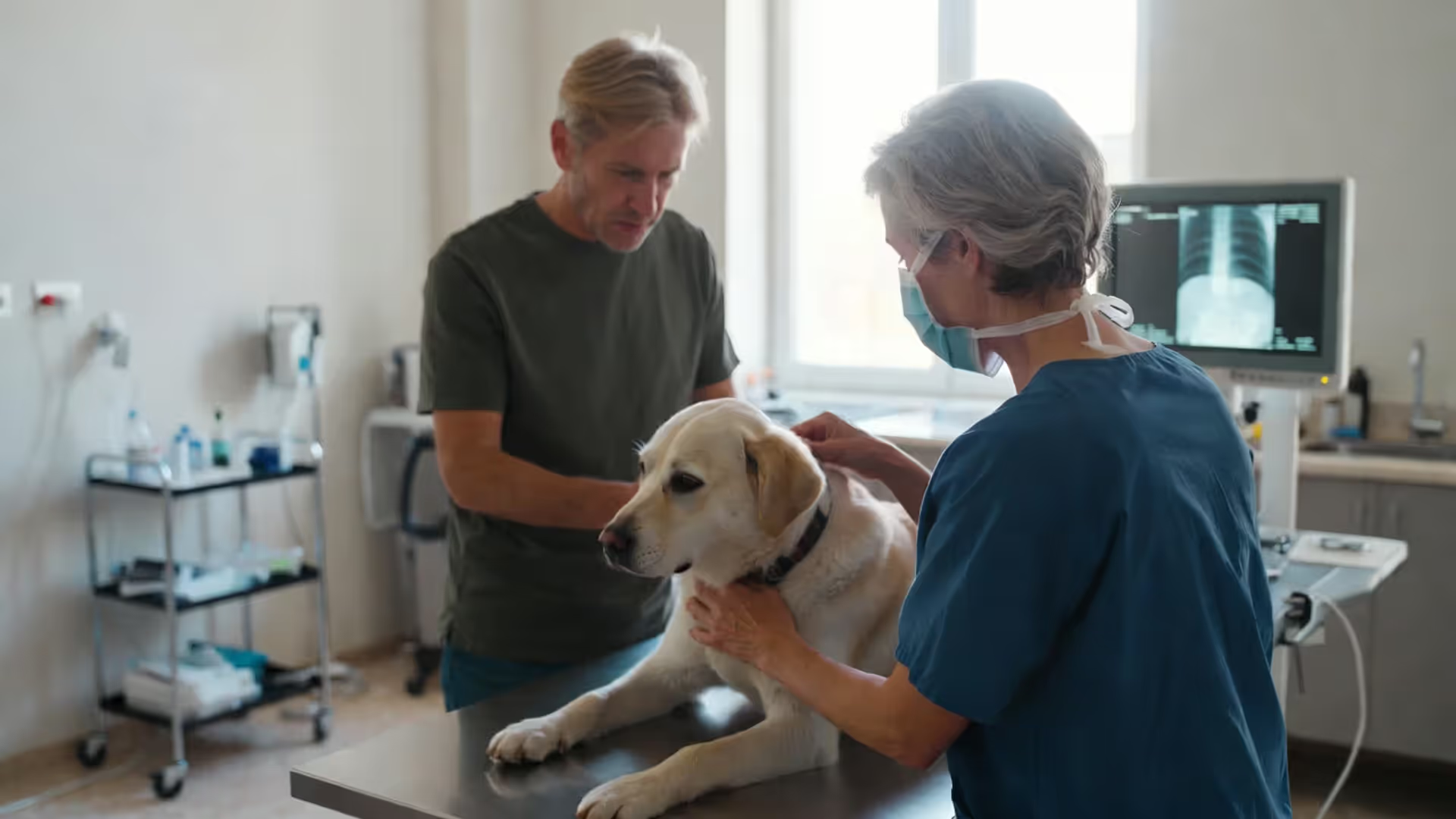
Pet insurance helps owners handle unexpected veterinary costs.
Full coverage pet insurance guide for what it covers and how to choose

Content
Full Coverage Pet Insurance: What It Covers and How to Choose the Right Plan
Your Golden Retriever just limped home from the dog park. X-rays reveal a torn ACL—surgery will run about $4,500. Or your previously healthy tabby starts drinking excessive water. Blood tests confirm diabetes. Monthly insulin costs? Around $150, indefinitely.
Here's what catches pet owners off guard: "full coverage" doesn't mean insurers cut you a check for every veterinary bill. The phrase lacks any official definition. What gets labeled comprehensive at one company might have gaps that would shock you at claim time.
The trick is knowing exactly what you're buying before your pet needs it.
What Does Full Coverage Pet Insurance Actually Include?
No industry standard defines "full coverage." Each insurer draws their own boundaries around what comprehensive means. That said, these policies generally combine three building blocks: protection against accidents, coverage for illnesses, and optional preventive care packages.
Accident and Illness Coverage Basics
The foundation covers unexpected injuries and diagnosed health problems. Think emergency room visits, overnight hospital stays, X-rays and ultrasounds, MRIs and CT scans, blood panels, medications your vet prescribes, and appointments with specialists like cardiologists or oncologists.
Let's say your Beagle raids the trash and swallows chicken bones. The emergency vet performs endoscopy to extract them—bill comes to $3,200. That's a textbook accident claim.
For illnesses, you're covered when your cat gets diagnosed with kidney failure, your dog needs chemotherapy for lymphoma, or your puppy contracts parvo and requires intensive care. Comprehensive pet insurance meaning encompasses both sudden problems and conditions requiring months or years of treatment.
Here's how the math works. Your policy pays a percentage (usually 70%, 80%, or 90%) after you've met your deductible. Imagine an $800 deductible with 80% reimbursement. That $3,200 endoscopy? You'd pay $800 plus 20% of the remaining $2,400. Total out-of-pocket: $1,280. The insurer sends you $1,920.

Author: Jordan Whitman;
Source: lamadone.net
Wellness and Preventive Care Add-Ons
Standard accident-and-illness plans won't touch routine veterinary care. You'll pay separately for annual checkups, vaccines, heartworm pills, flea prevention, teeth cleanings (the preventive kind), spay or neuter surgery, and microchipping.
Want those covered? Full protection pet insurance plans let you tack on wellness packages. Expect to pay $15 to $35 extra monthly. Most packages reimburse $250 to $500 worth of preventive care per year.
Do the math before adding this. Say your healthy three-year-old Labrador needs yearly vaccines ($75), heartworm test and prevention ($120), and an annual exam ($85). That's $280 in preventive costs. If the wellness rider costs $25 monthly—$300 annually—you're spending $20 more than you'd pay out-of-pocket. Not exactly a bargain.
These add-ons make sense if you're religious about dental cleanings ($350+ each) or have multiple pets sharing the benefit.

Author: Jordan Whitman;
Source: lamadone.net
Hereditary and Chronic Condition Protection
This is where comprehensive plans earn their premium. Basic policies often exclude or severely limit coverage for genetic conditions and ongoing diseases.
Purebred dogs carry baggage. German Shepherds get hip dysplasia. Bulldogs develop breathing problems. Dachshunds suffer back injuries. Cocker Spaniels develop eye disease. Maximum coverage insurance pets policies cover these breed-specific problems—as long as your pet gets diagnosed after coverage begins and waiting periods expire.
Chronic conditions matter even more. Your 9-year-old cat develops hyperthyroidism. Treatment involves daily medication, periodic bloodwork, and regular vet visits for potentially 4-6 more years. A truly comprehensive plan keeps paying its percentage year after year, not just for the initial diagnosis month.
Watch out for per-condition annual caps. Some insurers might cover up to $5,000 yearly for diabetes management. Others set one overall annual limit covering everything. Still others offer unlimited annual coverage (at significantly higher premiums, naturally).
How Full Coverage Differs from Basic Pet Insurance Plans
Pet insurance comes in tiers. Accident-only plans sit at the bottom. Basic accident-and-illness policies occupy the middle. Comprehensive packages top the range. Here's where your money goes at each level:
| Feature | Full Coverage Plan | Basic Plan | Accident-Only Plan |
| Broken bones, swallowed objects, lacerations | ✓ Yes | ✓ Yes | ✓ Yes |
| Infections, cancer, organ disease | ✓ Yes | ✓ Yes | ✗ No |
| Hip dysplasia, heart defects, eye disease | ✓ Yes | Often excluded or limited | ✗ No |
| Diabetes, arthritis, kidney disease (ongoing) | ✓ Yes, continuously | May cap after 6-12 months | ✗ No |
| Prescribed medications | ✓ Yes | ✓ Yes | ✗ No |
| Vet exam fees | ✓ Yes | Sometimes excluded | Varies by insurer |
| Preventive care option | ✓ Available | ✓ Available | ✗ Not offered |
| Annual coverage cap | $10,000 to no limit | $5,000-$10,000 | $5,000-$10,000 |
| Typical monthly premium (medium dog) | $55-$95 | $30-$50 | $15-$25 |
The complete insurance pets coverage guide becomes critical when facing ongoing treatment. Say your dog gets diagnosed with mast cell cancer. Surgery costs $3,500. Follow-up chemotherapy runs $4,000 over six months. Monitoring bloodwork and scans add another $1,200 over the next year.
A basic plan might cover the surgery and initial chemo, then stop reimbursing after a certain time period or dollar amount. Your comprehensive policy? It keeps covering follow-ups, medication adjustments, and monitoring scans within your annual limits—year after year if needed.

Author: Jordan Whitman;
Source: lamadone.net
What Full Coverage Pet Insurance Doesn't Pay For
Even policies marketed as "comprehensive" have boundaries. Knowing these prevents the frustration of denied claims.
Common Exclusions You Should Know
Cosmetic work gets rejected unless medically required. Tail docking, ear cropping, or removing extra dewclaws? Pay out-of-pocket. However, if a damaged dewclaw gets infected and needs removal, that's medical—covered.
Breeding-related costs fall outside coverage. Pregnancy ultrasounds, whelping complications, C-sections, and neonatal puppy care aren't covered. Insurers consider breeding a business activity, not a medical need.
Behavioral problems occupy murky territory. If your dog develops severe separation anxiety and your vet prescribes anti-anxiety medication, some insurers cover the prescription and behavioral veterinarian consultation. Others exclude anything behavior-related, forcing you to pay for training, behavior modification, and related medications entirely on your own.
Experimental treatments typically don't qualify for reimbursement. When conventional cancer therapy fails and your oncologist suggests a clinical trial costing $10,000, expect to cover that yourself.
Bilateral conditions—problems affecting both sides of the body—sometimes face weird restrictions. Your dog tears the CCL in her right knee at age 4. Surgery costs $4,000, mostly covered. At age 6, she tears the left knee's CCL. Some policies treat this as a continuation of the original condition, applying one shared annual limit rather than treating it as separate.
Pre-Existing Conditions Explained
This exclusion generates more claim denials than anything else. Every insurer refuses coverage for health problems that existed before your policy started or showed up during waiting periods.
The definition stretches beyond formal diagnoses, though. Say your vet wrote "mild heart murmur detected, recheck in 3 months" in your dog's file. You buy insurance two months later. Any heart-related treatment might get denied—even though nothing was definitively diagnosed when the murmur was first noted.
Curable conditions sometimes get a second chance. Your kitten had a urinary tract infection that completely resolved four months before enrollment. Some companies will cover future bladder issues after a symptom-free window (often 180 days). But chronic stuff—diabetes, Cushing's disease, arthritis, heart disease—stays excluded forever once it appears in medical records.
How Much Does Maximum Coverage Pet Insurance Cost?
Premiums swing wildly based on risk factors insurers crunch through their algorithms. That two-year-old mutt might cost you $38 monthly for comprehensive coverage. The same plan for a ten-year-old English Bulldog? Try $135 monthly.
Price Factors That Affect Your Premium

Author: Jordan Whitman;
Source: lamadone.net
Species and breed form your base price. Dogs cost more than cats—they injure themselves more often, eat things they shouldn't, and rack up bigger veterinary bills. Among dogs, breeds predisposed to expensive problems (Bulldogs, Rottweilers, Great Danes, Bernese Mountain Dogs) carry steeper premiums than typically healthy breeds like Border Collies or Australian Cattle Dogs.
Age at enrollment matters enormously. Insure a puppy or kitten and you'll lock in lower base rates that increase gradually as they age. Wait until your pet hits middle age and you're starting from higher premiums that climb steeply once they hit senior status.
Where you live drives regional pricing. Veterinary costs in San Francisco or New York run 40-60% higher than rural areas. Your insurance premium reflects this. The exact same policy for the same dog might cost $85 monthly in Manhattan but $50 monthly in rural Nebraska.
Your deductible and reimbursement picks create trade-offs. Bump your deductible from $250 to $1,000 and you might slash monthly premiums by 25-30%. But you'll pay more upfront when filing claims. Drop from 90% reimbursement to 70% and your premium falls, but your coinsurance burden grows.
Annual limit selection represents your biggest cost lever. Policies capping at $5,000 annually cost substantially less than $15,000 limits, which run cheaper than unlimited annual coverage.
Average Monthly Costs by Pet Type and Age
| Pet Type | Age Range | Coverage Level | Monthly Premium Range |
| Dog (medium mixed breed) | Under 2 years | $10,000 annual cap, 80% back | $35-$50 |
| Dog (medium mixed breed) | 3-7 years | $10,000 annual cap, 80% back | $50-$70 |
| Dog (medium mixed breed) | 8+ years | $10,000 annual cap, 80% back | $80-$120 |
| Dog (large purebred) | Under 2 years | Unlimited annual, 90% back | $65-$85 |
| Dog (large purebred) | 8+ years | Unlimited annual, 90% back | $130-$180 |
| Cat | Under 2 years | $10,000 annual cap, 80% back | $20-$30 |
| Cat | 3-7 years | $10,000 annual cap, 80% back | $30-$45 |
| Cat | 8+ years | $10,000 annual cap, 80% back | $50-$75 |
These represent national averages. High-risk breeds in expensive cities push costs higher. Mixed breeds in affordable regions trend toward the lower end.
5 Mistakes Pet Owners Make When Buying Comprehensive Coverage
Mistake 1: Enrolling after symptoms appear. Your neighbor's Poodle just got diagnosed with Addison's disease. Now they're frantically shopping for insurance. Too late—that condition's excluded as pre-existing. You can't insure a burning house. Best practice? Enroll during puppyhood or kittenhood, definitely before age three while they're healthy.
Mistake 2: Gravitating toward the cheapest monthly premium. That $22 monthly policy looks tempting until you discover it caps reimbursement at $3,000 per year. One cruciate ligament surgery exhausts that limit in January, leaving you unprotected for 11 months. Better to pay $45 monthly for $15,000 in annual coverage than save $23 monthly and risk hitting limits early.
Mistake 3: Forgetting about waiting periods. Most policies won't pay illness claims for 14 days after enrollment. Orthopedic conditions like cruciate tears? Six to twelve months. If your dog starts limping during that waiting window, the knee problem becomes pre-existing and excluded permanently. Coverage doesn't activate the day you sign up.
Mistake 4: Missing the exam fee detail. Some full protection pet insurance plans exclude the $75-$150 examination fee veterinarians charge, only reimbursing diagnostics and actual treatment. Since literally every claim involves an exam, this exclusion adds up fast. Policies including exam fees deliver better value even if they cost $8-10 more monthly.
Mistake 5: Setting it and forgetting it. Insurers quietly change policy terms, add exclusions, or jack up premiums beyond normal age-related increases. Review your policy documents every renewal period. If your company drops coverage for a condition your breed commonly develops, jump ship before your pet shows symptoms.
How to Compare Full Protection Pet Insurance Plans
Shopping for pet insurance feels like comparing cell phone plans—similar-sounding features hide critical differences. Zero in on these three areas.

Author: Jordan Whitman;
Source: lamadone.net
Reimbursement Rates and Annual Limits
The reimbursement percentage determines what you pay per claim after your deductible. Options usually run 70%, 80%, or 90%. The spread seems small until you're staring at a $7,500 oncology bill.
With 70% reimbursement, you'd pay $2,250 plus your deductible. At 90%, you'd pay $750 plus deductible—a $1,500 difference on one claim.
Annual limits cap what insurers will reimburse during your policy year. A $5,000 limit handles routine problems but evaporates quickly with cancer treatment or multiple emergencies. Unlimited annual coverage eliminates this ceiling but typically costs 30-50% more each month.
Per-incident limits work differently. Some policies cap reimbursement per condition annually—maybe $5,000 for kidney disease, $5,000 for arthritis, $5,000 for allergies—letting you claim multiple conditions up to individual limits. Others set one overall annual cap regardless of how many different problems your pet develops.
Deductible Options and Waiting Periods
Annual deductibles reset every policy year. Once you've paid your deductible amount, the insurer starts reimbursing at your chosen percentage for remaining claims until renewal. Per-incident deductibles apply separately to each new condition—you'd pay the full deductible for a broken leg, then again for an ear infection, then again for a bladder stone.
Annual deductibles usually make more financial sense for pets with chronic conditions needing ongoing care. Per-incident deductibles suit healthy pets likely to need just occasional treatment.
Waiting periods break down by problem type:
- Accidents: 2-3 days
- Illnesses: 14 days
- Cruciate ligament conditions: 6-12 months
- Hip dysplasia: 6-12 months (some carriers)
Why the long orthopedic waits? Some owners enroll after noticing limping, hoping to pass off pre-existing conditions as new injuries. Extended waiting periods discourage this.
Reading the Fine Print on Coverage Caps
Beyond annual limits, watch for per-condition lifetime caps. Some policies impose $5,000 or $10,000 lifetime maximums on hereditary conditions. If your French Bulldog needs $12,000 in spinal surgery and treatment over his life, you'll cover the overage once that cap is hit.
Benefit schedules list maximum reimbursement for specific procedures. Your policy might cover cruciate surgery but cap reimbursement at $2,500 when your surgeon charges $4,800. You'd pay the $2,300 difference plus your deductible and coinsurance. Compare benefit schedules across insurers—better policies reimburse based on actual costs up to your annual limit without procedure-specific caps.
Is Full Coverage Pet Insurance Worth the Investment?
Whether comprehensive coverage makes financial sense depends on three things: your savings cushion, your pet's risk factors, and your treatment philosophy. Maximum coverage insurance pets policies deliver the most value in specific situations.
Comprehensive coverage makes sense when:
- Your dog's a breed prone to expensive hereditary problems (Bulldogs, Golden Retrievers, German Shepherds, Rottweilers)
- You're insuring a young pet, locking in lower rates before health issues develop
- You don't have $5,000-$10,000 set aside specifically for emergency vet bills
- You'd pursue aggressive treatment for serious illness regardless of price
- Your pet does risky activities—agility competitions, backcountry hiking, hunting, dock diving
Skip insurance or choose basic plans when:
- You maintain substantial emergency savings earmarked for veterinary expenses
- You have a healthy mixed breed with no concerning health history
- You'd choose conservative, lower-cost treatment or humane euthanasia over expensive interventions
- Your pet's already senior with diagnosed conditions (they'd be excluded anyway)
Mathematically, pet insurance doesn't save most people money over their pet's lifetime—insurers price policies to stay profitable. But that misses the point. Insurance isn't about saving money on average. It's about converting unpredictable catastrophic expenses into predictable monthly payments. For clients who'd be financially devastated by a $7,000 emergency but can comfortably handle $60 monthly, comprehensive coverage provides enormous value. It often means the difference between pursuing treatment and euthanizing a pet who could've had years of quality life left.
— Dr. Sarah Chen, a veterinary financial consultant who's advised pet owners for 15 years
Run your own break-even analysis. Pay $65 monthly for comprehensive coverage? That's $780 annually. Over your dog's lifetime, you might pay $9,000 in premiums. If he needs $14,000 in covered treatment after deductibles and coinsurance, you've come out ahead financially. If he stays remarkably healthy, you've paid for peace of mind and financial protection.
Frequently Asked Questions About Full Coverage Pet Insurance
Making the Right Choice for Your Pet
Shopping for pet insurance parallels buying car insurance—you're paying for protection you genuinely hope never to use. But here's the difference: veterinary medicine advances incredibly fast. Cancer therapies that didn't exist five years ago now extend pets' lives by years. Advanced orthopedic procedures, cutting-edge diagnostics, chronic disease management protocols—these interventions work remarkably well. They also carry substantial price tags.
Full coverage pet insurance delivers maximum value when purchased early, before health problems surface. That comprehensive policy for a healthy two-year-old Labrador might run $48 monthly now versus $115 monthly if you wait until she's eight. Those six years of lower premiums represent real savings, plus you've protected against conditions that would become permanent exclusions if you'd delayed enrollment.
Compare at least three companies, focusing on what's actually covered, annual limits, and specific exclusions rather than getting dazzled by low monthly premiums. Request actual policy documents—not just marketing brochures—to review real contract language. Marketing materials often promise more than policies actually deliver. Check whether your preferred veterinary specialists work directly with specific insurers for large claims, which simplifies the payment process.
Consider your breed, lifestyle, and financial reserves honestly. A dedicated $10,000 emergency fund for pet care might eliminate your need for insurance entirely. But most households lack that cushion. If a $6,000 emergency would force you onto credit cards or create genuine financial hardship, comprehensive coverage provides valuable protection.
The ideal time to enroll was the day you brought your puppy or kitten home. The second-best time? Today, while they're still healthy enough to qualify without exclusions.