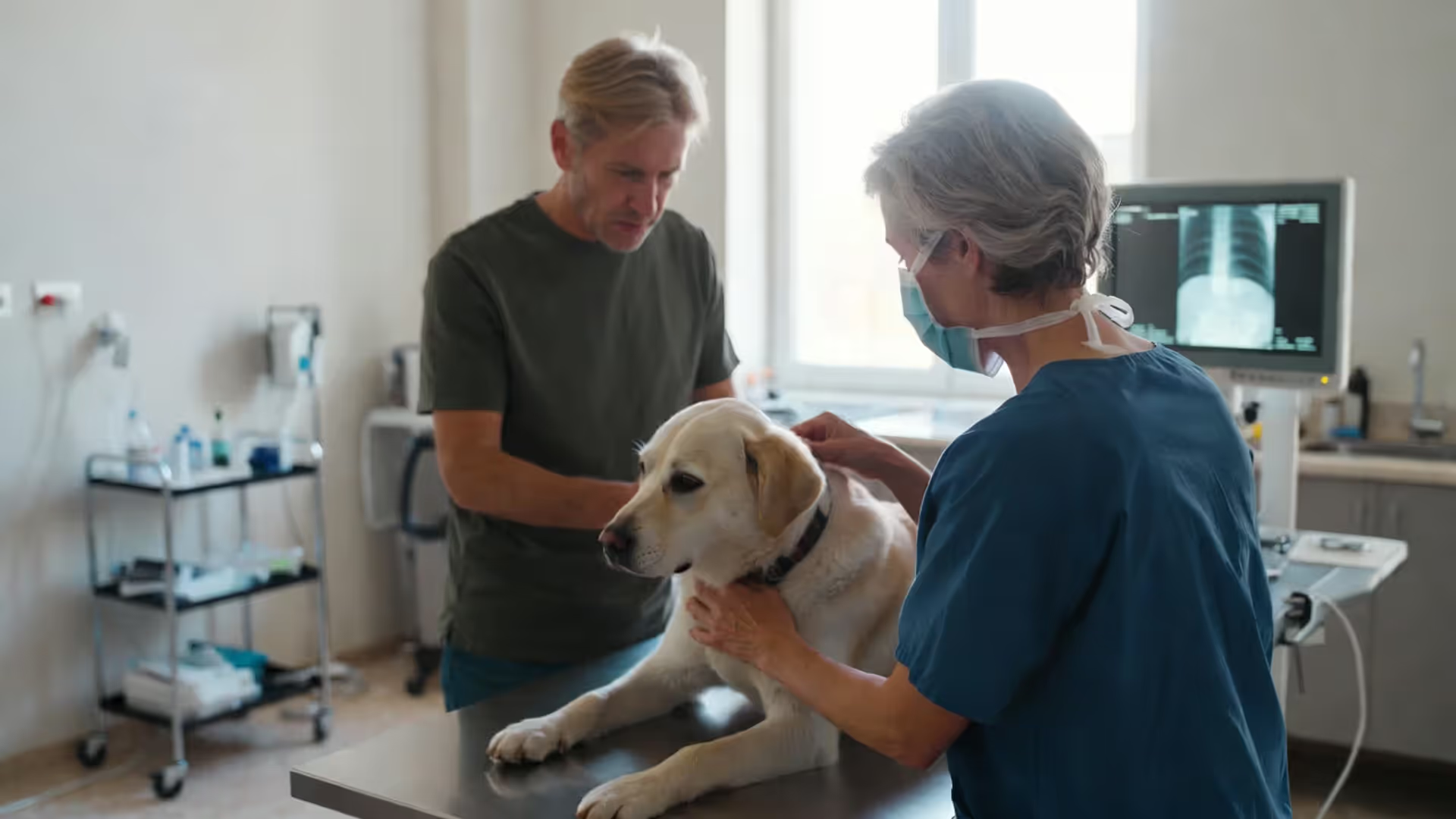
Vaccinations are routine care that standard pet insurance usually does not cover.
Pet Insurance Vaccination Coverage guide for what is covered and out of pocket costs

Content
Here's what happens to most people: They buy pet insurance, feeling responsible and prepared. Three months later, they bring their dog in for shots. The bill is $85. They submit the claim, confident they'll get that money back. Then comes the denial email. "Vaccinations aren't covered under your plan."
Wait, what?
Standard pet insurance doesn't cover vaccines. That shocks about half of new policyholders. Your base plan handles emergencies—ACL tears, cancer, toxin ingestion. Preventive care lives in a completely different category, available only through optional wellness add-ons. You'll pay extra each month for that coverage, and whether it's worth the money depends on math we'll break down in detail.
Let's clear up exactly how pet insurance vaccination coverage actually functions, what you can expect to pay, and when these add-ons make financial sense versus when you're better off just paying your vet directly.
How Pet Insurance Handles Vaccinations (Standard vs. Wellness Coverage)
Your accident-and-illness policy works the same way your car insurance does. You're protecting against the unexpected—the expensive emergencies you can't predict. A $6,000 surgery after your Labrador eats a corncob. A $3,500 cancer diagnosis for your cat. These policies kick in when something goes wrong.
Vaccines don't go wrong. They happen on a schedule. Every puppy needs them. Every adult dog gets annual boosters. Insurance companies know this, which means covering vaccines under standard policies would just create a middleman for costs everyone already expects to pay.
That's why wellness riders exist as separate products. You're adding another layer to your policy—typically $10 to $30 per month—that creates a dedicated bucket of money for scheduled care. That bucket might hold $200, $350, or $500 depending on which tier you pick. Vaccinations get reimbursed from this bucket, along with teeth cleanings, yearly checkups, bloodwork, and parasite prevention.
Here's the part that confuses people: your wellness bucket operates independently from everything else. Your main policy might have a $300 deductible and reimburse 80% of covered costs. None of that applies to wellness claims. The wellness money works more simply—you spend money on approved services, you submit receipts, you get money back up to your annual cap. No deductible. Usually 100% reimbursement.
The vaccination benefits insurance pets receive through these add-ons aren't really "insurance" at all. You're prepaying for routine care through monthly installments. Whether that arrangement saves money or costs you more depends entirely on how much preventive care your specific pet needs compared to what you're paying in premiums.

Author: Ashley Reynolds;
Source: lamadone.net
Which Vaccines Are Covered Under Wellness Riders?
Wellness plans typically cover any vaccine your vet recommends, but vets split vaccines into two categories that affect how quickly you'll burn through your annual allowance.
Core Vaccines Usually Included
Core vaccines protect against diseases every pet faces, regardless of whether they live indoors or roam the neighborhood. Dogs need a combination shot that guards against distemper, hepatitis, parvovirus, and parainfluenza—you'll see it abbreviated as DHPP or DA2PP on your invoice. Rabies protection is legally required in every state.
Cats get the FVRCP combination (feline viral rhinotracheitis, calicivirus, panleukopenia) plus rabies.
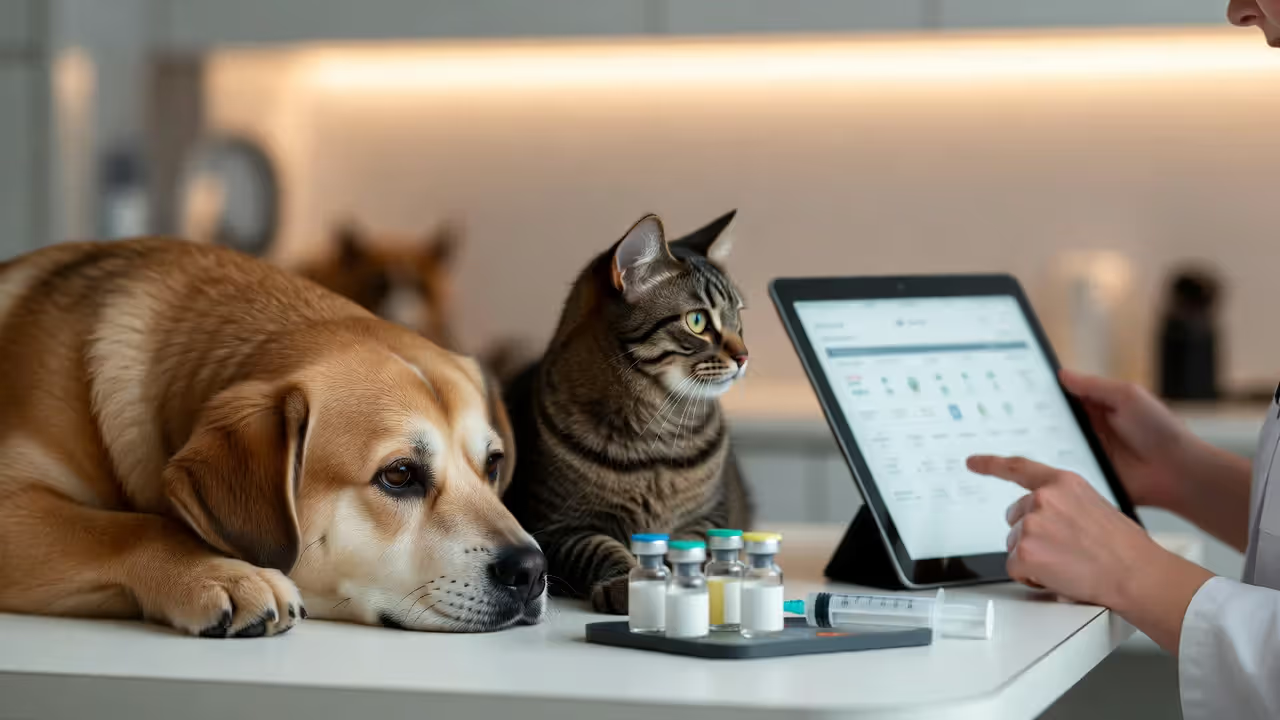
Puppies and kittens can't build immunity from just one shot. They need three rounds spaced about a month apart, usually at 8, 12, and 16 weeks old. That series runs $75 to $150 total depending on your location. Adult pets need boosters—some annually, others every three years based on state law and vaccine type. Each booster costs $20 to $40.
If your wellness cap is $250 and you've got a puppy going through the initial series, you've just consumed over half your allowance on core vaccines alone before adding anything else.
Author: Ashley Reynolds;
Source: lamadone.net
Non-Core and Lifestyle Vaccines
Non-core vaccines target diseases your pet might encounter based on where you live and what they do. Bordetella (kennel cough) makes sense for dogs hitting the dog park three times a week or staying at boarding kennels. Skip it if your dog never socializes beyond your backyard.
Lyme disease vaccination matters in the Northeast and upper Midwest where tick-borne illness rates are climbing. It's pointless in Arizona.
For cats, feline leukemia coverage is recommended for kittens but optional for adult cats who never venture outside. Canine influenza vaccines exist but only make sense in areas with active outbreaks—Chicago saw one in 2015, New York in 2018.
Most wellness plans reimburse for non-core vaccines without questioning your vet's judgment, but you need to think strategically. You've got a fixed pool of money. If you're already planning on a $300 dental cleaning and $100 in bloodwork, adding a $30 Bordetella shot might push you over your limit. Some people skip the cheaper vaccines and pay out-of-pocket, saving their wellness allowance for expensive services that deliver better ROI.
| Vaccine Type | Dog Vaccines | Cat Vaccines | What You'll Pay | Usually Covered? |
| Core | DHPP, Rabies | FVRCP, Rabies | $20-40 each | Yes, up to your cap |
| Non-Core | Bordetella, Lyme, Canine Influenza, Leptospirosis | FeLV (for adults), FIV | $25-45 each | Yes, up to your cap |
| Puppy/Kitten Series | Three DHPP rounds | Three FVRCP rounds | $75-150 complete series | Yes, but eats up your limit fast |
Vaccine Reimbursement: How Claims Work for Preventive Care
Submitting wellness claims is easier than filing accident or illness claims, but you need to understand the timing and limits.
Your vet gives you an itemized invoice after administering vaccines. It lists each shot separately with individual costs. You photograph this invoice using your insurance company's mobile app and upload it. Some older companies still accept email or physical mail, though that's becoming rare.
Claims process in five to fifteen business days—much faster than medical claims because nobody needs to review treatment records or determine if something's covered. Either the service appears on your plan's approved list or it doesn't.
You'll get reimbursed through direct deposit, a paper check, or occasionally a credit toward next month's premium. Unlike your main policy, wellness coverage doesn't involve deductibles. If your plan covers vaccinations at 100% (most do), you receive the full vaccine cost back until your annual money runs out.
That annual cap resets on your policy anniversary, not January 1st. Buy your policy on March 15th, and your $300 limit refreshes every March 15th. This timing creates a planning opportunity: book your pet's annual exam right after your renewal date. You maximize the time before you need to dip into next year's bucket.
Waiting periods run 14 to 30 days from when coverage starts. You can't buy a wellness plan on Monday and file a claim for Tuesday's vaccine appointment. Companies built in these delays to prevent people from gaming the system—purchasing coverage only when they need it, then canceling.
One frustration: you pay the vet upfront and wait for reimbursement. Very few insurers have moved to direct payment models. If you're scheduling annual checkups for three pets simultaneously, you might need to front $400 to $600 before seeing reimbursement checks weeks later.
Comparing Top Pet Insurance Providers' Vaccination Policies
The vaccine policy pets insurance companies enforce varies dramatically in cost structure and flexibility. Here's what six major providers currently offer:
| Provider | Monthly Wellness Cost | Annual Vaccine Limit | Waiting Period | Reimbursement Rate | Key Details |
| Healthy Paws | Not available | N/A | N/A | N/A | Emergency coverage only, no preventive option |
| Trupanion | $18-28 | Shares $300-450 total pool | 30 days | 100% | Three tiers to choose from |
| Nationwide | $9-30 | $50-150 for vaccines specifically | 14 days | 100% | Vaccines get separate bucket from other services |
| ASPCA | $9.95-24.95 | Shares $250-450 total pool | 14 days | 100% | Combined allowance for all preventive care |
| Embrace | $18-35 | Shares $250-650 total pool | 14 days | 100% | Highest caps available |
| Spot | $9.95-24.95 | Shares $250-450 total pool | 14 days | 100% | Gold tier recommended for vaccine needs |
Healthy Paws deliberately avoids wellness coverage. They focus exclusively on emergencies and illnesses, keeping their base premiums lower than competitors. You're on your own for vaccines and routine care.
Nationwide structures their wellness differently than everyone else—they allocate specific dollar amounts to different service categories instead of one combined pool. You might get $150 for vaccines, $200 for dental, $100 for exams. This benefits people whose pets need heavy vaccination schedules but skip other preventive services.
Adding wellness coverage costs $120 to $420 annually, depending on the tier you select. But your actual vaccine costs for a healthy adult pet typically run $60 to $120 per year including the exam fee. You need to use additional services—dental cleanings at $200-400, senior bloodwork at $100-150, fecal tests at $25-50—to break even on most wellness plans.
Wellness riders make sense financially for owners who already maintain consistent preventive care schedules and want to spread costs across the year instead of facing large bills. For a healthy three-year-old dog needing just annual vaccines and a checkup, you'll probably pay more for the rider than you'd spend at the vet. Puppies and kittens are different—their first year preventive costs easily justify wellness coverage.
— Dr. Sarah Chen, a veterinarian advising Pet Insurance Review
5 Common Mistakes Pet Owners Make With Vaccination Coverage
Assuming your base policy handles vaccines. This trips up more than half of first-time buyers. They purchase an accident-illness policy, take their puppy for shots, submit the claim, and get blindsided by the denial. Check your policy documents before making assumptions—wellness coverage must be added separately and appears as a line item on your premium invoice.
Forgetting when your annual limit resets. Your wellness allowance refreshes on your policy anniversary date, not the calendar year or your pet's birthday. Enrolled on June 1st and burned through your $300 by August? You're self-paying until next June 1st. Smart owners schedule expensive services like dental cleanings right after their renewal, spreading smaller routine costs throughout the remaining months.

Author: Ashley Reynolds;
Source: lamadone.net
Losing track of how much limit remains. Insurance companies don't usually alert you when you're approaching your cap. You might book a $200 dental cleaning thinking you've got $250 available, only to discover earlier claims already consumed $180. Log into your account dashboard before scheduling costly preventive services to verify your remaining balance.
Paying twice for the same vaccines. Many veterinary practices sell wellness packages—flat annual fees covering exams, vaccines, and basic diagnostics. If you're already paying $240 yearly for insurance wellness coverage, then paying another $300 for your vet's package, you've just paid twice for identical services. Compare both options' math and pick one, not both.
Getting caught by waiting periods when switching insurers. Your old policy ends on the 15th. Your new policy starts on the 16th with a 30-day waiting period for wellness coverage. Your dog needs annual vaccines on the 20th. That claim gets denied. Always account for waiting period gaps when changing providers—either maintain overlap or postpone routine care until your new coverage activates.
Is Adding Vaccination Coverage Worth the Cost?
The financial logic behind wellness coverage shifts dramatically based on your pet's age and your actual usage of preventive services.
Puppies and kittens in their first year usually justify the expense. A typical puppy needs three DHPP rounds ($75-120), rabies vaccines ($60-90 for the series), possible Bordetella and Lyme shots ($50-90), several fecal tests ($30-60), deworming treatments ($30-50), and multiple exam fees. First-year preventive costs hit $300-500 easily. A wellness rider costing $180-300 annually that reimburses up to $400-450 delivers real savings.
Adult pets in maintenance mode flip the equation. Your five-year-old dog gets annual DHPP ($25), rabies ($25), maybe Bordetella ($25), plus one yearly exam ($60). Total: $135. You're paying $240 yearly for wellness coverage with a $250 cap. You've just spent $105 more than if you'd paid the vet directly. You need additional services—dental cleaning at $200-400, senior bloodwork at $100-150—to justify the premium.
Try this calculation: pull out last year's vet receipts and total what you actually spent on preventive care. If that number exceeds the annual cost of wellness coverage and you expect similar expenses ahead, buy the rider. If your preventive costs came in significantly lower, skip the rider and pocket the premium difference.
Geography changes the math too. Veterinary care in San Francisco costs 40% more than veterinary care in rural Oklahoma. If your local vet charges $45 per vaccine instead of $25, your annual preventive expenses rise proportionally, potentially making wellness coverage worthwhile even for adult pets.
Beyond pure math, consider budgeting psychology. Some people genuinely prefer paying $20 monthly over facing a $250 annual vet bill, even if the total yearly cost is slightly higher with insurance. If monthly payments help you maintain consistent preventive care instead of skipping vaccines because money's tight that month, that behavioral benefit might justify the extra cost. No judgment—different financial approaches work for different households.
Frequently Asked Questions About Pet Insurance and Vaccinations
Vaccination coverage through pet insurance occupies this weird space between legitimate insurance and glorified layaway plans. For owners committed to maintaining consistent preventive care—especially during the vaccine-heavy puppy and kitten stages—wellness riders can smooth out budgeting and eliminate the sticker shock of large vet bills. But they don't automatically save you money. The economics depend on your pet's specific needs, your local vet's pricing, and how completely you use that annual allowance.
Start with honest assessment: calculate your actual annual preventive expenses from last year's receipts, compare them against wellness rider costs and limits at different tiers, and factor in how your brain handles money management. Some people prefer writing one $300 check yearly for vaccines and exams. Others find value in spreading that expense across twelve $25 monthly payments even when the total is slightly higher. Both approaches work—pick the structure that keeps your pet current on vaccinations without creating financial stress.
Before purchasing wellness coverage, request detailed breakdowns of covered services, annual limits, reimbursement percentages, and waiting periods from any company you're considering. Read the fine print about which specific vaccines qualify, whether titers count toward your limit, and exactly when your cap resets. Complete information beats assumptions every time when you're deciding whether vaccination coverage makes sense for your situation.