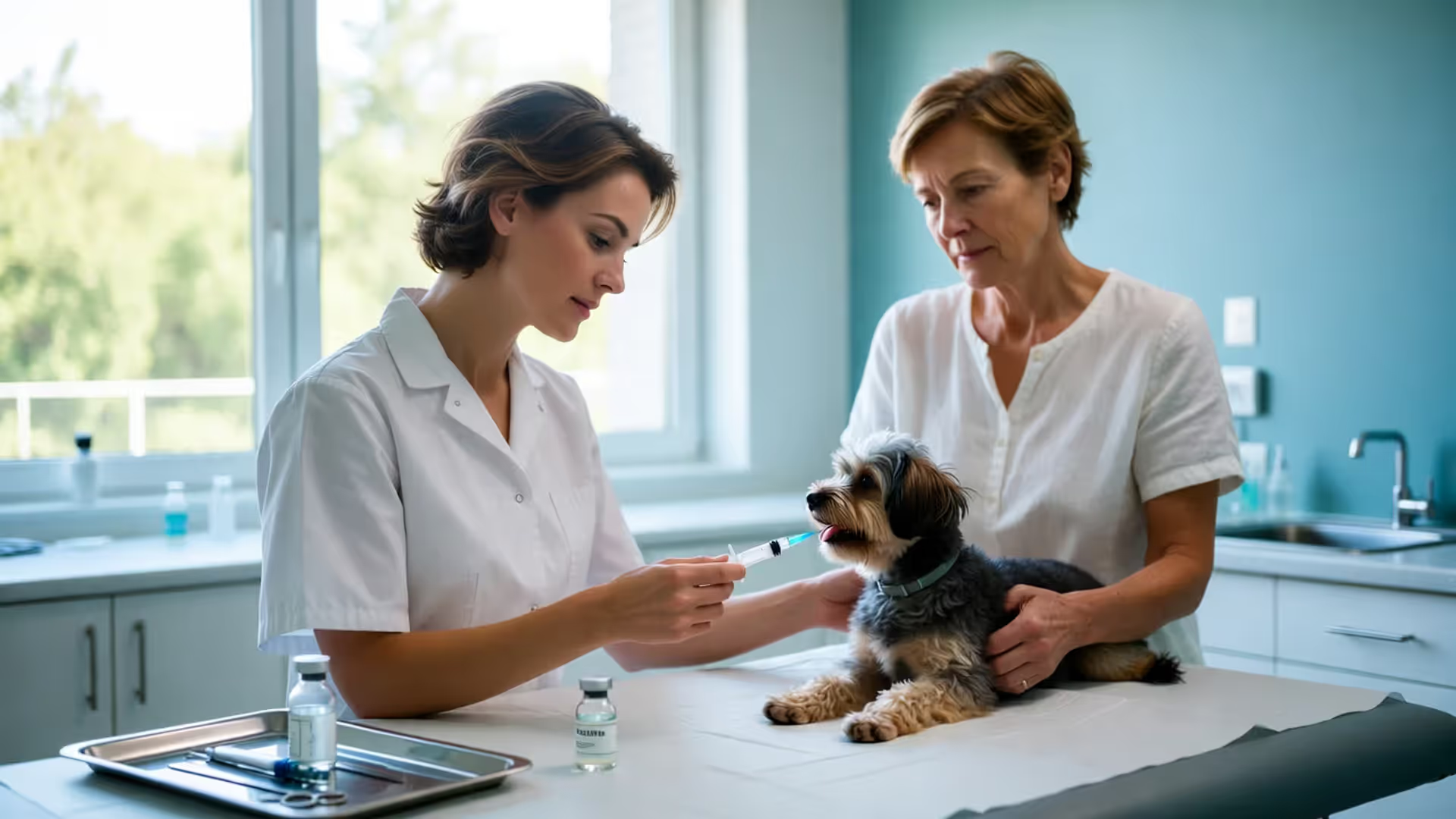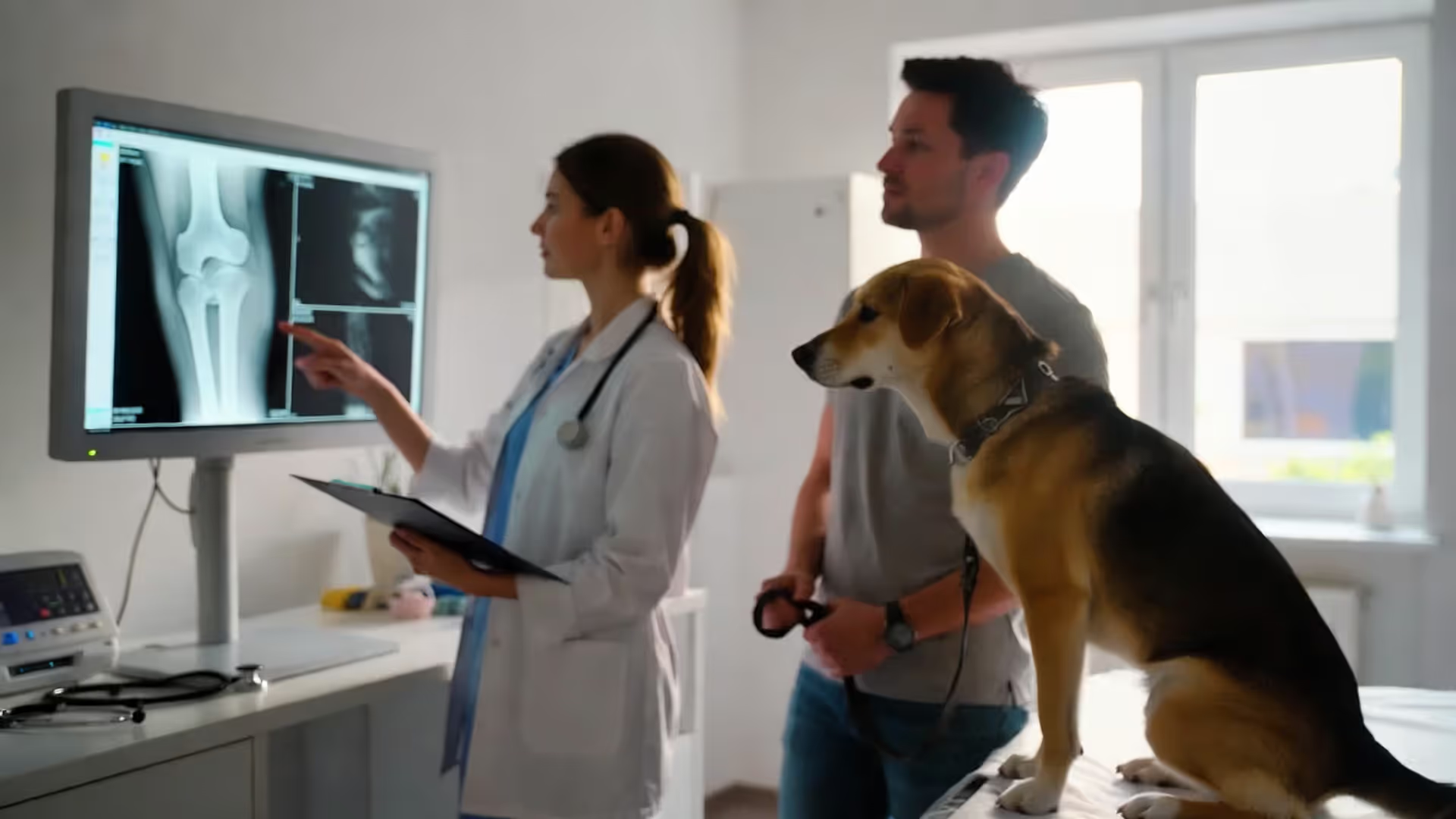
Pet insurance can reduce the financial shock of major veterinary surgery
Pet Insurance Surgery Coverage guide for procedures covered and reimbursement

Content
Pet Insurance Surgery Coverage: What Surgical Procedures Are Covered and How Reimbursement Works
When your dog tears an ACL chasing a squirrel or your cat needs emergency surgery to remove a swallowed toy, the veterinary bill can easily reach $3,000 to $7,000. Pet insurance surgery coverage exists to soften these financial blows, but understanding what's actually covered—and how much you'll get back—requires digging past the marketing promises.
Most pet owners don't realize their policy might cover 90% of a $5,000 tumor removal but nothing for that $800 dental extraction their 12-year-old retriever needs. The difference lies in how insurers classify procedures, when conditions developed, and what fine print governs your specific plan.
How Pet Insurance Covers Surgical Procedures
Standard pet insurance policies treat surgical procedures as part of broader accident and illness coverage. When your veterinarian recommends surgery, the insurer evaluates whether the underlying condition qualifies under your policy terms, not simply whether a scalpel was involved.
Accident-only plans cover surgeries resulting from unexpected injuries: broken bones from falls, lacerations requiring stitches, foreign body removal after your puppy ate a sock. These policies cost less but won't help when your cat develops kidney stones requiring surgical intervention or your dog needs a mass removed.
Accident and illness plans—the most common type—add coverage for surgeries addressing medical conditions: tumor removals, bladder stone surgery, gastrointestinal obstructions from illness, orthopedic procedures for hip dysplasia. This is where surgical procedures coverage pets insurance becomes meaningful for most pet owners.
Wellness or preventive care riders occasionally cover routine spay/neuter procedures, but these are add-ons to base policies, not surgery coverage in the traditional sense. Don't confuse a $150 wellness benefit for neutering with actual surgical coverage for medical needs.
Pre-existing conditions create the biggest coverage gap. If your dog limped before your policy's effective date and later needs cruciate ligament surgery, expect a denial. Insurers define pre-existing conditions as any injury, illness, or symptom that occurred or showed clinical signs before coverage began or during waiting periods. This applies even if no formal diagnosis existed—limping counts as a clinical sign.
Pet owners frequently misunderstand that insurance protects against future conditions, not current or past problems. Enrolling after your pet shows symptoms of a condition requiring surgery means you'll pay out-of-pocket for that specific issue, even if surgery happens months later.
— Dr. Jennifer Coates, DVM, veterinary advisor and former practicing veterinarian
Types of Surgeries Typically Covered by Pet Insurance
Emergency and Accident-Related Surgeries
Accident coverage kicks in for traumatic injuries requiring immediate surgical intervention. Foreign body removal tops the list—dogs swallow everything from corn cobs to children's toys, and cats ingest string or ribbons that tangle their intestines. These surgeries run $2,000–$5,000 depending on complexity.
Fracture repairs from falls, car accidents, or rough play qualify under accident coverage. Expect $1,500–$4,000 for simple breaks, more for compound fractures requiring pins and plates. Laceration repairs, eye injuries from fights or accidents, and emergency splenectomies after trauma all fall under this category.

Author: Brandon Keller;
Source: lamadone.net
Cruciate ligament tears occupy a gray zone. While the tear often happens during play (an "accident"), some insurers argue the underlying joint weakness represents a pre-existing condition if your pet showed any prior lameness. This is where policy language matters tremendously.
Illness-Related Surgical Procedures
Cancer surgeries represent a major category of covered surgeries pets insurance policies handle. Mast cell tumor removal, lipoma excision, mammary tumor surgery—these procedures cost $500–$5,000 depending on location and complexity. Most policies cover cancer treatment surgeries if the cancer developed after your coverage began.
Gastrointestinal surgeries for conditions like intestinal blockages from illness, gastric dilatation-volvulus (bloat), or inflammatory bowel disease complications typically receive coverage. Bloat surgery alone costs $3,000–$8,000 and requires immediate intervention.
Bladder stone removal, cherry eye surgery, entropion correction, and other condition-specific procedures qualify when the underlying condition isn't pre-existing. A Shih Tzu developing entropion at age three would be covered; signs present at adoption likely wouldn't be.

Author: Brandon Keller;
Source: lamadone.net
Breed-Specific Surgeries and Hereditary Conditions
This category causes the most confusion. Many purebred dogs face predictable health issues: Bulldogs need soft palate resections, German Shepherds develop hip dysplasia, Dachshunds suffer intervertebral disc disease. Major surgery insurance pets policies handle these differently based on when symptoms appear.
If you enroll your healthy six-month-old Labrador and she develops hip dysplasia at age four, surgery is typically covered. Enroll that same Lab at age three with existing hip pain, and you'll face a pre-existing condition exclusion.
Brachycephalic airway syndrome surgeries (for flat-faced breeds) get covered if respiratory symptoms develop after enrollment. Some insurers now exclude breed-specific conditions entirely or impose longer waiting periods, so compare policies carefully if you own a breed with known hereditary issues.
What Determines Your Surgery Reimbursement Amount

Author: Brandon Keller;
Source: lamadone.net
Understanding surgery reimbursement pets insurance calculations prevents surprise bills. Four factors determine what you actually receive:
Reimbursement percentage is what you select when buying coverage—typically 70%, 80%, or 90%. This percentage applies to covered expenses after your deductible. Higher percentages mean higher premiums but better protection for expensive procedures.
Annual limits cap total reimbursement per policy year. A $10,000 annual limit sounds generous until your dog needs $6,000 ACL surgery in March and $5,000 cancer surgery in October. You'll hit your limit and pay the remaining $1,000 entirely out-of-pocket. Unlimited annual coverage costs more but eliminates this risk.
Deductibles come in two flavors: annual deductibles (you pay once per year before reimbursement starts) and per-incident deductibles (you pay for each new condition). Annual deductibles range from $100–$1,000. Per-incident deductibles mean paying $250–$500 every time a new surgical need arises.
Co-insurance is simply your share after deductible and reimbursement percentage. Here's a real example:
Your dog needs $4,000 ACL surgery. You have a $250 annual deductible (already met), 80% reimbursement, and a $10,000 annual limit.
- Covered amount after deductible: $4,000
- Insurance pays (80%): $3,200
- You pay (20% co-insurance): $800
If you hadn't met your deductible yet:
- Total surgery cost: $4,000
- Minus deductible: $250
- Remaining covered amount: $3,750
- Insurance pays (80% of $3,750): $3,000
- You pay ($250 deductible + $750 co-insurance): $1,000
These calculations matter most for major surgery insurance pets scenarios where bills exceed $3,000.
Common Surgeries and Their Coverage Status
| Surgery Type | Typical Cost Range | Usually Covered | Common Waiting Period | Notes |
| ACL/Cruciate Ligament Repair | $2,500–$5,500 | Yes (if no pre-existing lameness) | 14–30 days | May require orthopedic exam records |
| Foreign Body Removal | $2,000–$5,000 | Yes (accident) | 2–3 days (accident) | Covered immediately after accident waiting period |
| Tumor/Mass Removal | $500–$4,000 | Yes (if cancer develops post-enrollment) | 14–30 days | Biopsies usually required |
| Bloat (GDV) Surgery | $3,000–$8,000 | Yes | 14–30 days | Time-sensitive emergency |
| Hip Dysplasia Surgery | $3,500–$7,000 | Yes (if no pre-existing symptoms) | 14–30 days, sometimes 6–12 months | Some insurers impose longer waits |
| Cherry Eye Correction | $500–$1,500 | Yes | 14–30 days | Breed predispositions may affect coverage |
| Bladder Stone Removal | $1,500–$3,500 | Yes | 14–30 days | Recurrence may complicate future claims |
| Spay/Neuter | $200–$800 | No (elective) | N/A | Sometimes covered under wellness add-ons |
| Dental Extractions (Disease) | $500–$1,500 | Partial/No | 14–30 days | Many policies exclude dental or require dental rider |
| Entropion Surgery | $500–$1,500 | Yes (if develops post-enrollment) | 14–30 days | Common breed-specific exclusions |
| Intervertebral Disc Surgery | $4,000–$8,000 | Yes (if no prior back issues) | 14–30 days | Pre-existing back pain disqualifies |
| Pyometra Surgery | $1,000–$3,000 | Yes | 14–30 days | Emergency uterine infection |
| Cataract Surgery | $3,000–$5,000 (both eyes) | Yes (if not hereditary/pre-existing) | 14–30 days, sometimes 6–12 months | Hereditary cataracts often excluded |
| Luxating Patella Repair | $1,500–$4,000 | Yes (if no prior symptoms) | 14–30 days | Common in small breeds; grading matters |
| Amputation (Injury/Cancer) | $1,500–$3,500 | Yes | 14–30 days | Covered if underlying condition qualifies |
| Ear Hematoma Surgery | $500–$1,500 | Yes | 14–30 days | Often related to ear infections |
| Perineal Urethrostomy | $2,000–$4,000 | Yes | 14–30 days | For cats with urinary blockages |
| Gastropexy (Preventive) | $400–$1,500 | No (preventive) | N/A | May be covered if done during emergency bloat surgery |
| C-Section | $1,500–$3,000 | No (breeding-related) | N/A | Breeding exclusions apply |
| Tail Docking/Ear Cropping | $200–$800 | No (cosmetic) | N/A | Elective cosmetic procedures excluded |
Surgery Eligibility Requirements and Waiting Periods
Surgery eligibility insurance pets policies impose waiting periods between enrollment and coverage activation. These periods protect insurers from people buying coverage only after their pet gets sick.
Accident waiting periods run 2–5 days. If your dog breaks a leg three days after enrollment with a three-day waiting period, you're covered. At two days, you're not.
Illness waiting periods typically span 14–30 days. Some insurers impose longer waits (6–12 months) for specific conditions like orthopedic issues or hereditary conditions. Read your policy's waiting period schedule carefully—not all conditions share the same timeline.
Cruciate ligament injuries sometimes face extended waiting periods (6–12 months) because of high claim rates. If your policy includes this extended wait, any ligament tear occurring in the first year won't be covered.
Documentation requirements matter for surgery eligibility. Insurers need:
- Complete medical records showing when symptoms first appeared
- Veterinarian's notes explaining the diagnosis and surgical necessity
- Itemized invoice detailing the procedure and all related costs
- Surgical reports and pathology results for tumor removals
Pre-authorization isn't always required, but calling your insurer before non-emergency surgery prevents surprises. Some companies want to review necessity for expensive procedures like hip replacement or advanced orthopedic surgery.
Coverage begins the day after your waiting period ends, assuming you've paid your premium and met all enrollment requirements. Mark these dates on your calendar—a surgery scheduled one day before your waiting period expires means paying the full bill yourself.
Surgeries Usually Excluded from Pet Insurance Coverage
Even comprehensive pet insurance surgery coverage has boundaries. Understanding exclusions prevents frustration when filing claims.
Elective procedures don't get covered because they're optional, not medically necessary. Spaying and neutering fall here unless complications arise (a spay surgery that discovers pyometra might be covered as emergency treatment). Tail docking, ear cropping, dewclaw removal, and debarking are cosmetic choices insurers won't fund.
Pre-existing condition surgeries represent the largest exclusion category. If your cat had urinary crystals before enrollment and later needs perineal urethrostomy, expect denial. If your dog limped before coverage began and eventually requires orthopedic surgery, you'll pay out-of-pocket even if the formal diagnosis came after enrollment.
Some insurers use "bilateral condition" clauses: if your pet's right knee shows cruciate ligament problems before enrollment, they'll exclude surgery on both knees, arguing the condition affects both joints even if only one showed symptoms.
Breeding-related procedures get excluded across the board. C-sections, pregnancy complications, dystocia surgery, and any procedure related to breeding or whelping aren't covered. This applies even if you didn't intentionally breed your pet—if your unspayed dog escapes and gets pregnant, you're covering the C-section.
Experimental treatments and surgeries not considered standard veterinary care face exclusion. If your veterinarian wants to try a novel surgical approach not yet widely accepted, insurers may deny coverage. Stem cell procedures, some advanced cancer surgeries, and cutting-edge treatments often fall into this gray area.
Dental disease surgeries get excluded or limited by many policies. Tooth extractions due to periodontal disease frequently aren't covered unless you've purchased a dental illness rider. The logic: dental disease is preventable with proper care. However, tooth fractures from trauma usually qualify under accident coverage.
How to File a Surgery Claim and Maximize Your Reimbursement

Author: Brandon Keller;
Source: lamadone.net
Filing surgery reimbursement pets insurance claims efficiently gets money back faster and reduces denial risk.
Step 1: Pay your veterinarian directly. Most pet insurance operates on a reimbursement model—you pay the bill, then the insurer pays you back. Only a few companies offer direct payment to veterinarians.
Step 2: Request itemized invoices showing every charge: examination fees, pre-surgical bloodwork, anesthesia, the surgery itself, pain medications, hospitalization, and follow-up visits. Generic "surgery" line items without details trigger claim reviews and delays.
Step 3: Gather supporting documentation: medical records explaining why surgery was necessary, diagnostic test results (X-rays, ultrasounds, bloodwork), surgical notes, and pathology reports for biopsies. Insurers want proof the surgery addressed a covered condition.
Step 4: Submit claims within your policy's deadline, usually 90 days to one year from the service date. Late claims get denied regardless of legitimacy.
Step 5: Use your insurer's preferred submission method. Many companies now offer mobile apps where you photograph invoices and upload them instantly. Others require online portals or mailed forms. Apps typically process faster.
Step 6: Track your claim status and respond immediately to requests for additional information. Insurers might need clarification on dates, additional records, or explanations from your veterinarian.
Common denial reasons include:
- Pre-existing condition flags (symptoms noted in previous records)
- Services during waiting periods
- Missing documentation or incomplete invoices
- Excluded procedures bundled with covered ones
- Exceeding annual or lifetime limits
- Lapsed coverage due to missed premium payments
Maximizing reimbursement tips:
Keep thorough records of your pet's health before enrollment. If a condition develops later, you can prove it wasn't pre-existing.
Schedule surgeries after waiting periods expire, when possible. Non-emergency procedures can wait a few weeks to ensure coverage.
Ask your veterinarian to separate invoices for multiple procedures. If your dog needs covered tumor removal and excluded dental cleaning during the same anesthesia, separate invoices clarify what should be reimbursed.
Appeal denials with additional documentation. If your insurer claims a condition was pre-existing, ask your veterinarian to write a letter explaining why symptoms noted in records didn't indicate the condition requiring surgery.
Choose higher reimbursement percentages (80%–90%) if you're risk-averse about major surgery insurance pets expenses. The premium difference often matters less than the reimbursement gap on a $6,000 surgery.
Frequently Asked Questions About Pet Insurance Surgery Coverage
Making Surgery Coverage Work When Your Pet Needs It
Pet insurance surgery coverage provides genuine financial protection when structured properly and purchased before problems develop. The difference between manageable $800 out-of-pocket costs and devastating $5,000 bills often comes down to understanding policy mechanics before your pet needs emergency care.
Successful coverage requires matching policy features to your pet's risk profile. Large breed puppies benefit from unlimited annual limits and high reimbursement percentages because of orthopedic surgery risks. Brachycephalic breeds need policies without breed-specific exclusions. Mixed breeds with unknown health histories do well with comprehensive accident and illness plans that don't impose extended waiting periods.
The pre-existing condition rule remains the most important factor: enroll while your pet is healthy. A six-month-old puppy with clean medical records can develop hip dysplasia at age four and receive full coverage for $6,000 surgery. That same dog enrolled at age three with existing hip pain gets nothing.
Review your policy's surgery coverage annually. As your pet ages or if you've filed claims, verify your annual limit hasn't been exhausted and your coverage remains active. Small premium increases might add valuable coverage upgrades like higher reimbursement percentages or unlimited annual limits that matter tremendously when facing major surgical decisions.
Ultimately, surgical procedures coverage pets insurance succeeds when you understand exactly what you're buying, maintain continuous coverage, and keep thorough medical records proving conditions developed after enrollment. These steps transform insurance from a confusing gamble into reliable financial protection when your pet needs surgery most.