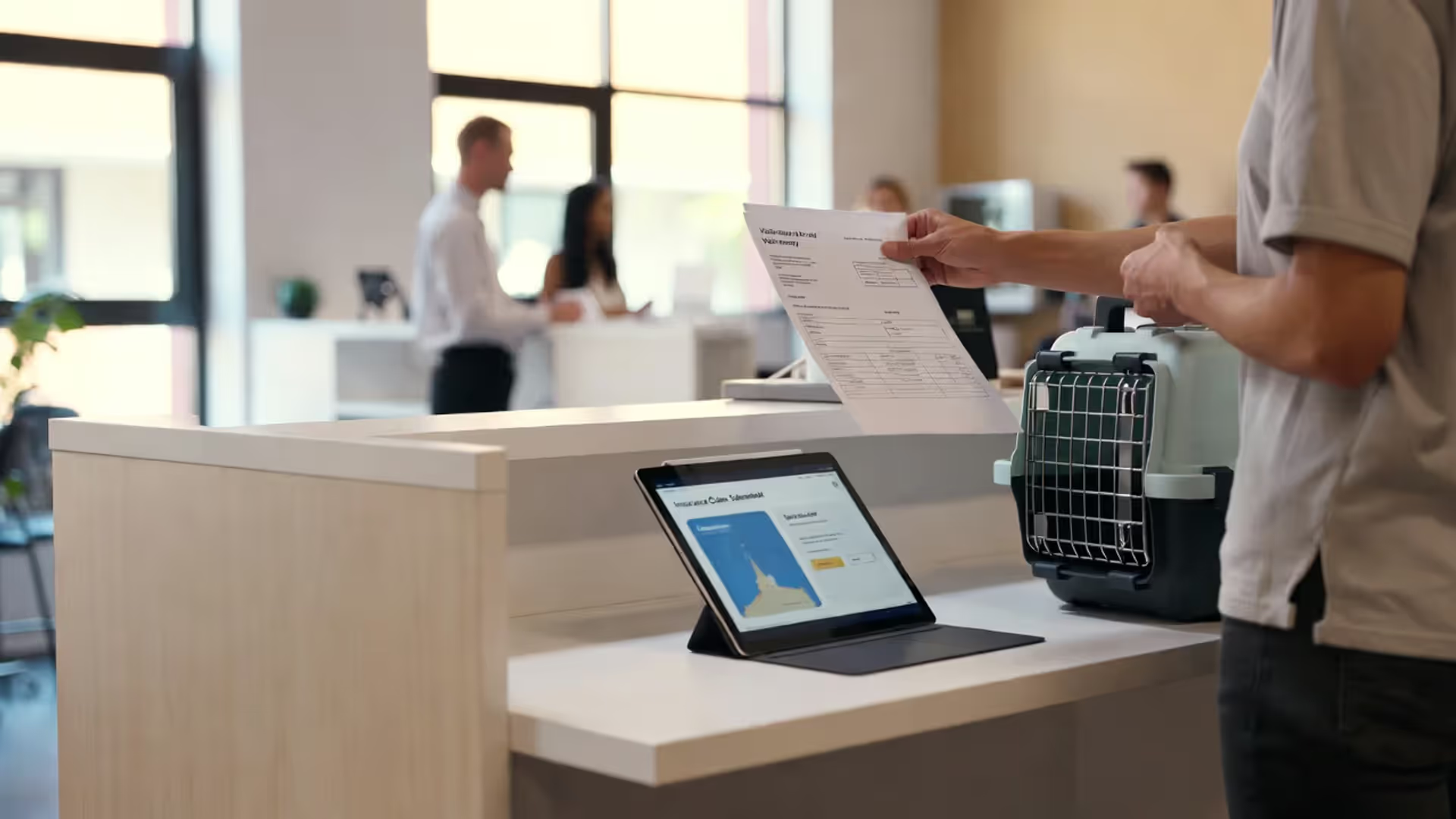
Understanding your coverage makes every claim easier.
Pet Insurance Claims Process Explained

Content
Filing a claim with your pet insurance provider shouldn't feel like navigating a maze, yet many pet owners find themselves confused about what to submit, when to submit it, and why their reimbursement is taking longer than expected. Understanding the claims workflow from start to finish helps you avoid delays, maximize your reimbursement, and reduce stress during already difficult times when your pet needs medical care.
The typical claim process involves three main phases: preparing your documentation, submitting your claim through your insurer's preferred method, and waiting for review and approval. Most pet owners receive reimbursement within 5-14 days for digital submissions, though paper claims can take significantly longer. Knowing what happens at each stage—and what can go wrong—makes the difference between a smooth experience and weeks of frustrating back-and-forth with customer service.
What Happens Before You File: Understanding Your Policy Coverage
Before you ever submit paperwork, you need to know exactly what your policy covers and what financial responsibilities fall on your shoulders. Pet insurance operates on a reimbursement model, meaning you pay the veterinarian upfront and file for reimbursement afterward—not like human health insurance where you might only pay a copay.
Your reimbursement rate determines what percentage of covered expenses you'll get back after meeting your deductible. If your policy has an 80% reimbursement rate and your vet bill is $1,000 for a covered condition, you'll receive $800 back (after the deductible is met). Some pet owners choose 90% reimbursement rates for higher monthly premiums, while others opt for 70% to keep costs down.
Deductibles work either annually or per-condition, depending on your policy structure. An annual deductible of $250 means you pay the first $250 of covered expenses each policy year before reimbursement kicks in. A per-condition deductible means you pay $250 for each new illness or injury your pet experiences. Annual deductibles typically benefit pets with multiple health issues throughout the year.
Waiting periods prevent pet owners from buying insurance the day before a scheduled surgery. Standard waiting periods include 2-3 days for accidents, 14 days for illnesses, and 6-12 months for orthopedic conditions like cruciate ligament tears or hip dysplasia. If your dog tears her ACL during the orthopedic waiting period, that claim will be denied.
Pre-existing conditions—any illness, injury, or symptom that appeared before your coverage started or during waiting periods—are permanently excluded from coverage. If your cat had a urinary blockage before enrollment, future urinary issues will likely be considered related and denied. This is why enrolling pets while young and healthy maximizes your coverage potential.
Some policies include annual or lifetime maximum payouts. A $10,000 annual maximum means the insurer will reimburse up to that amount per policy year, regardless of your actual expenses. Unlimited plans cost more but protect against catastrophic expenses like cancer treatment that can easily exceed $15,000.
Step-by-Step: How to Submit a Pet Insurance Claim
The claims filing process varies slightly between providers, but the fundamental requirements remain consistent across the industry. Knowing exactly what documentation you need before leaving the vet's office saves you time and prevents processing delays.

Author: Megan Thornton;
Source: lamadone.net
Gathering Required Documentation
Every pet insurance claim requires three essential documents: an itemized veterinary invoice, medical records from the visit, and a completed claim form. The invoice must show the date of service, detailed breakdown of charges (not just a total), your veterinarian's contact information, and payment confirmation.
Medical records should include the reason for the visit, examination findings, diagnosis, treatment provided, and any prescriptions or follow-up recommendations. Many veterinary practices provide a combined invoice and medical summary, which satisfies both requirements. If your vet only gives you an itemized receipt, request the medical notes separately—claims processors need to see the clinical justification for each charge.
The claim form asks for basic information: your policy number, pet's name, date of treatment, and total amount paid. Most forms also ask whether the condition is related to a previous illness or injury, which helps the insurer determine if pre-existing condition exclusions apply. Answer these questions accurately; inconsistencies between your claim form and medical records trigger additional review.
For ongoing conditions requiring multiple visits—like diabetes management or chemotherapy—keep all documentation organized by date. Some insurers allow you to submit multiple invoices from the same condition in a single claim, while others prefer separate submissions for each visit.
Prescription medications require both the prescription itself and the itemized receipt from the pharmacy. Over-the-counter supplements typically aren't covered unless specifically prescribed by your veterinarian for a diagnosed condition.
Digital vs. Paper Claim Submission Methods
Most pet insurance companies now offer multiple submission channels, each with different processing speeds and convenience levels. Mobile apps provide the fastest route—you can photograph your documents immediately after a vet visit and submit while still in the parking lot. Apps typically process claims 2-3 days faster than other methods because they feed directly into automated review systems.
Online portals through your insurer's website function similarly to mobile apps but require scanning or photographing documents on your own. Upload your claim form, invoice, and medical records as PDF or image files. The portal usually confirms receipt immediately and assigns a claim number for tracking.
Email submission works when you have scanned documents but prefer not to use an app or portal. Send everything to your insurer's dedicated claims email address with your policy number in the subject line. Processing times match online portals, typically 5-10 business days for straightforward claims.
Paper mail remains an option, though it's the slowest method by far. Print your claim form, make copies of all documents for your records, and mail to the address specified in your policy documents. Expect 14-21 days for processing, plus mail transit time on both ends. Paper claims also carry higher risk of loss or damage during handling.
The number one reason we see claims delayed is incomplete medical records. Pet owners submit the invoice but forget the actual exam notes explaining what the veterinarian found and why they recommended specific treatments. Without that clinical context, insurers can't determine if the charges are medically necessary and covered under the policy.
— Jennifer Martinez, Practice Manager, Riverside Veterinary Hospital
Regardless of submission method, keep copies of everything you send. If documents go missing or questions arise during review, you'll need to reference your originals. Create a dedicated folder—physical or digital—for each claim you file.
The Claim Approval Process: What Insurers Review and How Long It Takes
Once your claim arrives, it enters a multi-step review workflow designed to verify coverage, confirm medical necessity, and calculate your reimbursement. Understanding what happens behind the scenes helps set realistic expectations for timing.
Claims processors first check basic eligibility: Is your policy active? Was treatment received during the coverage period? Have you met your deductible? Does the condition fall within a waiting period? These automated checks happen within 24 hours for digital submissions.
Next comes medical review, where trained specialists—often licensed veterinary technicians—examine your pet's medical records against your policy terms. They determine whether the diagnosis is covered, if treatments were medically appropriate, and whether any pre-existing condition exclusions apply. This stage takes 2-5 business days for routine claims but longer for complex cases requiring additional documentation or veterinary consultation.

Author: Megan Thornton;
Source: lamadone.net
For conditions that might be pre-existing, reviewers may request your pet's complete medical history from your veterinarian. If your dog is being treated for a heart murmur and your previous vet's records show a murmur was detected two years ago, the claim will likely be denied as pre-existing, even if you didn't know about it when you enrolled.
| Submission Method | Average Processing Time | Fastest Observed | Typical for Complex Claims |
| Mobile App | 5-7 business days | 2 business days | 10-14 business days |
| Online Portal | 5-10 business days | 3 business days | 12-16 business days |
| 7-12 business days | 4 business days | 14-18 business days | |
| Paper Mail | 14-21 business days | 10 business days | 21-30 business days |
Note: Times exclude mail transit and assume complete documentation submitted initially
After approval, reimbursement is processed according to your selected payment method. Direct deposit arrives within 1-3 business days, while paper checks take 5-10 business days to arrive by mail. Some insurers offer PayPal or Venmo options with similar speed to direct deposit.
Communication throughout the process varies by provider. Better insurers send automated updates when your claim is received, when it enters review, and when reimbursement is processed. Others only contact you if there's a problem or when payment is issued.
Delays most commonly occur when documentation is incomplete, medical records are unclear, or the claim involves conditions that require historical medical record review. Submitting clean, complete documentation upfront prevents 80% of processing delays.
Common Mistakes That Delay or Deny Pet Insurance Claims
Even experienced pet owners make filing errors that slow down reimbursement or result in denials. Recognizing these pitfalls before you submit saves significant frustration.
Missing or illegible documentation tops the list. Blurry photos of invoices, cut-off medical records, or forgotten claim forms force processors to contact you for replacements, adding 5-7 days to your timeline. Before submitting, zoom in on photos to verify all text is readable and all document edges are captured.
Filing outside your policy's time limits creates automatic denials. Most insurers require claims within 90 days of treatment, though some allow up to 180 days. If you're gathering documentation for an expensive treatment course, submit claims in batches rather than waiting until everything is complete—you can always file supplemental claims later.
Incomplete itemization causes confusion and delays. A vet invoice showing only "office visit - $450" doesn't tell the processor what services were provided. You need line items: examination $75, blood panel $120, urinalysis $45, medications $210. Without this breakdown, claims processors must contact your vet directly, extending processing time.
Submitting claims for non-covered services wastes everyone's time. Routine wellness care like annual vaccines, dental cleanings (unless you have a wellness rider), and spay/neuter procedures aren't covered under standard accident and illness policies. Review your policy's exclusions list before filing to avoid unnecessary denials.

Author: Megan Thornton;
Source: lamadone.net
Failing to disclose related previous conditions triggers investigations. If your claim form says "no previous related conditions" but your pet's medical history shows otherwise, the insurer will suspect fraud and conduct a thorough review. Be honest—even if you think a previous condition might affect coverage, disclose it. Processors can work with honesty but not with inconsistencies.
Not following up when you don't hear back assumes everything is fine. If you haven't received confirmation within 3 business days of digital submission or 10 days of mailing, contact customer service. Your claim may have been lost, rejected for technical reasons, or stuck in a processing queue.
How to Track Your Claim Status and Follow Up Effectively
Most pet insurance providers offer online claim tracking through their website or mobile app. After submitting, log in to view your claim's current status: received, under review, approved, or payment processed. These portals typically update daily, though some only refresh when major status changes occur.
If your insurer doesn't offer online tracking, note your claim number from the submission confirmation and use it when calling customer service. Representatives can pull up your claim instantly with this number, whereas searching by pet name or policy number takes longer and increases hold times.
When following up by phone, have your documentation ready in case the representative needs to verify details. Ask specific questions: "What stage is my claim in?" "Are you waiting for additional information?" "When do you expect to complete the review?" Generic questions get generic answers.
Email follow-ups create a paper trail but take longer to get responses—typically 24-48 hours. Use email for non-urgent status checks or to provide requested additional documentation. For time-sensitive issues like payment delays beyond stated processing times, phone calls get faster resolution.
If your claim is denied, you'll receive an explanation of benefits (EOB) letter detailing the reason. Common denial reasons include pre-existing conditions, treatment during waiting periods, non-covered services, or policy exclusions for specific conditions or breeds. Read the EOB carefully—it references specific policy sections that explain the denial.
The appeals process starts with gathering additional evidence supporting your claim. If denied as pre-existing but you have records proving the condition arose after coverage began, submit those with a formal appeal letter. Include your claim number, specific reasons you believe the denial was incorrect, and supporting documentation.
Most insurers have a two-tier appeal process: first to the claims department, then to a senior review team if the initial appeal is denied. Submit appeals within the timeframe specified in your EOB—usually 60-90 days. After exhausting internal appeals, some states allow you to involve the Department of Insurance for mediation.
For payment disputes where the claim was approved but the reimbursement amount seems incorrect, verify the calculation against your policy terms. If your deductible was $500, reimbursement rate 80%, and the covered expenses totaled $1,000, you should receive $400: ($1,000 - $500) × 0.80. Errors do happen, especially with complex claims involving multiple conditions.
Frequently Asked Questions About Pet Insurance Claims
The pet insurance claims process becomes straightforward once you understand what insurers need, when they need it, and how they evaluate your submission. Success comes down to three practices: knowing your policy details before you need to file, submitting complete documentation the first time, and following up appropriately when timelines extend beyond normal ranges.
Keep a claims folder with copies of your policy, a summary of your coverage terms (deductible, reimbursement rate, waiting periods), and all submitted documentation. This organization pays off when you need to reference previous claims, appeal denials, or verify reimbursement calculations.
The relationship between you, your veterinarian, and your insurer works best when communication flows clearly in all directions. Don't hesitate to ask your vet's office to include specific details in medical records, request itemized invoices that break down every charge, or contact your insurer's customer service with questions before problems arise.
Pet insurance provides financial protection during unexpected health crises, but that protection only works when you successfully navigate the claims workflow. The time you invest in understanding the process now saves money, stress, and delays when your pet needs care most.