Keeping pet insurance paperwork organized before you need it.
Pet Insurance Documentation Guide for Claim Records

Content
When your dog swallows a sock or your cat develops a sudden limp, the last thing you want is a claim denial because you're missing a single piece of paper. Yet thousands of pet owners face exactly that scenario each year—not because their pets weren't covered, but because their documentation fell short.
Understanding what paperwork matters, where it goes, and how long you must keep it transforms pet insurance from a frustrating maze into a straightforward safety net. This guide walks through every document you'll encounter, from the day you sign up through filing your first (and fiftieth) claim.
What Documents You'll Receive When You Buy Pet Insurance
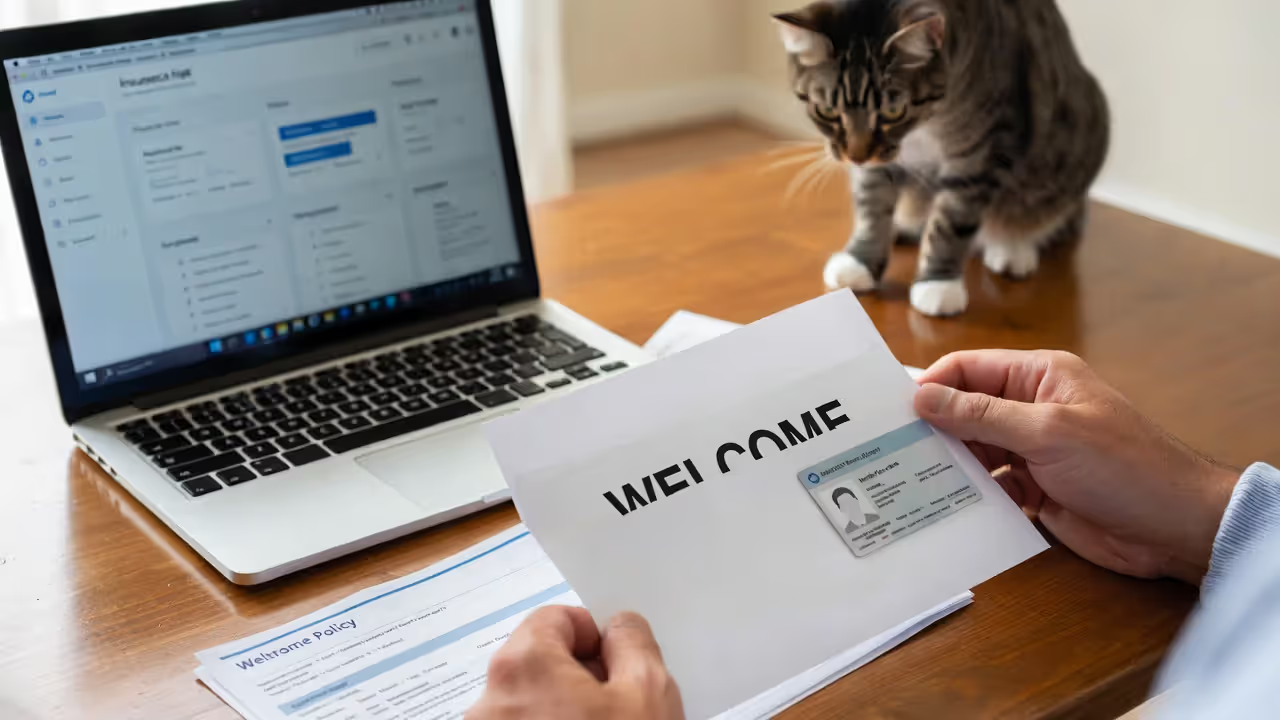
Your policy documents pets insurance guide begins the moment your coverage activates. Most insurers send a welcome packet within 48 hours, either by email or postal mail, containing several critical items.
The policy declarations page lists your pet's name, coverage effective date, annual deductible, reimbursement percentage, and annual or per-incident limits. This single sheet answers most "am I covered?" questions, so save it somewhere accessible—not buried in an email folder you'll never check again.
Your coverage summary or certificate of insurance explains what conditions, treatments, and scenarios fall under your plan. It's typically 3–8 pages and written in slightly less dense language than the full policy contract. Read it once now rather than during an emergency at 11 p.m.
The member ID card (digital or physical) includes your policy number and the claims submission email or portal URL. Some veterinary practices ask for this at check-in, though it's less universal than human health insurance cards.
Author: Brandon Keller;
Source: lamadone.net
Finally, the full policy contract runs 20–40 pages and contains the legal fine print: exclusions, waiting periods, pre-existing condition definitions, and dispute resolution procedures. You won't reference it often, but keep it permanently. If a claim dispute arises, this document defines your rights.
Many insurers also include a claims checklist or quick-start guide. Don't dismiss it as fluff—it often highlights insurer-specific quirks, like whether they accept photos of receipts or require original invoices.
Essential Records to Keep Before Filing a Claim
Smart record keeping pets insurance starts before anything goes wrong. Scrambling to reconstruct your pet's medical history after an emergency wastes time and increases the chance of errors that trigger claim denials.
Medical History and Veterinary Records
Request a complete copy of your pet's medical records from every veterinarian they've seen—not just your current clinic. This includes:
- Exam notes from wellness visits
- Vaccination records
- Diagnostic test results (bloodwork, X-rays, ultrasounds)
- Surgical reports and anesthesia logs
- Specialist consultations
Insurance companies use these records to establish baselines and identify pre-existing conditions. If your pet limped once during a puppy exam two years ago, and now tears an ACL, that old note might matter. Having the full history prevents disputes about whether a condition existed before coverage began.
Most veterinary practices can export records as PDFs for $10–25. Request them annually, or whenever you switch vets, rather than waiting until you need to file a claim.

Author: Brandon Keller;
Source: lamadone.net
Receipts and Invoices from Vet Visits
Every single veterinary receipt matters—even for routine wellness exams you don't plan to claim. Why? Because those receipts create a timeline. If your dog visits the vet for a cough in March, then develops pneumonia in April, the March receipt proves the cough was a new symptom, not a pre-existing condition.
Keep both the itemized invoice (showing each service and medication) and the payment receipt. Some insurers accept only the itemized version because it includes diagnosis codes and procedure descriptions.
Store receipts immediately after each visit. Thermal paper receipts fade within months, so photograph or scan them the same day. A faded receipt showing only "$327" with no details is worthless for claims.
Prescription and Medication Documentation
If your pet takes any medications—heartworm preventive, thyroid pills, antibiotics—keep the prescription labels and receipts. Many policies cover prescription medications, but you'll need proof of the prescribing veterinarian's instructions and the dispensing date.
For compounded medications or those filled at human pharmacies, keep both the vet's written prescription and the pharmacy receipt. Some insurers require documentation proving the medication was prescribed for a covered condition rather than a pre-existing issue.
Step-by-Step: Documents Needed to File a Pet Insurance Claim
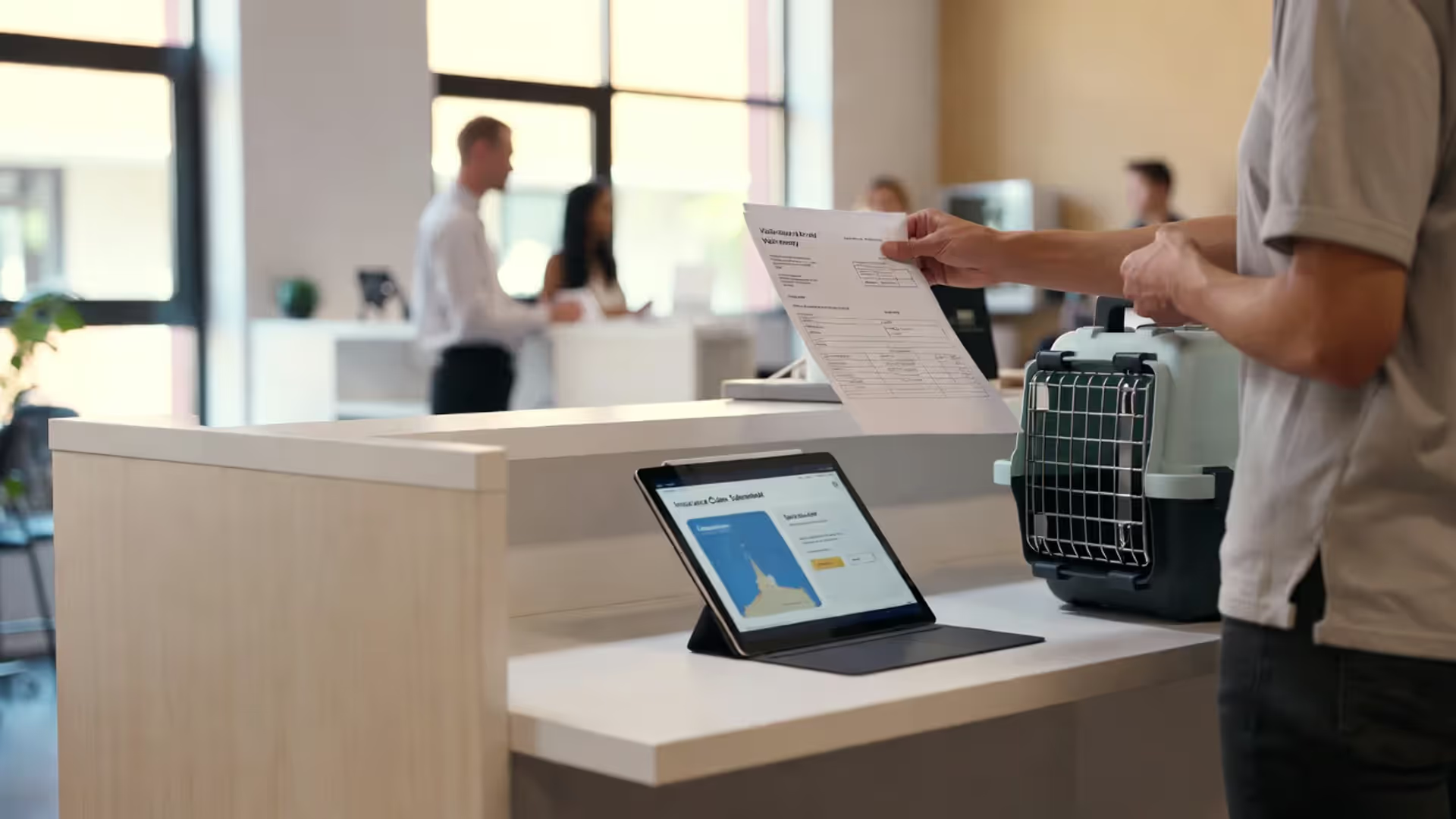
Understanding what documents needed claims pets insurance requires depends on your insurer's process, but most follow a similar pattern.
Author: Brandon Keller;
Source: lamadone.net
Step 1: Obtain the itemized invoice. Immediately after your vet visit, request an invoice showing each service with its corresponding diagnosis code (usually ICD-10 codes). Generic receipts listing only "exam and treatment - $450" get rejected. You need line items: "Complete Blood Count - $85," "Radiograph, two views - $180," etc.
Step 2: Complete the claim form. Your insurer's claim form asks for your policy number, pet details, date of service, and a brief description of the issue. Some companies let you skip the paper form if you submit through their app, which auto-fills policy information.
Step 3: Attach the veterinary medical records. For anything beyond routine wellness, include the exam notes describing your pet's symptoms, the veterinarian's diagnosis, and the treatment plan. A receipt alone doesn't explain why the treatment was necessary.
Step 4: Include supporting documentation. If your claim involves: - Emergency care: attach the emergency clinic's triage notes and discharge instructions - Specialist visits: include the referral letter from your primary vet - Ongoing treatment: provide previous related records showing the condition's progression - Prescription medications: attach the prescription label or pharmacy printout
Step 5: Submit within the deadline. Most insurers require claims within 90–180 days of service. Late submissions get denied regardless of validity, so don't stockpile receipts planning to file quarterly.
Step 6: Keep confirmation. Save the submission confirmation email or screenshot. If the insurer claims they never received your paperwork, this proof matters.
For recurring conditions requiring multiple visits—say, chemotherapy for cancer—ask your insurer if they offer a "continuation of care" process that reduces documentation for follow-up appointments. You might only need to submit updated invoices rather than full medical records each time.
How Long Should You Keep Pet Insurance Paperwork?
Retention periods vary by document type, but erring toward longer is safer than purging too soon.
| Document Type | Retention Period | Storage Method | Why This Long? |
| Policy contracts & declarations | Permanent (life of pet + 7 years) | Digital + paper | Legal disputes can arise years later; needed for tax records if claiming medical deductions |
| Claim forms & submissions | 7 years after claim closure | Digital primary, paper backup | IRS can audit pet medical deductions up to 7 years; insurer disputes occasionally resurface |
| Explanation of Benefits (EOBs) | 5 years | Digital | Useful for tracking deductible and annual limits; may be needed if you switch insurers |
| Veterinary medical records | Permanent (life of pet + 3 years) | Digital + paper | Establishes full medical history; critical if you change insurers or face pre-existing condition disputes |
| Receipts & invoices (claimed) | 7 years | Digital | Must match claim forms if audited; proves payment was made |
| Receipts & invoices (unclaimed) | 3 years | Digital | Might become relevant if related condition develops; useful for establishing baselines |
| Correspondence with insurer | 3 years after resolution | Digital | Proves what was communicated if disputes arise |
| Renewal notices & rate changes | Until next renewal + 1 year | Digital | Tracks coverage changes; useful for comparing plans at renewal |
The seven-year rule aligns with IRS audit windows. Even though most pet insurance premiums aren't tax-deductible for typical pet owners, some people with service animals or business-related pets can deduct expenses. Keeping records ensures you're covered if questions arise.
When your pet passes away, resist the urge to immediately purge all records. Keep everything for at least three more years in case any final claims or disputes emerge.

Author: Brandon Keller;
Source: lamadone.net
Common Documentation Mistakes That Delay or Deny Claims
Understanding documentation requirements pets insurance means knowing where others stumble. Claims adjusters see the same errors repeatedly.
Illegible or faded receipts top the list. Thermal paper receipts from credit card terminals fade fast, especially if stored in hot cars or near windows. By the time you file a claim months later, the text has vanished. Photograph or scan every receipt the day you receive it.
Missing diagnosis codes cause immediate rejections. A receipt showing "office visit - $75" without indicating why your pet needed that visit provides no proof the condition is covered. Always request itemized invoices with diagnostic codes, not just payment summaries.
Incomplete veterinary forms waste weeks. Some insurers provide forms for veterinarians to complete. If your vet leaves sections blank or skips the signature, the form gets rejected and sent back. Review forms before leaving the clinic to ensure everything is filled out.
Unsigned documents seem minor but trigger automatic denials. Both you and your veterinarian (when applicable) must sign claim forms. An unsigned form isn't legally valid.
Mismatched dates raise fraud flags. If your claim form says the visit occurred on March 15, but the receipt shows March 18, adjusters suspect you're filing for a different visit or fabricating details. Double-check that all dates align across every document.
Missing medical records for new conditions lead to pre-existing condition disputes. If you file a claim for diabetes but don't include the bloodwork results that led to diagnosis, the insurer can't verify when the condition started. They might deny the claim, assuming it pre-dated your coverage.
Submitting only page one of multi-page invoices happens more often than you'd expect. If your vet visit generated a three-page invoice but you only scan the first page, the insurer sees incomplete information and requests the rest—adding days or weeks to processing.
The number one mistake I see is pet owners submitting credit card receipts instead of itemized invoices. A receipt that just says 'veterinary services - $427' tells us nothing about what was treated or why. We need the detailed breakdown showing each service, medication, and diagnostic test with the associated diagnosis. Without that, we can't determine coverage, and the claim gets denied. Always ask your vet for the itemized invoice, not just the payment receipt.
— Jennifer Martinez, Claims Processing Manager, PetFirst Insurance
Digital vs. Paper: Best Practices for Organizing Pet Insurance Records
Effective insurance paperwork pets guide systems balance accessibility with security. Neither all-digital nor all-paper is ideal; a hybrid approach works best.
For digital storage, create a dedicated folder structure on your computer or cloud service:
Pet Insurance - <Save everything as PDFs with descriptive filenames: "2026-03-15_Broken-Tooth_Invoice.pdf" rather than "IMG_8472.pdf." When you need to find a specific document two years later, clear names save enormous time.
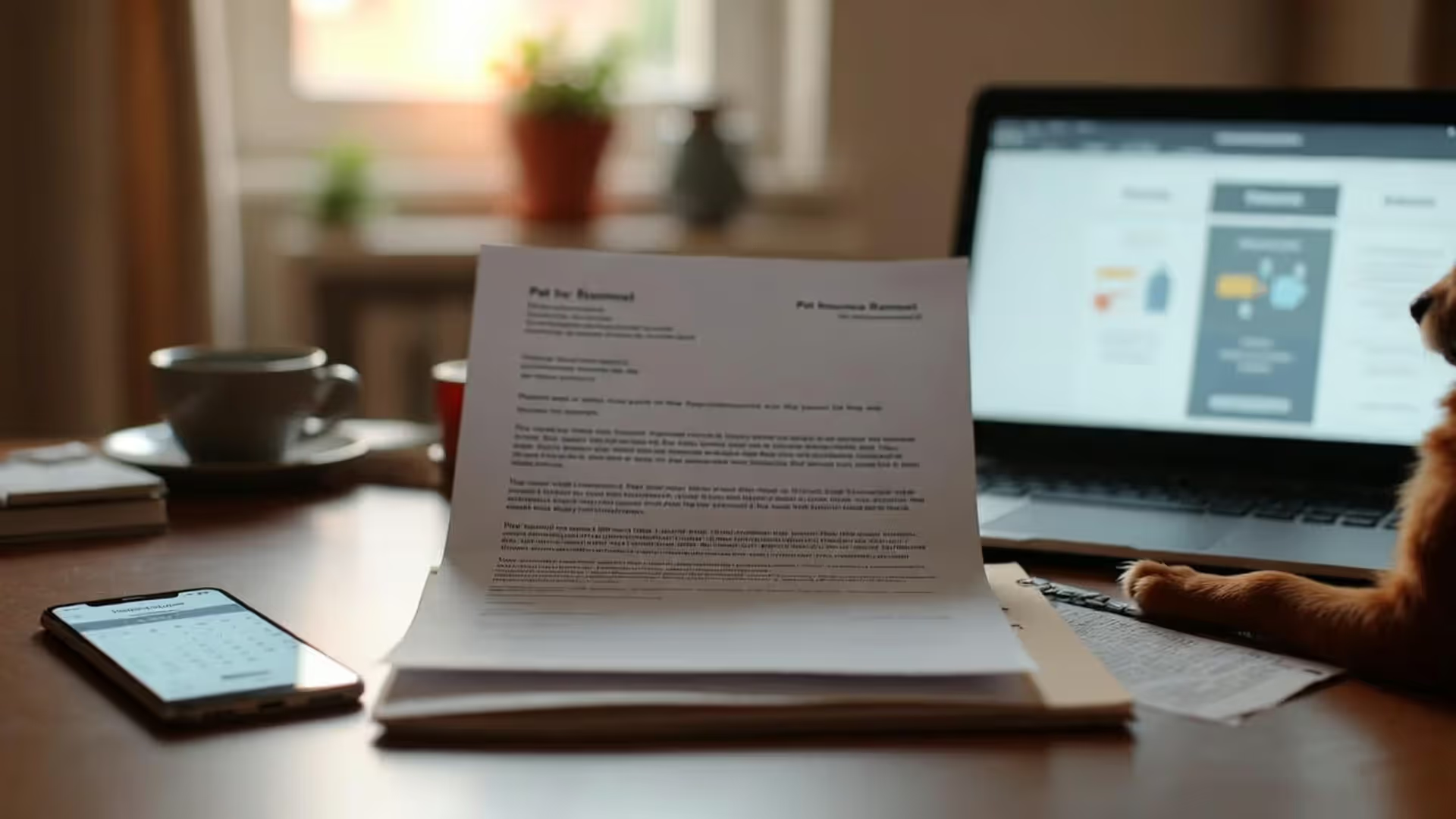
Use cloud storage (Google Drive, Dropbox, iCloud) rather than only local storage. If your computer crashes the day before you need to file an urgent claim, you'll still have access from your phone or a borrowed device.
For paper backups, keep a small file box or accordion folder with:
- Current policy declarations (single sheet, updated at each renewal)
- Last 12 months of receipts and invoices
- Current year's claim submissions and EOBs
You don't need paper copies of everything—that's what digital is for—but having recent essentials in physical form helps if technology fails at an inconvenient moment.
Scanning tips for mobile phone photos:
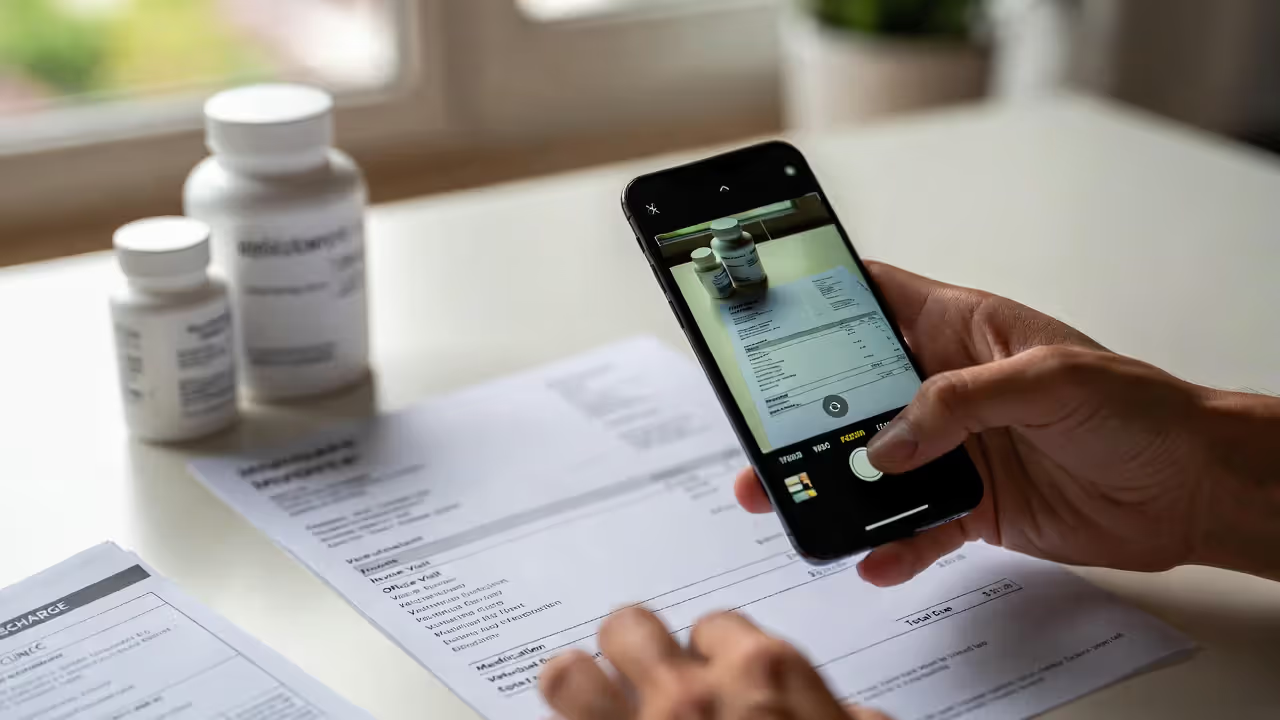
- Use scanning apps (Adobe Scan, Microsoft Lens, CamScanner) rather than your camera app. They auto-crop, enhance contrast, and save as PDFs
- Photograph receipts flat on a dark surface with good lighting
- Capture the entire document in one shot; avoid multi-photo documents that might get separated
- Scan immediately after each vet visit while receipts are crisp
Backup strategy: Follow the 3-2-1 rule—three copies, two different media types, one offsite. For pet insurance records, that might mean: original digital files on your computer, synced to cloud storage (offsite), with critical documents also printed (different media type).
App-based organization: Many pet insurance companies offer mobile apps that let you photograph and submit claims directly. These apps often store your submission history, making it easy to reference past claims. However, don't rely solely on the insurer's app—they control that data, and if you switch insurers, you might lose access. Always maintain your own independent archive.
Set a calendar reminder every six months to review and organize your pet insurance documents. Delete duplicates, ensure everything is properly named, and verify your backup systems are working. Fifteen minutes twice a year prevents hours of frantic searching during emergencies.
Frequently Asked Questions About Pet Insurance Documentation
Pet insurance documentation isn't glamorous, but it's the difference between a smooth $3,000 reimbursement and a denied claim that leaves you paying out of pocket. Build your system now—before you're stressed about your sick pet—and maintaining it becomes automatic. Scan receipts the day you get them, organize files every six months, and keep everything longer than you think necessary. When an emergency strikes, you'll have one less thing to worry about.