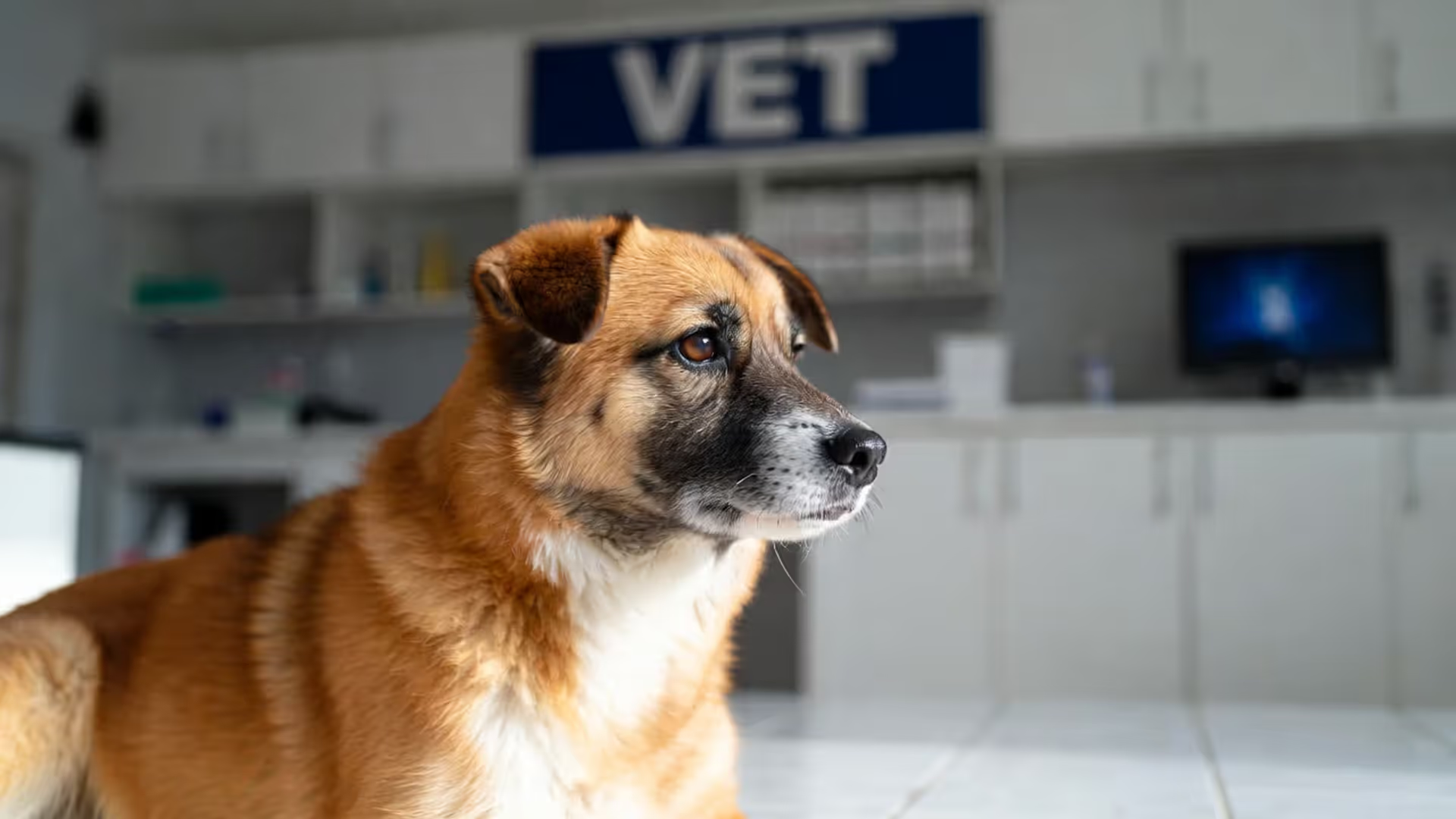
Pet Insurance Guide for First-Time Dog and Cat Owners
Pet Insurance Guide for First-Time Pet Owners

Content
When your dog swallows a sock or your cat develops diabetes, veterinary bills can spiral into thousands of dollars within hours. Pet insurance exists to soften that financial blow, but most policies don't work like human health insurance—and that confusion costs pet owners money every year.
This guide breaks down exactly how pet insurance functions in the United States, what you're actually buying, and how to avoid the traps that catch first-time buyers.
How Pet Insurance Actually Works
Pet insurance operates on a reimbursement model, not a copay system. You pay the vet bill upfront in full, submit a claim with invoices and medical records, then receive money back based on your policy terms. No network restrictions exist—you can visit any licensed veterinarian, specialist, or emergency clinic in the country.
Here's the basic financial structure. You pay a monthly premium to keep coverage active. Each policy year, you must spend a certain amount out-of-pocket (your deductible) before reimbursement begins. Once you've met that deductible, the insurer reimburses a percentage of covered expenses—typically 70%, 80%, or 90%. This continues until you hit your annual coverage limit, which usually ranges from $5,000 to unlimited.
The claim process follows four steps. First, you pay your vet directly at the time of service. Second, you photograph or scan the itemized invoice and any relevant medical notes. Third, you submit these documents through the insurer's app or website, usually within 90-180 days of treatment. Fourth, the company reviews the claim (typically within 5-14 business days) and deposits reimbursement into your bank account or mails a check.

Author: Jordan Whitman;
Source: lamadone.net
Most insurers now offer direct deposit, which speeds up payment considerably. Some providers have begun piloting direct payment to veterinary practices, but this remains uncommon.
The biggest surprise for new pet owners is that they need available credit or savings to cover the initial bill. Pet insurance is financial protection, not a payment plan. You're still responsible for settling the account before you leave the clinic.
— Dr. Jennifer Coates, a veterinary advisor with over 20 years of clinical experience
Waiting periods delay when coverage begins. Accident coverage typically starts within 2-3 days of your policy effective date. Illness coverage usually requires 14 days. Orthopedic conditions—cruciate ligament tears, hip dysplasia—often carry 6-12 month waiting periods. If your pet shows any symptoms during the waiting period, that condition becomes excluded as pre-existing.
What Pet Insurance Covers (And What It Doesn't)
Accident and Illness Coverage
Standard comprehensive policies cover diagnostic testing, hospitalization, surgery, prescription medications, and specialist care for unexpected injuries and illnesses. This includes broken bones, lacerations, foreign body ingestion, cancer treatment, chronic conditions like diabetes or allergies, emergency care, and specialist consultations with cardiologists, oncologists, or neurologists.
Coverage extends to alternative therapies if prescribed by a veterinarian—acupuncture for pain management, hydrotherapy for rehabilitation, behavioral therapy for anxiety disorders. Prescription diets are sometimes covered when medically necessary to treat a diagnosed condition, though this varies by insurer.
Hereditary and congenital conditions receive coverage under most modern policies. Hip dysplasia in German Shepherds, heart defects in Cavalier King Charles Spaniels, and collapsing trachea in Yorkshire Terriers all qualify for reimbursement, provided they weren't diagnosed or symptomatic before coverage began.
Common Exclusions to Watch For
Pre-existing conditions represent the biggest coverage gap. Any illness, injury, or symptom documented in medical records before your policy starts—or during waiting periods—remains excluded forever. If your dog limped once before enrollment, any future cruciate ligament problems in that leg might be denied. Bilateral conditions create particular frustration: an ear infection in the left ear before coverage can exclude future right ear infections at some companies.

Author: Jordan Whitman;
Source: lamadone.net
Preventive and routine care stays excluded from base policies. Annual exams, vaccinations, heartworm prevention, flea and tick medications, teeth cleaning, nail trims, and spay/neuter procedures require separate wellness add-ons that function more like discount plans than insurance.
Breeding, pregnancy, and whelping costs are never covered. Cosmetic procedures—tail docking, ear cropping, dewclaw removal for appearance—also fall outside coverage. Behavioral issues without underlying medical causes remain excluded, though anxiety disorders with documented medical components sometimes qualify.
Some policies exclude specific conditions by breed. Certain insurers won't cover intervertebral disc disease in Dachshunds or brachycephalic airway syndrome in Bulldogs. These breed-specific exclusions should appear clearly in policy documents, but they're easy to miss during enrollment.
Breaking Down Pet Insurance Terminology
Insurance contracts use specific language that determines whether claims get approved or denied. Understanding these terms before you need to file prevents nasty surprises.
| Term | Definition | Real Example |
| Deductible | The amount you pay out-of-pocket each policy year before reimbursement begins | With a $250 annual deductible, you pay the first $250 of covered expenses; the insurer reimburses subsequent claims |
| Reimbursement Rate | The percentage of covered costs the insurer pays after you meet your deductible | At 80% reimbursement, a $1,000 surgery costs you $200 plus your deductible |
| Annual Limit | The maximum amount the insurer will pay per policy year | A $10,000 annual limit means coverage stops after the insurer has paid $10,000 in claims that year |
| Waiting Period | Time between enrollment and when coverage becomes active for specific conditions | A 14-day illness waiting period means a diagnosis on day 10 won't be covered |
| Pre-existing Condition | Any injury, illness, or symptom that existed before coverage started or during waiting periods | Limping before enrollment excludes future leg injuries; vomiting during the waiting period excludes gastrointestinal coverage |
| Hereditary Condition | Genetic disorders passed from parents to offspring, common in specific breeds | Hip dysplasia in Labrador Retrievers, progressive retinal atrophy in Poodles |
| Congenital Condition | Abnormalities present at birth, regardless of when they're discovered | Heart murmurs, cleft palates, liver shunts |
| Chronic Condition | Ongoing illnesses requiring long-term management | Diabetes, kidney disease, arthritis, allergies |
| Bilateral Condition | Issues affecting paired body parts (ears, eyes, knees, hips) | If one knee has a cruciate tear before coverage, some insurers exclude the other knee |
The difference between annual and lifetime limits matters significantly. Annual limits reset each policy year, giving you fresh coverage. Lifetime limits cap total payouts across your pet's entire life—once reached, coverage ends permanently. Most modern policies use annual limits or offer unlimited coverage.
Per-incident limits cap reimbursement for specific conditions. A policy might cover $5,000 per condition annually, meaning if your dog develops cancer and kidney disease in the same year, you get up to $5,000 for each diagnosis rather than $5,000 total.
How Much Does Pet Insurance Cost and What Affects Your Premium?
Monthly premiums vary dramatically based on several factors. Average costs provide a starting point, but your actual rate depends on your specific situation.
| Pet Type & Age | Accident-Only | Accident + Illness (Basic) | Accident + Illness (Comprehensive) |
| Dog (puppy, under 1 year) | $15-25 | $30-50 | $50-80 |
| Dog (adult, 1-7 years) | $20-35 | $40-65 | $65-100 |
| Dog (senior, 8+ years) | $30-50 | $75-150 | $120-250 |
| Cat (kitten, under 1 year) | $8-15 | $15-25 | $25-40 |
| Cat (adult, 1-7 years) | $10-20 | $20-35 | $30-50 |
| Cat (senior, 8+ years) | $15-30 | $35-75 | $50-120 |
Note: Rates reflect market averages for mixed breed pets with $500 deductible, 80% reimbursement, and $10,000 annual limit. Purebred pets and higher coverage tiers cost more.
Age at enrollment dramatically impacts lifetime costs. Enrolling a puppy at 8 weeks might cost $40 monthly initially, with gradual increases to $80 by age seven. Waiting until age five could mean starting at $65 and climbing to $150 by age ten. Premiums rise annually as pets age, and some insurers implement steeper increases after age eight.
Breed influences pricing significantly. Large breeds prone to orthopedic issues—Great Danes, Rottweilers, German Shepherds—carry higher premiums than smaller, healthier breeds. Brachycephalic breeds (Bulldogs, Pugs, Persian cats) face elevated rates due to respiratory problems. Mixed breed pets generally cost 10-30% less than purebreds.
Geographic location affects costs by 20-40% between the most and least expensive states. Urban areas with higher veterinary costs—New York City, San Francisco, Los Angeles—see correspondingly higher premiums. Rural areas with lower vet fees pay less for coverage.

Author: Jordan Whitman;
Source: lamadone.net
Your coverage choices directly control costs. Selecting a $1,000 deductible instead of $250 might reduce premiums by 30%. Dropping reimbursement from 90% to 70% could save 15-20%. Choosing a $5,000 annual limit over unlimited coverage typically cuts costs by 20-25%.
Accident-Only vs. Comprehensive Coverage: Which Plan Makes Sense?
Accident-only policies cover injuries from unexpected events—broken bones, lacerations, poisoning, foreign object ingestion, bite wounds. They exclude all illnesses, from ear infections to cancer. These plans cost 40-60% less than comprehensive coverage but leave you exposed to the most expensive veterinary conditions.
Accident-only makes sense in limited scenarios. If you're managing a tight budget and want catastrophic protection, it prevents financial devastation from emergency surgery. For young, healthy pets where you're building an emergency fund, it provides a temporary safety net. Some pet owners use accident-only coverage for secondary pets when they can't afford comprehensive policies for multiple animals.
Comprehensive accident and illness coverage handles both injuries and medical conditions. This includes chronic diseases requiring ongoing treatment—the scenarios that generate the largest lifetime veterinary expenses. Diabetes management, cancer treatment, kidney disease, heart conditions, and autoimmune disorders all fall under comprehensive plans.
The math favors comprehensive coverage for most pet owners. Chronic conditions generate $3,000-10,000+ in annual costs for years. A single cancer diagnosis averages $5,000-15,000 for treatment. Accident-only policies leave you paying 100% of these expenses while you continue paying premiums that only cover injuries.
Wellness add-ons function differently than insurance. These optional riders reimburse routine care—annual exams, vaccinations, dental cleanings, heartworm tests—up to a fixed annual amount, typically $250-500. You pay an extra $15-35 monthly for this benefit.
Wellness add-ons rarely provide good value. If the rider costs $25 monthly ($300 annually) and reimburses up to $400, you're paying $300 to get back $400—a $100 benefit. You'd need to use the full reimbursement amount every year to break even. Most pet owners save money by budgeting for routine care separately rather than purchasing wellness coverage.
The exception: wellness plans make sense if you struggle with budgeting or want forced savings. Paying monthly feels easier than facing a $400 vet bill once yearly, even if the total cost is similar.

Author: Jordan Whitman;
Source: lamadone.net
5 Mistakes New Pet Owners Make When Buying Insurance
Mistake 1: Waiting until after a vet visit to enroll. Your puppy vomits once, you visit the vet for an exam, and that gastrointestinal symptom is now documented. Even if nothing serious was found, future GI issues might be excluded as pre-existing. Enroll within days of adoption, before any symptoms appear or vet visits occur beyond initial wellness checks.
Mistake 2: Choosing a deductible based solely on monthly premium savings. A $1,000 deductible saves $30 monthly compared to a $250 deductible—$360 annually. But you'll pay $750 more out-of-pocket per claim before reimbursement starts. If your pet needs treatment twice in one year, you've lost money. Select a deductible you can comfortably afford to pay multiple times annually.
Mistake 3: Ignoring the reimbursement percentage. The difference between 70% and 90% reimbursement seems small until you're facing a $5,000 surgery. At 70%, you pay $1,500 after your deductible. At 90%, you pay $500. That $1,000 difference exceeds years of premium savings from choosing the lower rate. If you can afford slightly higher premiums, 80-90% reimbursement provides substantially better protection.
Mistake 4: Not reading breed-specific and bilateral condition exclusions. Some policies exclude conditions your breed commonly develops. Others use bilateral exclusion clauses that deny coverage for the second leg, ear, or eye if the first showed symptoms before enrollment. These clauses hide in policy documents. Before purchasing, specifically ask: "Does this policy exclude any conditions common to my breed?" and "How do you handle bilateral conditions?"
Mistake 5: Comparing only monthly premiums without examining coverage differences. A $35 policy and a $55 policy aren't equivalent if one excludes hereditary conditions, uses per-incident limits, or requires higher out-of-pocket costs. Compare total potential out-of-pocket expenses for realistic scenarios—a $3,000 foreign body surgery, ongoing $200 monthly diabetes care, a $10,000 cancer treatment—across policies to understand true value.
Frequently Asked Questions About Pet Insurance
Pet insurance functions as financial protection against veterinary costs that exceed what you can comfortably pay from savings or monthly cash flow. It's not about whether your pet will need veterinary care—they will. The question is whether you can afford unexpected $3,000-10,000 expenses without insurance reimbursement.
The right policy matches your financial situation and risk tolerance. Higher deductibles and lower reimbursement rates reduce monthly premiums but increase your costs when filing claims. Unlimited annual limits and 90% reimbursement provide maximum protection but cost more monthly. Most pet owners find balance with $250-500 deductibles, 80-90% reimbursement, and annual limits of $10,000 or unlimited.
Enroll early, read exclusions carefully, and understand exactly what you're paying for each month. Pet insurance explained comes down to this: you're prepaying for veterinary care in small monthly amounts rather than facing large unexpected bills when your pet needs treatment. Whether that trade-off makes sense depends on your emergency savings, monthly budget, and willingness to make difficult financial decisions during medical crises.
The pets who benefit most from insurance are those whose owners would struggle to pay for expensive treatment without it. If a $5,000 emergency would force you to choose between treatment and financial hardship, insurance provides genuine value. If you have substantial savings dedicated to pet care, you might self-insure instead. But for most American pet owners, comprehensive coverage purchased young offers the best combination of financial protection and peace of mind.